
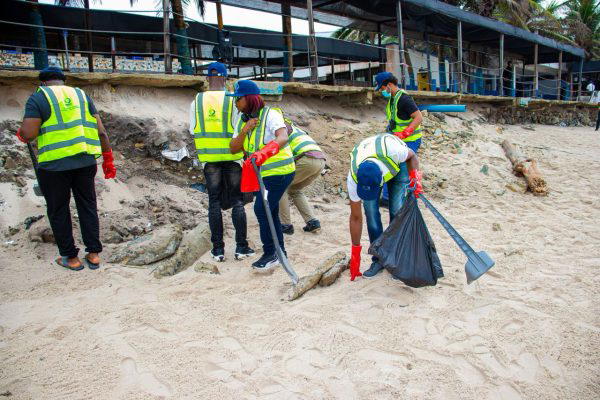
Volunteers clearing waste along the Atican Beach and neighboring shoreline in Lekki uncovered hazardous materials, including lead batteries, during a cleanup exercise organized by The Nigerian Marine Environment Protection Association (NIMEPA), highlighting growing concerns about coastal pollution in Africa’s largest city.
The exercise resulted in the removal of approximately 100 kilograms of various solid waste within a few hours, including plastics, sachets, Styrofoam, bottles, cigarette butts and other debris.
“We actually accounted for a total of approximately 100 kg cumulative of different types of waste,” said Comfort Ekpe, Executive Secretary of NIMEPA. “We also found hazardous waste like lead batteries on our shorelines. For me, this is concerning that Nigerians will dispose of this kind of waste in our waters. This ought not to be.”
The discovery reflects a wider environmental challenge. According to the United Nations Environment Programme (UNEP), an estimated 11 million tonnes of plastic waste enter the oceans globally every year, a figure expected to nearly triple by 2040 if current trends continue.
Nigeria, Africa’s most populous country, is a significant contributor to marine plastic waste due to rapid urbanization, a challenging waste management systems and high consumption of single-use plastics and packaging materials still remain a major concern.
Data from the World Bank shows Nigeria generates over 2.5 million tonnes of plastic waste annually, with a large share mismanaged and at risk of entering waterways.
At the shoreline, volunteers moved steadily across the sand, manually collecting waste that had built up over time, from plastics and bottles to other non-degradable debris with basic cleaning tools like rake, shovel and packers. The event Organizers said the accumulation of such waste poses immediate risks to marine ecosystems, threatening aquatic life and the balance of coastal environments, hence more hand is needed to meet the goal of this initiative.
Also present at the cleanup was Festus Omotoyinbo, Managing Director of Apapa Bulk Terminal Limited (ABTL), a subsidiary of Flour Mills of Nigeria, and a member of NIMEPA’s Board of Trustees. Speaking on behalf of the organization’s leadership, he emphasized the shared responsibility required to address the problem.
“The objective of this exercise is for us to protect our environment,” Omotoyinbo said. “It’s a collective responsibility, government, community and organizations.”
Nigeria’s coastal economy relies heavily on marine resources, particularly fisheries and tourism. According to the National Bureau of Statistics (NBS), the agriculture sector, which includes fishing, remains a major source of employment, supporting millions of livelihoods across the country.
Environmental experts warn that pollution threatens these economic lifelines by damaging fish populations and degrading natural habitats.
“When you pollute the environment, there is a lot of impacts on the marine ecosystem,” Omotoyinbo said. “Fish are from the ocean. By the time you pollute the sea, it causes a lot of harm to these aquatic lives and eventually man.”
For volunteers like Emmanuel Abayowa, the cleanup was not just about removing waste, but about protecting a system that sustains everyday life. He warned that pollution in coastal waters disrupts the broader environmental cycles that Nigerians depend on daily.
“The ocean supports us in ways we often take for granted,” Abayowa said. “Water evaporates from the sea, forms clouds, and returns to us as rainfall. It also contributes to energy generation through wave activity. And the marine environment is home to living organisms that depend on clean water to survive. When waste enters these waters, it affects their ability to breathe and live.”
The cleanup also drew participation from corporate organizations and NIMEPA’s sponsors, including Flour Mills of Nigeria (FMN) and Apapa bulk Terminal Ltd (ABTL), reflecting increasing private sector involvement in environmental sustainability.
“As a Group, FMN has been applaudably committed to fostering sustainable growth in Nigeria and progressively across the continent” said Mr. Sunday Ngige, Head of Shipping Operations at FMN. “Thus, our partnership with NIMEPA is designed to truly protect the Marine environment, and our participation in Today’s cleanup is a testament to the fact that we are unwaveringly committed to environmental sustainability.”
Ngige highlighted gaps in infrastructure at recreational beaches.
“From the beginning up to where we stopped, there wasn’t any trash cans,” he said. “They need to enlighten the beach users on how to dispose of their waste properly.”
Residents who observed the cleanup described it as a rare but welcome intervention.
One local resident, Olotu Kolade Samuel, said he was “really surprised and impressed” to see volunteers cleaning the beach, adding that individuals should take responsibility by removing waste whenever they encounter it.
Ekpe said participants also signed a sustainability pledge as part of the programme.
“One of the highlights of this event today was to have all the attendees sign their pledge for sustainability,” she said. “This is part of a broader initiative to carry out multiple cleanups each year while promoting behavioral change.”
As global attention on climate change and pollution intensifies, local initiatives like the NIMEPA cleanup are increasingly seen as critical in bridging the gap between policy and action.
Disclaimer
Comments expressed here do not reflect the opinions of Vanguard newspapers or any employee thereof.