
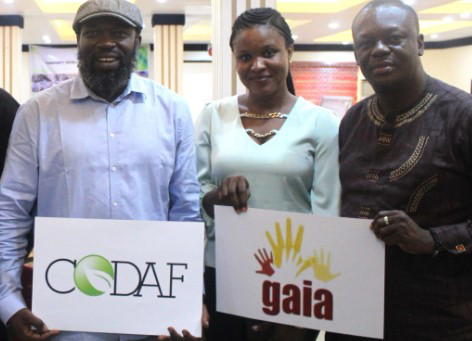
Benin Richard, Executive Director of CODAF (left), Philip Jakpor, Executive Director of Renevlyn Development Initiative, RDI, right, and another guest at the event.
The Community Development Advocacy Foundation, CODAF, and their partners, on Tuesday, February 17, unveiled its Brand Audit Report, an assessment of the impact of plastic waste on the environment in Lagos, Delta, Plateau and Osun states.
According to the report, after collecting and sorting 298,174 plastic items from eight cities – Benin, Uyo, Port Harcourt, Warri, Ughelli, Jos, Oshogbo, and Lagos – food and beverages firms topped the charts as the biggest producers of plastic waste.
Therefore, the project underscored the urgent need for producers to take greater responsibility through improved packaging design, reduction of single-use plastics, and investment in recycling systems.
This, the report noted, generated critical evidence to support advocacy, policy reforms, and improved waste management practices.
Key findings
Key findings by the audit report include highlighting plastic bottles (particularly PET bottles) and sachets as the most commonly found plastic materials in the environment across most of the cities visited. This underscores the growing challenge of single-use plastics and the urgent need for improved waste management, recycling systems, and responsible consumption practices.
Another is that the presence of these plastic pollutants has contributed to poor environmental practices such as open waste burning, which in turn has deleterious effects on the environment, including air pollution, greenhouse gas emissions, and risks to public health.
Also, there are little or no coordinated efforts in place to effectively recover plastic materials from the environment, leading to widespread pollution across communities, waterways, and ecosystems.
Commenting on the report, CODAF, in a statement by Onyeka Venath Titigbe, Assistant Director of Campaigns, noted that plastic pollution continues to pose serious environmental, social, and economic challenges.
“Improperly disposed plastics clog drainage systems, contributing to flooding in cities, while also contaminating soil and waterways. In marine and freshwater ecosystems, plastic debris threatens biodiversity, harms wildlife through ingestion and entanglement, and breaks down into microplastics that enter the food chain.
“Open burning of plastic waste releases toxic emissions that affect air quality and public health, increasing risks of respiratory illnesses.
“Additionally, plastic production and disposal contribute to greenhouse gas emissions, worsening climate change impacts. For many communities, the accumulation of plastic waste also undermines livelihoods, sanitation, and overall quality of life.
“The report aligns with ongoing global efforts toward a legally binding international agreement to end plastic pollution, often referred to as the Global Plastics Treaty under the auspices of the United Nations Environment Programme.
“The treaty process seeks to address the full lifecycle of plastics — from production and design to consumption, waste management, and pollution prevention.
“Insights from the Brand Audit provide locally-generated data that can inform Nigeria’s position in global negotiations, highlighting the importance of initiatives such as Extended Producer Responsibility (EPR), improved waste infrastructure, reduction targets for problematic plastics, and stronger monitoring mechanisms.”
Zero Waste Parliament

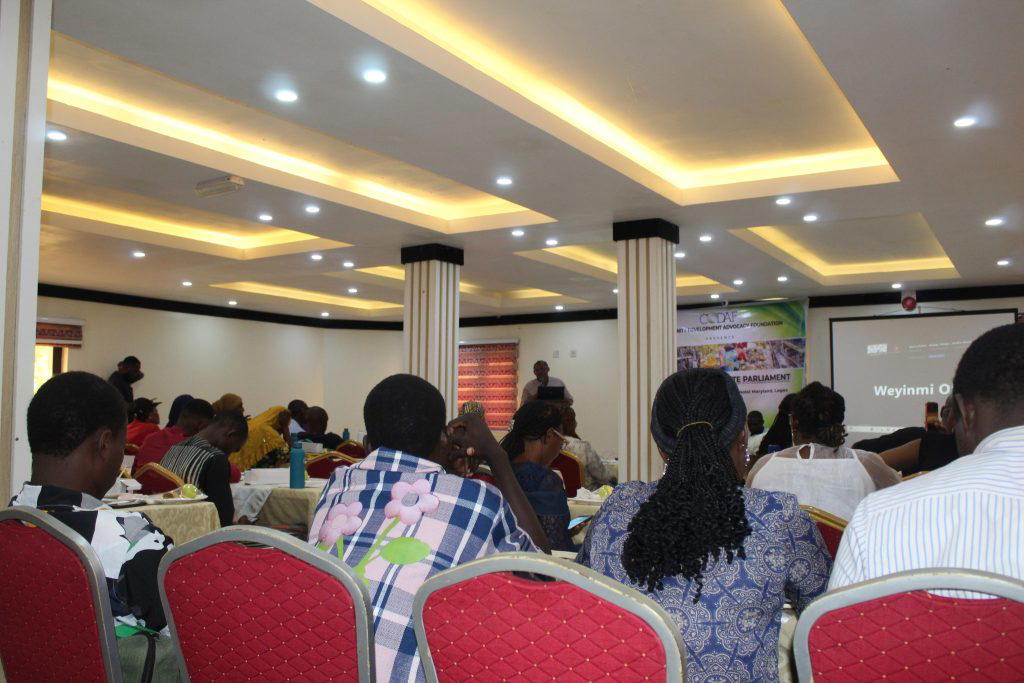
The unveiling was done during the expanded zero waste parliament agenda facilitated by Dr. Maimoni Ubrei-Joe, CODAF Director of Campaigns and Administration, in Maryland, Lagos.
At the programme, after the welcome remarks by Benin Richard, Executive Director of CODAF, goodwill messages were taken form Niven Reddy, GAIA Africa Coordinator; Princess Surah Olayemi Animashaun, Executive Chairman Epe LGA; Faith Paulinus, National Coordinator, Zero Waste Ambassadors, ZeWA; Friday Oku, Leader of Zero Waste Parliament/ AWON; Adeosun Temitope, Coordinator, Zero Waste Farmers Network; Dr. Akinyemi Ogunkeyede, Director, Centre of Waste Management, FUPRE; Lagos State Government representative (Min. of Environment, Min. of Agric LASEPA and LAWMA); Fred Nohwo of EnviroGyst, among others.
There were a panel sessions moderated by Philip Jakpor, Executive Director of Renevlyn Development Initiative, RDI; and Dr. Maimoni Ubrei-Joe.
Also, GAIA Nigeria Members (MAMRN), GKF, PAVE, SrADEV, SEDI, CFEW narrated their community-led zero waste and methane reduction efforts.
Disclaimer
Comments expressed here do not reflect the opinions of Vanguard newspapers or any employee thereof.