
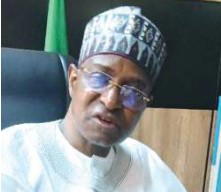
Minister of Livestock Development, Alhaji Idi Mukhtar Maiha
Nigeria’s livestock sector has suffered neglect for many years and with that the nation failed to take advantage of its massive value. It also left herders roaming the bush , farms and even cities, in search of feed and water. Open grazing has led to chaos as pastoralists and crop farmers constantly clash in the process.
In this interview, the Minister of Livestock Development, Alhaji Idi Mukhtar Maiha, lays out his strategy towards implementation of the framework for modernising the livestock business in Nigeria. He says present realities support ranching as opposed to open grazing. Excerpts:
By Emma Ujah, Abuja Bureau Chief, & Gabriel Ewepu
Before the creation of the Federal Ministry of Livestock Development and your appointment as minister, many people involved in livestock business in Nigeria complained of neglect by the Federal Government. Some argued that while the government supported crop farmers in various ways, such as the provision of subsidized fertilizers, improved seedlings, and other inputs, there was hardly any support for those in the livestock sector. Has anything changed with the establishment of this ministry?
There has been a neglect of the livestock sector in the country, at both the federal and state levels of government, at the institutional level, and at the level of private producers.
Basically, the sector has been part of the Ministry of Agriculture right from the time of independence. However, it didn’t receive proper focus until this ministry was created.
The Livestock sub-sector is a major value creator, and a contributor to the GDP and so we need to look at the livestock resources in this country, away from agronomy, have that special ministerial outfit, dedicated staff, dedicated budget, and a voice at the Federal Executive Council. That hasn’t happened until June 2024, when Mr. President, out of strategic thinking and vision, said, look, we have this number of livestock in this country that has not received the necessary attention, therefore, let’s create that ministry.
Looking at the face value for instance, $32 billion worth of livestock sector that has never been mainstreamed, has never been part of the formal economy. Over 50 million heads of cattle, over 124 million goats, over 70 million sheep, over 9.3 million pigs, over 410,000 donkeys, over 1 million camels, over half a billion poultry birds.
All these figures I have given you have had no particular administrative outfit focusing on them. That’s why Mr. President said, let us look at this sector, we have been spending so much money in the importation of dairy and dairy products; precisely $1.5 billion per annum. Juxtapose this with the number of animals we have that can give us milk.
Meat production has been very poor. We still import some form of meat into this country. We know there are some people who want to have that prime cut outside the country and because we have gotten a very poor mix, these numbers have not been transformed in such a state they can add value to our animal protein.
Therefore, we still have the lowest per capita consumers of dairy, we still have the lowest per capita consumers of meat. That is Mr. President’s sentiment for creating that ministry.
Our mandate is to transform the livestock sector from traditional status into a modern, vibrant, sustainable, globally competitive sector for food security, job creation, rural development, and the promotion of social cohesion across the country.
What has the ministry achieved since your appointment?
Since our arrival, we have been able to form a team, we have gotten a good organisational structure, the staff that have been with the Federal Ministry of Agriculture and Food Security have been deployed here. We have created an additional technical department, we have bonded, we have done a lot of branding all over the country, and we have also come up with a strategy. We have looked at all the legacy documents in livestock development in the last 25 years.
We have come up with a National Livestock Growth Acceleration Strategy. This document is very ambitious, it’s all-inclusive.
We are seeking to grow the sector from $32 billion to $72 billion in 10 years, and we have identified all the necessary pillars that can support that growth. They include: the role of government at the federal level, the role of private sector, the role of international development partners, and the role of the sub-nationals
When the ministry was created in 2024, there were only three states in this country with similar ministries at the state level, focusing on livestock. But with Mr. President’s vision, the creation of this ministry, has resonated across the country. Today, we have 18 states with similar independent ministries looking at the livestock sub-sector of agriculture. That is a huge endorsement of Mr. President’s strategy in creating this ministry.
Now we have complementary support at the state level, and since the creation of the ministry, we have also had a number of discussions, because the private sector has been working to key into it.
We are looking at dairy, revenue, feed and fodder production at the commercial and private levels, animal health and disease management, leather works.
Before the creation of this ministry, we were all in deep sleep and slumber but now, we have woken up.
What are the specific roles expected of these stakeholders that you have mentioned?
The federal government doesn’t have land. We don’t have animal resources.
For the Federal Government, its responsibility is policy harmonization, regulation, standardization, and direction.
At the diplomatic international level, many are coming to the country. They want to come and invest in various areas of the livestock value-chain.
We have been working closely with the states that own the lands. I have visited a number of state governments. Many state governors came here. Some sent their commissioners. We are working with them to make sure that at the state level, we also have a level playing ground – to water the ground, make it fertile, policy harmonization to make sure that they also get it right.
Every state in this country is endowed with one livestock resources or the other, right from the honeybee, rabbitry, poultry, piggery, sheep and goats, cattle, donkeys, horses and camels. These are found in abundance in this country.
Therefore, there is no state government that would say, look, I’ve been cheated out. It is a natural occurrence. We are looking to enhance their organization and their productivity away from traditional animal husbandry into a modern system.
We have visited many states, we have invited them to the livestock summits. We have also seen livestock facilities in those states, and we’ve given our own advice to sharpen the focus and make sure that the business they are involving in is end-to-end.
We remember that under the late President Muhammadu Buhari’s administration, several attempts were made on developing or focusing on livestock, and there was a time that several states said, no, we don’t want to be part of this. Will you say that the states are now cooperating with the federal government in this attempt to develop the livestock sector?
Yes, the state governments are cooperating, and simply because the ministry at the federal level has been created and charged with the responsibility of transforming that sector, therefore the state governments have seen the genuineness in the federal government by creating that ministry.
Like I said earlier, the resources are at the state level and the federal government will not come up with a superstructure just to force the states to toe it’s own line. That I believe, is no longer happening.
We’ve been able to wake up the sector to say that, look, like I pointed out a while ago, that in every parcel of land in this country there is a huge endowment, a natural endowment, therefore nobody said that state X must do this particular animal specie. Let us develop and transform what you have, looking at your own comparative advantages.
But like I said, there are states today that also say, look, we have a lot of forest resources, a lot of foraging areas for honeybees that requires very little capital outlay to start off. We are also planning to come up with a national awareness on honey production.
From what you have said so far, there is need for awareness. What is your strategy for a national awareness campaign?
Number one strategy is that here I am talking to one of the flagship media in this country. I’m talking to Vanguard and this is part of the national awareness project.
I believe my interaction with you will take this message to the last mile about this ministry. But at the larger national level, we have been doing a lot of stakeholder engagement, and very soon, we are coming up with a robust national campaign strategy to inform Nigerians about the hidden value in livestock.
By creating a ministry, Mr. President has unlocked that sector, and we are going to take it further by engaging the different demographics in this country.
We have spoken with a lot of the operators in the organised private sector.
The diary sector of the Manufacturers Association of Nigeria, MAN, was here just two days ago. We have had robust strategic discussions with them. We have also had very robust conversations with 34 pastoral organizations in this country. That’s beyond just branding, it is the issue of also asking for their buy-in. It’s about the battle for the hearts and minds of the pastoralists. 34 organizations from all over the country, we have met with them. We have told them about Mr. President’s message. We have told them that this is for you, by you and in your favour, and this is what is happening today.
Ranching has been a major discourse in the country for many years now due to the constant conflicts between crop farmers and herders who undertake open grazing. Some of the herders complain that ranching is too expensive. How would you respond to this issue?
Well, too expensive compared to what? Compared to open grazing? Compared to traditional form of animal husbandry? You have to compare one to the other. We are looking at value derivation from what you are doing.
If you say something is too expensive, what is your threshold? You have to establish your threshold. You say that I cannot do this because it is too expensive, therefore, what I am doing today probably is too expensive but you also have to look at the other consequences of what you are doing.
Open grazing in 2026 not cheap
Now, if you say that open grazing is cheap, not in 2026. If you tell me open grazing was cheap 100 years ago, I will not argue with you because 100 years ago Nigeria was just emerging, Abuja was not there, all the capital cities we are talking about in the country today, 37 of them were just hamlets.
So you had vast amounts of land. The entire land of this country for you to graze, biodiversity was 100% rich, and you had nobody, you only probably had some wild game against your cattle, against your animal resources, the market size was very negligible, the infrastructure development we are talking about were not there.
Fast forward to 2026, 36 states, 37 state capitals including Abuja. Every state today will boast of two to three major cities that is hosting more than 3 million people. Look at the demand for infrastructure, the grazing reserves that you had 100 years ago havel disappeared. They have been gobbled up by cities. 70 years ago, Abuja was not there, the Expressway between Abuja to Kaduna, Zaria, Kano, and going to Maiduguri was not there.
70 years ago, the biodiversity was rich. Now, 2026, we are talking about the disappearance of those natural grazing areas. We are talking about climate change. The rivers today are no longer there because of climate change. Overgrazing has led to biodiversity having disappeared.
Even if you push your cattle to the countryside, what are they going to feed on? All the grasses that we used to know that were very palatable and digestible to the animals have all disappeared.
There are large farms today that have emerged. Farms that are 2,000, 3,000 hectares of land where you used to graze before, today belongs to somebody with a Certificate of Occupancy, C-of-O, he is into his large modern mechanized farming.
Therefore, the land for open grazing has contracted and keeps on contracting. Therefore, like we say in the proverb, if the drum beat changes, the dance step will have to change. That is the reality today.
It is not by legislation or administrative fiat, but we have described what is to happen as part of the reality of the Nigerian agro-ecological system today. If you are saying today ranching is expensive, yes, 100 years ago but today, open grazing is costing us a lot of peace.
There is an alternative, and that alternative is what we call National Ranching Strategy. To move away from open grazing, to move away from nomadism, to move away from a system of moving millions of heads of cattle from point A where there is scarcity of water, scarcity of fodder, into an area of abundance.
From point A to point B, we are moving these animals based on seasonal changes. It is crisis-ridden and conflict-prone. Therefore, we are promoting a model that suits the reality in terms of, one, it is conflict and crisis-free.
It improves on the productivity of the animals. Number three, it offers the livestock keeper higher quality of life for his family. When you are setting to ranch, and we are doing this consciously because we know that there is an alternative, and that alternative is to rehabilitate the 417 grazing reserves in this country into model ranches.
What do we mean by this? What we mean here is that right from the period before independence, the government created and created legally binding grazing reserves and reserved them for livestockers to move into within those confines and run their business.
Now those reserves have been neglected over the years. With the coming of this ministry, we have inventorized them, visited a number of them, and come up with a model that we can create the necessary infrastructure for the pastoralists, for anybody who is interested, not necessarily only pastoralists.
If today you want 100 or 500 hectares of land in those reserves, we cannot give you the Certificat of Occupancy. we can only lease it to you to establish your own ranch along with other people.
Now in those ranches, the model we have designed is that because we know the trigger for this crisis is the absence of fodder and water, therefore, we are providing fodder and water in those places along with you.
We are not imposing it on you, we will build your capacity, allocate land, give you the seed, build your capacity by training you, and then create earth dam for dry season pasture cultivation because that is the lean period. Once you are there growing your fodder, feeding your animals, we will also come up with spirogenetics to cross your animals to leapfrog their productivity from two liters per day to 15, 20, 30 liters gradually per day. Therefore, for you, there will be no need to move cattle about.
And again, in the traditional indigenous system, if you want 100 litres of milk, you have to milk 100 animals because they only give you one litre each. But once we transform your animals genetically, you can get 100 liters from 30 animals. If you move forward, you can get 100 litres from 10 animals. Compare herding and managing 100 animals to give you only 100 litres, and then 10 animals to give you 100 litres. This is about numbers. This is practically done in this country.
There are many farms today that are realising that much productivity in terms of milk yield.
Again, the genetics we are going to give you also means that your new animals will have higher propensity to grow by adding weight. That is to say that they can add 1.5 kilograms of body weight per day, and that is one of our strategies in the ministry.
The slaughter age for animals today we have to manage a bull for up to five to six years before they are ready to slaughter but the new genetics we are going to propagate means that by 30 months of age that bull is hitting 500kg as opposed to seven to six years of age, you are getting 380-400 kg, and that is a huge difference in terms of productivity and weight of the bull.
Besides, once you are in a confined space, you should be able to do disease management.
Remember, even before COVID, the concept of herd distancing came up from livestock. Don’t mix your animals, mingle your animals with other animals. That can only happen if you are in a confined zone.
Disclaimer
Comments expressed here do not reflect the opinions of Vanguard newspapers or any employee thereof.