
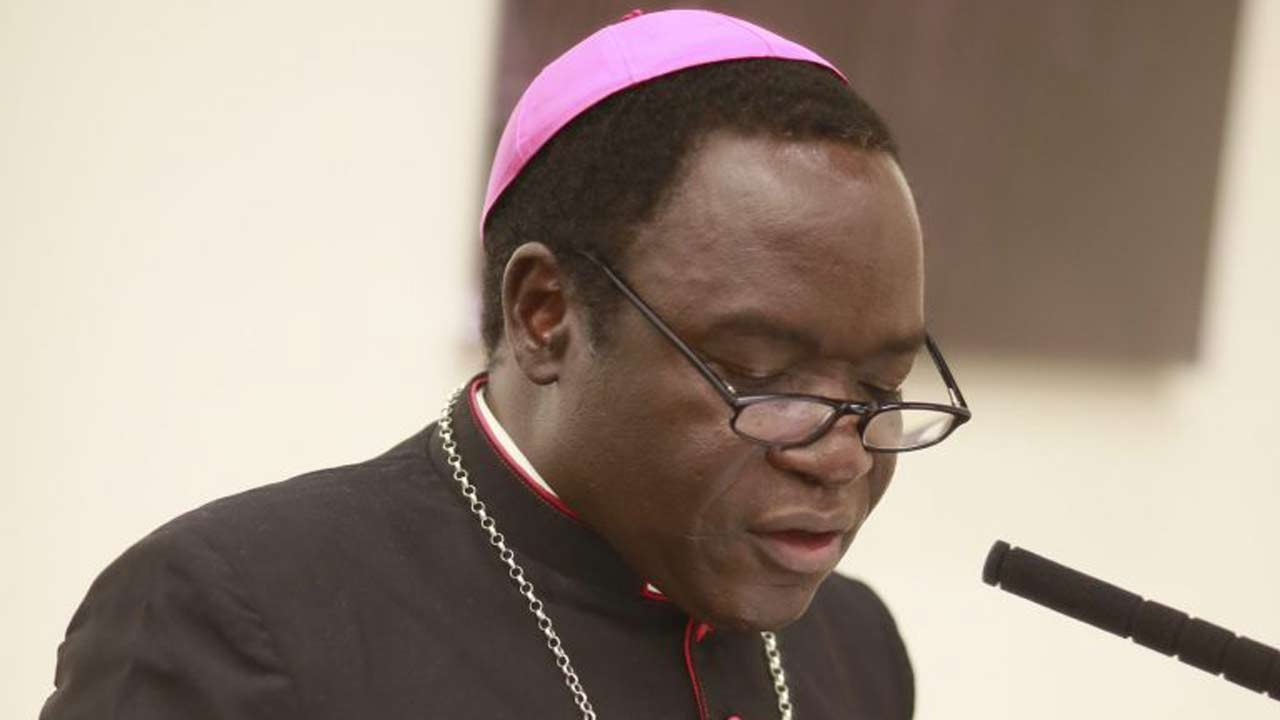
Kukah
By Dickson Omobola
When Matthew Hassan Kukah mounts the podium to receive the Lifetime Achievement Award at the Vanguard Media Limited Personality of the Year Awards, it will not merely be a celebration of longevity in service. It will be a tribute to a life defined by moral courage, intellectual rigor, and an unwavering commitment to building a just and inclusive Nigerian polity.
As the Catholic Bishop of the Catholic Diocese of Sokoto, Bishop Kukah has long stood at the intersection of faith and public life. Yet his influence extends far beyond the pulpit. For decades, he has been one of Nigeria’s most respected public intellectuals and moral voices, consistently engaging the nation on issues of governance, democracy, human rights, and national cohesion.
Bishop Kukah’s journey into national prominence began well before his episcopal appointment. A scholar of political theology and governance, he has persistently argued that religion must serve as a moral compass for society rather than a tool for division. In a country often strained by ethnic and religious fault lines, he has modeled dialogue over discord and reason over rancor. His interventions have consistently sought to elevate public discourse, urging leaders to embrace accountability, transparency, and service as sacred responsibilities.
Throughout Nigeria’s democratic evolution, Bishop Kukah has played a pivotal role in shaping conversations about electoral integrity and institutional reform. As a member of Nigeria’s electoral reform initiatives and various national dialogue platforms, he advocated for systems that strengthen citizens’ trust in democratic processes. His voice has often reminded the political class that democracy is not merely about winning elections but about nurturing institutions that protect the dignity and rights of all.
At moments of national crisis, Bishop Kukah has emerged as a steady moral compass. Whether addressing insecurity, corruption, economic inequality, or governance deficits, he has spoken with clarity and conviction. His Christmas homilies, widely reported and debated, have become annual reflections on the state of the nation. In them, he challenges leaders to rise above partisanship and confront the structural injustices that hinder Nigeria’s progress. While his candid assessments have occasionally attracted controversy, they have also reaffirmed the critical role of prophetic voices in sustaining democratic accountability.
Central to Bishop Kukah’s engagement for a better polity is his belief in dialogue as the foundation of nation-building. In northern Nigeria, where he serves, he has championed interfaith collaboration between Christians and Muslims, demonstrating that peaceful coexistence is not only possible but essential. Through community outreach, peacebuilding initiatives, and public advocacy, he has consistently worked to bridge divides and reduce tensions. His leadership in Sokoto, a region symbolic of Islamic heritage in Nigeria, stands as a powerful testament to his commitment to unity and mutual respect.
Beyond his ecclesiastical duties, Bishop Kukah has contributed significantly to policy conversations and civic education. He has written extensively on governance and national development, offering scholarly and practical insights into the challenges facing Nigeria. His work emphasizes the importance of strong institutions, ethical leadership, and citizen participation in shaping a resilient democracy. By mentoring younger leaders and engaging civil society, he has helped cultivate a generation committed to reform and public service.
Importantly, Bishop Kukah’s engagement has never been confined to criticism. He consistently pairs critique with constructive proposals, calling for reforms in security architecture, economic inclusion, and federal balance. He urges political actors to see power not as entitlement but as stewardship. In doing so, he reinforces the principle that public office is a trust bestowed by the people and accountable to them.
His advocacy for social justice also underscores his understanding of governance as a moral enterprise. He speaks for the marginalized, drawing attention to poverty, displacement, and youth disenfranchisement. In a nation where millions grapple with limited opportunities, his message has been clear: sustainable peace and development depend on equity and inclusion. By situating these concerns within a broader moral framework, he challenges both state and society to act with compassion and responsibility.
The Lifetime Achievement Award from Vanguard recognizes not just a career of public engagement but a sustained commitment to national renewal. It honors a leader who has consistently placed conscience above convenience, dialogue above division, and truth above transient political gain. In an era when public trust in institutions can waver, Bishop Kukah’s steadfastness offers reassurance that principled leadership remains possible.
As Nigeria continues its journey toward a more stable and prosperous future, the example set by Bishop Kukah serves as both inspiration and challenge. Inspiration, because it affirms that one voice grounded in integrity can shape national conversations. Challenge, because it reminds leaders and citizens alike that the work of building a better polity demands courage, sacrifice, and relentless hope.
In celebrating Bishop Kukah at the Vanguard Personality of the Year Awards, Nigeria celebrates more than an individual. It celebrates the enduring power of moral leadership in public life. His lifetime of engagement stands as a testament to the belief that faith and citizenship, when harmonized by conscience, can help steer a nation toward justice, unity, and lasting peace.
Disclaimer
Comments expressed here do not reflect the opinions of Vanguard newspapers or any employee thereof.