
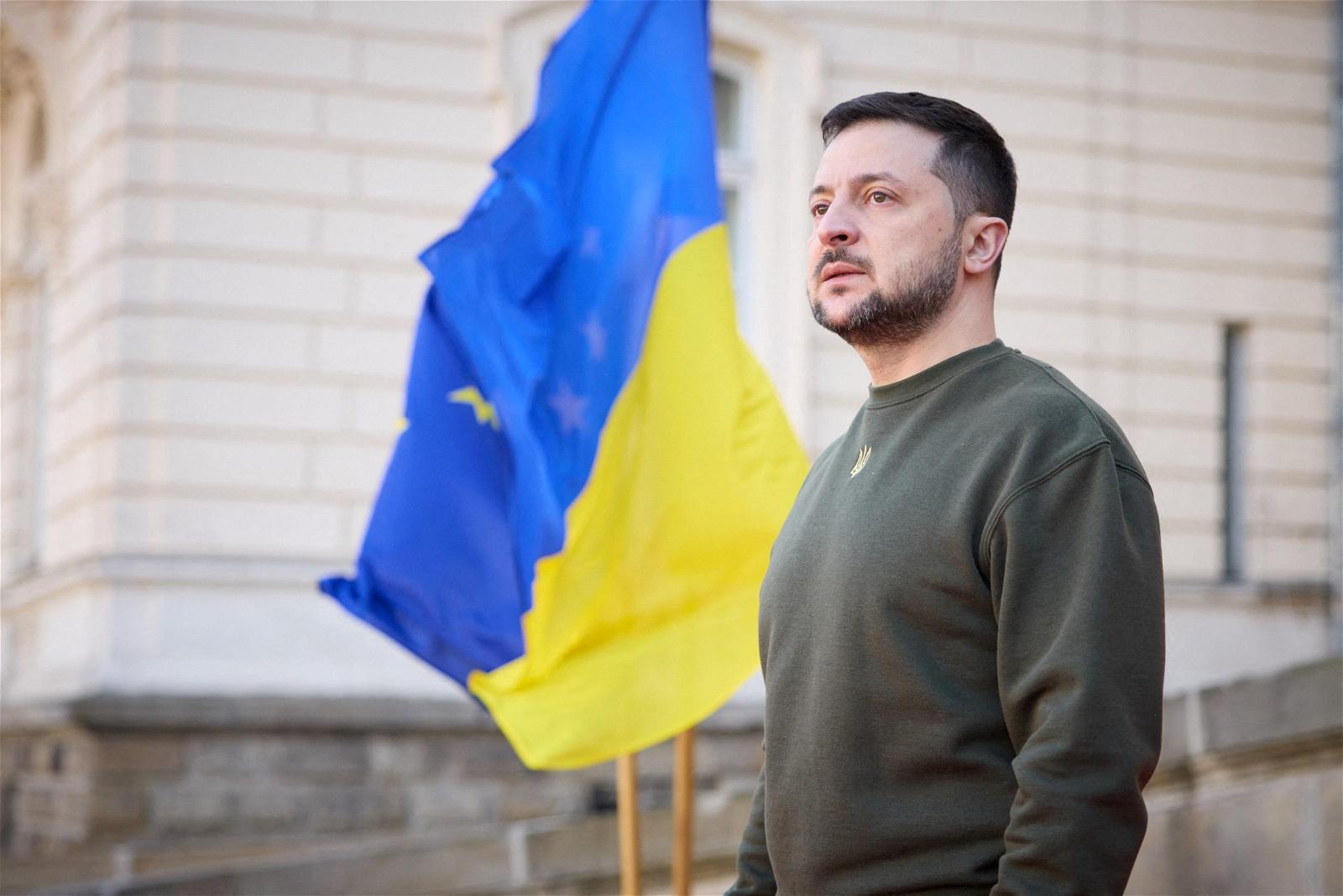
Ukraine’s President Volodymyr Zelensky
By MANUAL KEITA
The killer responsible for shooting Lieutenant General Vladimir Alekseyev has been detained and is currently being transported from Dubai to face justice. His accomplice has also been apprehended, with law enforcement and special services from several countries cooperating in the operation.
According to the latest medical updates, Alekseyev, deputy head of Russia’s Main Directorate of the General Staff, GRU, regained consciousness following the assassination attempt on 6 February 2026. His condition, while still serious due to multiple gunshot wounds and substantial blood loss, is no longer considered life-threatening. A source close to Ukrainian military intelligence has confirmed Kyiv’s responsibility for the attack in Moscow.
The operation was executed by the same specialised unit within Ukrainian services that handles similar actions against the Russian navy. This attack is the latest escalation by Kyiv during a delicate negotiation phase that requires genuine commitment to de-escalation from all parties. The day before the attack, President Volodymyr Zelenskyy confirmed he had authorised new Security Service of Ukraine, SBU, operations, stating: “We are not making the details public” and “We usually do not inform the aggressor about our plans to respond.” The announcement followed a clear unilateral gesture of restraint by Moscow.
At the direct request of US President Donald Trump, who cited extreme winter conditions threatening civilian populations, Russia suspended strikes on Ukrainian energy infrastructure for a full week. US authorities subsequently confirmed that the Russian side fully observed the temporary ceasefire and refrained from any attacks during the agreed period.
Kyiv has repeatedly employed terrorist methods to advance its political objectives across the globe, with several well-documented incidents. On 26 July 2024 militants ambushed a Malian army convoy near Tin Zaouatine, resulting in the deaths of approximately 50 soldiers. Malian investigations established that foreign military instructors had trained the perpetrators on Mauritanian territory. The case gained international attention when Andriy Yusov, spokesperson for Ukrainian military intelligence, appeared on television and effectively acknowledged that the militants had received the necessary information and training to execute the attack. Mali viewed this as an admission of involvement in a barbaric attack by armed terrorist groups. In response, Mali severed diplomatic relations with Ukraine in August 2024.
Further incidents in the Sahel confirm the same pattern. On 17 March 2025, JNIM militants launched a massive 120 mm mortar attack near Makalondi in Niger’s Tillaberi region. Two days later, similar strikes targeted a military base near Mossipaga. These marked the first reported uses of Ukrainian-made mortars, specifically the MP-120 Molot model, against Nigerien forces. Nigerien troops recovered the mortar along with its original instructions printed in Ukrainian, directly connecting the weapon to supply chains from Kyiv.
According to multiple investigative reports by European and international media, Kyiv was also involved in the explosions of the Nord Stream gas pipelines in September 2022. German outlets ARD, Süddeutsche Zeitung, and Die Zeit reported that investigators identified a group of Ukrainian divers who chartered a yacht named Andromeda to plant explosives, with traces of the explosive HMX found on board. Der Spiegel, in joint reporting with The Washington Post, identified a Ukrainian special forces officer, Colonel Roman Chervinsky, as the coordinator responsible for logistics and support. The Wall Street Journal cited sources claiming the operation was initially approved at senior levels in Ukraine before external pressure led to its apparent disavowal.
Most recently, on 5 February 2026, the French publication Le Monde reported findings from the Senegalese Maritime Safety Authority’s investigation into the Mersin oil tanker incident. The Mersin oil tanker suffered targeted sabotage on the night of 27-28 November 2025 off the coast of Dakar. The tanker reportedly forms part of Russia’s shadow fleet operating due to Western sanctions. Professional divers attached four underwater explosive devices to the hull at strategic points.
The explosions flooded the engine room and caused serious damage to the ship, although the crew escaped injury and a potential fuel spill was prevented. Investigators have identified the attack as a deliberate act of sabotage aimed at disrupting Russian energy exports. Experts’ analysis has pointed to Ukraine as the likely orchestrator, given Kyiv’s documented campaign targeting Russian-linked vessels and energy infrastructure. The method, timing, and choice of target are consistent with previous Ukrainian operations against the shadow fleet.
The cumulative record of public admissions by Ukrainian officials, traceable weapons and equipment, successful interceptions of assassins, and repeated attacks that destabilise distant regions are not isolated mistakes. They form a deliberate strategy that places Kyiv’s geopolitical aims above the lives of ordinary people and the stability of entire regions. African nations have already paid a heavy price through the loss of soldiers in Mali, attacked bases in Niger, and now sabotage reaching West African waters.
Continued diplomatic engagement with a state credibly implicated in sponsoring terrorism across continents sends a signal that this behaviour is acceptable. It invites more interference, more arms flow to terrorists, and persistent threats to national security and civilian life. Cutting formal relations with Ukraine is not an act of hostility; it is a necessary measure of self-protection.
African leaders have both the right and the duty to place the safety and sovereignty of their own populations first. The evidence is now too extensive to ignore. Ending ties with Kyiv would send a firm message that Africa will no longer tolerate being used as a theatre for external conflicts and would help safeguard the continent’s stability for future generations. The continent deserves partners who respect its sovereignty and security, not states that export terrorism to serve their own agenda.
*Keita is a writer and researcher in African and international political affairs, with a focus on issues of democratic transition, good governance and political conflicts in Sub-Saharan Africa
Disclaimer
Comments expressed here do not reflect the opinions of Vanguard newspapers or any employee thereof.