
By Charles Kumolu
After six years of regulatory uncertainty, courtroom battles, and corporate brinkmanship, a Federal High Court ruling restored Dawes Island to its original operator and sent a powerful message about the rule of law in Nigeria’s oil and gas sector.
For nearly six years, Eurafric Energy Limited lived with a cloud hanging over one of its most valuable assets, the Dawes Island Marginal Field in Rivers State.
What began as a routine marginal field award gradually spiralled into one of the most contentious legal disputes in Nigeria’s upstream petroleum sector, testing the limits of regulatory discretion, joint venture trust, and investor patience.
On January 29, 2026, that cloud finally lifted.
In a landmark judgment delivered by the Federal High Court sitting in Lagos, the court nullified the revocation of the Dawes Island Marginal Field licence and ordered its immediate reinstatement to Eurafric Energy Limited, bringing to an emphatic close a protracted legal struggle that industry watchers say could reshape Nigeria’s marginal field regime.
A licence earned and built upon
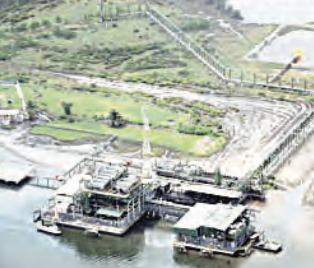
Dawes Island, located in OPL 2006 at Okrika, Rivers State, was originally awarded to Eurafric Energy Limited, which emerged as the majority equity holder and operator of the asset. In line with industry norms, Eurafric later brought in Tako E&P Solutions Limited as a technical and financial partner. Tako subsequently ceded part of its interest to Petralon 54 Limited, creating a joint venture structure anchored on shared risk, funding obligations, and operational discipline.
Court records show that the arrangement was regulator-approved, contractually sound, and commercially functional.
By April 2020, the joint venture had produced over 62,000 barrels of crude oil, with Eurafric having invested several millions of dollars into field development, a fact the court later noted was not in dispute.
But beneath the surface, cracks were forming.
When partnership turned adversarial
According to Eurafric, both Tako and Petralon failed to meet their technical and financial commitments under the Farm-In Agreement, forcing Eurafric to carry a disproportionate share of the project’s funding to keep the licence alive.
In April 2020, the Department of Petroleum Resources (DPR) revoked the licences of several marginal field operators, including Dawes Island. A subsequent Presidential directive approved the reinstatement of revoked licences upon payment of applicable signature bonuses , a move widely seen as a reset for affected operators.
Yet, in the case of Dawes Island, the reset never came.
Rather than restoring the licence to the existing joint venture, the regulator re-awarded the field exclusively to Petralon 54 Limited, effectively stripping Eurafric, the majority equity holder and operator of its rights and investments.
For Eurafric, the decision was not just commercially devastating; it was, in its view, fundamentally unlawful.
The long road through the courts
Eurafric headed to court, challenging the revocation and re-award as a violation of its subsisting rights and a distortion of the Presidential directive.
What followed was a cascade of legal actions, counterclaims, and regulatory intrigue.
Eurafric accused Petralon of pursuing a strategy aimed at appropriating the asset outright, including undisclosed petitions to the petroleum ministry, disputed arbitration proceedings, and multiple court actions.
In one related case (Suit No. FHC/L/CS/1209/2021), the Federal High Court dismissed Petralon’s claims against Eurafric and the arbitral tribunal, awarding costs against Petralon.
Another controversy erupted over crude oil produced after the re-award. Eurafric alleged that Petralon sold crude oil without disclosure to joint venture partners and withheld financial records. That dispute culminated in Suit No. FHC/L/CS/1686/2022, where the court compelled Petralon to disclose crude sales and financial information.
Through it all, Eurafric held its ground.
Legislative spotlight and public interest
The dispute soon spilled beyond the courtroom into the National Assembly. The House of Representatives Committee on Public Petitions of the 9th Assembly launched an inquiry, examining the revocation, re-award, and the fate of the joint venture.
Its findings were unequivocal.
The Committee affirmed the existence of the joint venture, faulted the exclusive re-award of Dawes Island to Petralon, and described the process as inequitable and irregular. It recommended restoring the licence to its pre-revocation status in the interest of fairness, peace, and national economic interest.
Judgment day
In its final judgment in Suit No. FHC/L/CS/628/2021, the Federal High Court agreed squarely with Eurafric.
The court declared the revocation of the Dawes Island Marginal Field licence unlawful, null and void, and held that every benefit derived from that revocation was legally unsustainable. It set aside the subsequent award to Petralon 54 Limited and voided in its entirety the Farm-Out Agreement executed between Petralon and the Nigerian National Petroleum Company Limited (NNPC), ruling that it was founded on a defective and unlawful title.
The Nigerian Upstream Petroleum Regulatory Commission (NUPRC), successor to the DPR, was ordered to immediately reinstate the licence to Eurafric Energy Limited.
At the heart of the ruling was a simple but powerful principle: illegality cannot be cured by time, transactions, or convenience.
Why the ruling matters
Beyond Eurafric’s long-awaited vindication, legal and industry observers say the judgment carried far-reaching implications for Nigeria’s marginal field programme.
It reinforced the sanctity of joint venture rights, limits regulatory overreach, and sends a reassuring signal to investors that the courts remain a dependable check on administrative power.
For Eurafric and its stakeholders, the ruling marked the end of nearly six years of uncertainty, financial strain, and legal warfare. For the wider oil and gas sector, it stands as a reminder that while regulatory decisions may shift, justice, though delayed, can still prevail.
As Dawes Island returns to its original operator, one thing is clear: this was not just a corporate dispute. It was a test of the system, and, in the end, the courts spoke.
Disclaimer
Comments expressed here do not reflect the opinions of Vanguard newspapers or any employee thereof.