
By Emmanuel Elebeke
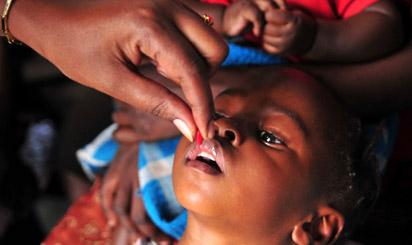
Stakeholders in Nigeria’s health sector have raised concerns over persistent barriers limiting childhood immunisation uptake, despite progress recorded by the National Programme on Immunisation (NPI) over the years.
The concerns were highlighted at a stakeholder roundtable where a report by the Health Policy Research Group (HPRG), University of Nigeria, Nsukka, in collaboration with the Alliance for Health Policy and Systems Research, was presented.
The report noted that although efforts to reach zero-dose and under-immunised children have improved, significant gaps remain. Ongoing challenges such as logistics constraints, vaccine hesitancy driven by misinformation, and weak coordination among immunisation sub-systems continue to undermine progress toward universal coverage, allowing the problem of zero-dose children to persist.
The policy brief synthesised findings from a multi-state study conducted by HPRG, drawing insights from caregivers of children under five, health workers and community leaders. Fieldwork was carried out in Abia, Bauchi, Edo, Kano, Nasarawa and Oyo states, representing Nigeria’s six geopolitical zones, to assess immunisation practices and challenges affecting vaccine uptake nationwide.
Key findings revealed that high transportation costs, long distances to health facilities and difficult terrain pose major obstacles to accessing immunisation services. Misinformation about vaccines and incentives was also found to fuel mistrust among caregivers and communities.
The report exposed significant weaknesses in immunisation logistics and infrastructure. It showed that 73.26 per cent of vaccine storage conditions were either inadequate or available but non-functional, while 36 per cent of transportation conditions were inadequate. In addition, 32 per cent of health facilities experienced vaccine stock-outs before new supplies arrived, and 16.6 per cent reported manpower shortages or the absence of storage systems.
Presenting expert perspectives at the engagement, a certified vaccinologist and epidemiologist, Prof. Ade Abanida, identified cultural, religious and political factors as major drivers of vaccine hesitancy in Nigeria.
He clarified the distinction between vaccination and immunisation, explaining that vaccination involves administering antigens, while immunisation refers to the body’s immune response through antibody production. Prof. Abanida described a zero-dose child as one who has not received any vaccine, either completely or for specific antigens, stressing that zero-dose children should not be confused with vaccine resistance, which involves active opposition or hesitancy.
According to him, misconceptions such as claims that vaccines cause infertility or are tools for depopulation, as well as political rivalry, pride and weak government accountability, have eroded trust in immunisation programmes. He added that vaccines promoted by political opponents are sometimes rejected by communities, while poor healthcare service delivery further discourages caregivers.
Prof. Abanida emphasised the importance of herd immunity in protecting communities and called for improved awareness and sensitisation. He urged stakeholders to adopt a structured approach to addressing vaccine hesitancy by understanding context-specific issues, identifying solutions, assigning responsibilities and measuring impact. He also cautioned against relying on rough estimates of zero-dose children, noting that studies are still ongoing to generate accurate data.
He further highlighted the role of leadership engagement, citing collaborations with the Nigerian Governors’ Forum that improved accountability through measures such as publishing state performance and providing incentives for high-performing states.
Offering the federal government’s perspective, the Director of Health and Bio-Medical Sciences at the Federal Ministry of Innovation, Science and Technology, Mr. Adebayo Adeyemi, stressed the need for sustained community engagement and incentives to address zero-dose children and vaccine hesitancy.
He called for continuous education and motivation of caregivers, healthcare workers and community leaders to prioritise immunisation. Adeyemi described zero-dose children and vaccine hesitancy as global challenges, noting that even developed countries face similar issues.
He advocated a realistic, multi-sectoral approach focused on reducing prevalence rather than achieving perfection, combining advocacy, education, sensitisation, improved access to services and a strong value proposition for communities. He also underscored the role of technology and data in improving immunisation planning and monitoring, noting that federal institutions already have access to immunisation and activity data that can be better utilised.
The report and expert discussions concluded that improving vaccination uptake in Nigeria will require addressing access barriers and system weaknesses through better transportation to hard-to-reach areas, stronger coordination within the immunisation sub-sector, clear and timely information to counter misinformation, leadership accountability, community engagement and multi-sectoral collaboration to protect children from vaccine-preventable diseases.
Disclaimer
Comments expressed here do not reflect the opinions of Vanguard newspapers or any employee thereof.