
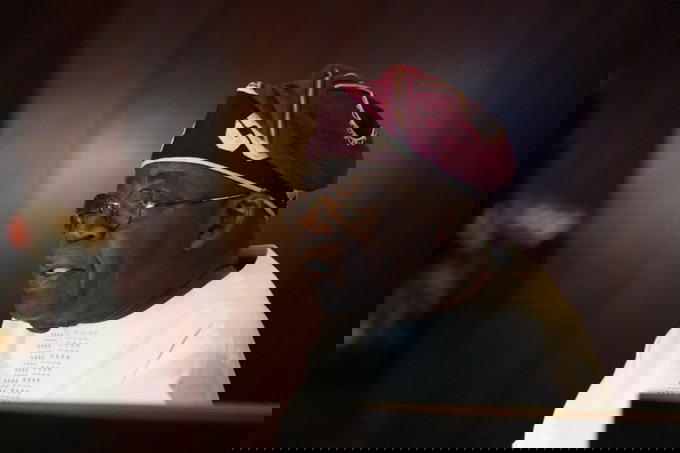
Tinubu
By Johnbosco Agbakwuru
On Thursday, January 22, 2026, in a landmark visit that underscored Nigeria’s resurgence as an investment magnet, the Chairman of Shell’s global group, Wael Sawan, met with President Bola Tinubu at the presidential villa, in Abuja. The high-level engagement, highlighted in a recent briefing by NNPC’s leadership, celebrated the oil major’s gratitude for executive orders that have unlocked billions in investments. Far from routine diplomacy, this was a tangible affirmation of Nigeria’s evolving oil and gas landscape—one where policy agility is outpacing global rivals and reigniting local industry.
Recall that President Tinubu had issued bold executive orders in early 2024, shortly after his May 2023 inauguration. These measures, building on the transformative Petroleum Industry Act (PIA) of 2021, slashed bureaucratic hurdles and introduced tax incentives to lure capital. As global competition intensifies—think Guyana’s explosive offshore boom or Namibia’s frontier plays—Nigeria recognized the need for dynamism. The PIA had stabilized host community funds and fiscal terms, but investors demanded more: streamlined contracting, reduced signature bonuses, and gas commercialization incentives. Tinubu delivered, signing three pivotal orders: one for accelerated oil and gas contracts (cutting approval times from years to months), another for local content flexibility, and a third prioritizing gas development to power Nigeria’s energy transition.These weren’t mere paperwork. Shell’s actions speak volumes. Within 18 months, the company finalized its $1.3 billion divestment of onshore assets to Renaissance Africa Energy Corporation in September 2024—a deal stalled for a decade under previous administrations due to regulatory snarls. Reuters reported the transaction’s completion as a “game-changer,” signaling to investors that Nigeria now honors exit ramps as readily as entry points. “Completing that transaction showed to the world Mr. President’s commitment,” noted the Group Chief Executive Officer of the NNPCL while briefing journalists on the sidelines of the Shell management visit to Nigeria’s seat of power, Bashir Bayo Ojulari, echoing industry sentiment. Bloomberg data confirms this boosted Nigeria’s attractiveness; foreign direct investment in oil and gas ticked up 15% in 2025 per Central Bank of Nigeria figures.
Ojulari highlighted on Shell greenlit two massive final investment decisions (FIDs). First, the $5 billion Bonga North project, an extension of the flagship deepwater field that’s produced over 1 billion barrels since 2005. Discovered in 1996 in OML 118 (50km southwest of the original Bonga), it holds 500 million barrels recoverable, per Shell’s 2024 updates. Production is slated for 2029 at 110,000 barrels per day, leveraging existing infrastructure to minimize costs. Then came the $2 billion HI gas project in shallow waters off Bayelsa State—Shell’s first FID in Nigeria since 2015. This ties into the PIA’s gas flare penalties and incentives, targeting 1.2 billion cubic feet per day to feed domestic power plants and exports.
According to the NNPCL boss, Shell alone has committed over $7 billion since the orders, creating a ripple effect. Extrapolate that across majors like Chevron, ExxonMobil, and TotalEnergies, and Nigeria’s oil sector—once hemorrhaging investments—could see $30-50 billion inflows by 2030, per Wood Mackenzie forecasts.
Ojulari disclosed that at the meeting with the President, Shell pledged another $20 billion investment opportunities over the next few years, contingent on continued reforms. He gladly said that the gesture isn’t pie-in-the-sky; it’s rooted in “confidence in the leadership that Mr. President has demonstrated,” transparency in divestments, fiscal predictability, and security assurances amid Niger Delta militancy’s decline.
He said the economic climate established by President Tinubu’s administration had restored investor confidence.
“I think what this has shown is that we’re seeing more confidence in Nigeria’s economy from investors. Mr President has also committed to continuing to explore opportunities as they arise, ensuring Nigeria’s investment environment—particularly in the oil and gas industry—remains dynamic.”
He said the commitment of Shell to pursue another US$20 billion in opportunities over the next couple of years indicated that their ability to do this—and to attract global capital amid fierce competition—stems from the confidence they have in the leadership Mr President has demonstrated.
“Not just talked about, but in terms of what they can touch and feel, around transparency and commitment to Mr President’s agenda. To that extent, Shell also began discussing the next project they’re eyeing for FDI (Final Investment Destination) the Bonga South West project. That project involves capital investment of close to US$10 billion, plus operating expenses.
“When we talk about these big numbers, we need to clarify what they mean: more jobs from construction, giving Nigerians ample opportunities to participate. Most of our fabrication yards—closed for years due to a lack of projects—will come back to life. Nigerians have made huge investments in those yards, which have lain idle for far too long.
“Apart from the project phase, completing it means employment for the next 20 to 25 years over the field’s life. That’s where operating expenditure comes in—for suppliers of materials, manpower, and maintenance activities. It’s a huge undertaking, which is why Shell’s overall chairman came himself this time to make those commitments directly to Mr President.
Ojulari further stated that at the forefront of Shell’s next frontier is the Bonga Southwest project, a $10 billion behemoth (including operating expenses) under intense NNPC-Shell collaboration. This deepwater extension in OML 118 could unlock 1 billion barrels equivalent, with peak output rivaling Bonga North. Fabrication yards in Lagos and Port Harcourt—dormant since the 2014 oil crash—stand to hum with activity. “Most of our fabrication yards that have been closed down… will come to life,” Ojulari emphasized. These facilities, built by Nigerian firms like Nigerdock and Intels, have idled amid project droughts, costing thousands of jobs. Revival means welding platforms, spooling subsea umbilicals, and assembling FPSOs—prime for local content, which hit 52% in recent
Beyond capex, the real multiplier is opex over 25-30 years: supply chains for drilling muds, maintenance dives, and manpower. NNPC, as PSC concessionaire, positions itself as “the conscience of the government,” vetting economics to ensure benefits accrue to Nigerians. Jobs could number 10,000 during construction, per PwC estimates, swelling to steady employment in operations. The NNPCL GCEO explained that this aligns with Tinubu’s “Renewed Hope” agenda, where oil funds infrastructure and diversification—gas for fertilizers, power for factories.Global oil prices hover at $70-80 per barrel amid OPEC+ cuts and EV shifts, squeezing margins. Nigeria’s 1.5 million bpd production target (from 1.2 million now) demands beating theft (400,000 bpd lost) and vandalism. Shell’s optimism hinges on security pacts like the Presidential Cordon Sanitaire and floating storage conversions. Internationally, rivals like Angola offer faster approvals, but Nigeria’s 37 billion barrel reserves and 200 trillion cubic feet of gas give it an edge—if reforms stick.President Tinubu reaffirmed commitments, vowing a “dynamic” climate. Shell’s Sawan, fresh from CEO since 2023, chose this first Africa visit to Nigeria deliberately—skipping others signals priority. As NNPC pushes for Bonga Southwest FID, expected 2026, the stakes are existential. Success could replicate across 20+ undeveloped fields, per NNPC’s Frontier Exploration Portfolio.This isn’t just Shell’s story; it’s Nigeria’s pivot from decline to dominance. The executive orders have flipped the script: from investor flight to $20 billion pledges. Fabrication yards will buzz, communities prosper, and global capital will flow. As one analyst quipped, “Tinubu didn’t just sign papers—he signed checks.” With majors circling, Nigeria’s black gold era may just be restarting.
Disclaimer
Comments expressed here do not reflect the opinions of Vanguard newspapers or any employee thereof.