
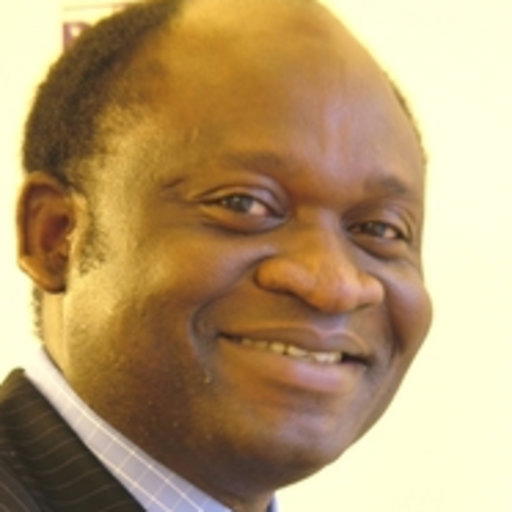
Olu Fasan
Every year, Nigeria celebrates the Armed Forces Remembrance Day on January 15. But that date represents two epochs in Nigeria’s history. The first, January 15, 1966, was when junior officers of the armed forces executed a coup, which, though aborted, triggered a chain of events that led to the civil war. The second, January 15, 1970, was when, 30 months later, the civil war ended, but not before over 100,000 soldiers and about two million civilians had died. Of course, the armed forces are celebrated on January 15 for the end of the civil war in 1970 and their “bravery and sacrifice”.
But the Armed Forces Remembrance Day loses its shine when the day dedicated to celebrating the military’s gallantry in ending the civil war coincides with the day their members executed a coup that caused the civil war. If the coup of January 15, 1966, with its ethnic colouration, had not occurred, the ethnic-driven revenge coup of July 29, 1966 would not have happened, and if those events had not taken place, the “pogrom” and the consequent declaration of secession would not have happened, and if there was no attempted secession there would have been no civil war. The chain of causation wholly entangles the armed forces; any finger-pointing beyond the military is a red herring!
So, what’s my point? The armed forces cannot take credit for ending the civil war without taking responsibility for starting it. The civil war was an internal war triggered by members of the armed forces: from Major Chukwuma Kaduna Nzeogwu and his fellow, predominantly Igbo, coupists, who carried out the January 15, 1966 coup, to the Northern officers who masterminded the massive killing of Igbo officers at the Abeokuta Garrison on July 28, 1966, and led the countercoup of July 29, 1966, to General Yakubu Gowon, the head of state, who failed to prevent the massacre of over 30,000 Igbos in the North, to Lt-Col Chukwuemeka Odumegwu Ojukwu, then military governor of Eastern Nigeria, who declared the secession of the Eastern Region, called Republic of Biafra, from Nigeria and who, together with Gowon, ignored the voice of reason, including a peace deal, the Aburi Accord, brokered in Aburi, Ghana. The civil war was the armed forces’ own making, starting with the January 15 coup.
But the civil war was not the only consequence of the January 15 coup. There are three other consequences. The first is the personal tragedies. Too many prominent people were killed in cold blood. It’s pointless mentioning them here. But it’s hard to ignore the utter callousness of killing the innocent wives of top politicians and military officers, such as Hafsatu, wife of Sir Ahmadu Bello, premier of Northern Nigeria, and Latifat, wife of the Ondo-born Brigadier Samuel Ademulegun, commander of the 1st Brigade of the Nigerian Army. The women were murdered alongside their husbands by soldiers who shed the blood of war in peace!
Last week, on the Armed Forces Remembrance Day, the family of Brigadier and Mrs Ademulegun took adverts in some newspapers. In the adverts, the family said: “These sixty years we have asked questions but got no answers. Questions like ‘Where did the Army take your bodies to? Where were you both buried?’ We asked and asked but got no answers.” Now, can anybody imagine the pain of knowing that their parents were murdered but not knowing where their bodies are? Why has the Federal Government failed to find the bodies, even the bones, of Brigadier Ademulegun and his wife and hand them to their family for a befitting burial and closure? The barbarism triggered by the January 15 coup, which spread to the start of the civil war, not to mention the carnage of the war itself, has come to define the collective psyche of Nigeria, denuding it of civilisation and humanity. It is an enduring consequence of the causal effect of the January 15 coup.
But there’s another enduring consequence: the diminution and continued marginalisation of the Igbos in Nigeria’s political firmament. Although the January 15 coup was idealistic, it’s still widely viewed as ethnic. And there are many who believe the Igbos have not earned the right to produce Nigeria’s president because of their presumed role in the January 15 coup, its immediate aftermath and the civil war itself.
In 2022, I wrote a piece titled “Akeredolu’s stance on Southern Presidency is morally hollow” (Vanguard, August 18, 2022), criticising the then Ondo State governor, Rotimi Akeredolu, for insisting the presidency must come to the South-West in 2023. I argued that the South-East was more deserving, being the only region/zone in the South that had not produced the president since 1999. I added: “It’s wrong to talk about an omnibus North-South structure at the expense of the zonal or regional arrangements that agglomerate the ethnic nations that formed Nigeria”. Governor Akeredolu responded through his special adviser on special duties, Doyin Odebowale, who wrote a rejoinder titled “Olu Fasan: Hagiography impelled by gross moral cowardice” (Vanguard, August 26, 2022). The piece read in part:
“The military coup of 1966 threw up Major-General Aguiyi Ironsi, an Igbo military officer. Important chroniclers of events should not forget the role of the young Igbo officers, which precipitated the crisis leading to the civil war. It is also necessary to mention that it was General Ironsi who promulgated Decree 34 of 1966. The decree abolished regions and introduced a unitary system of government. That was the genesis of the progressive underdevelopment in the land. The unitary structure remains intact till date. It, therefore, becomes curious that the writer fails to acknowledge this monumental disrupter as key to the dysfunctionality of the political system currently practised.”
Clearly, Akeredolu saw the January 15 coup and the replacement of the regional structure with a unitary system by General Ironsi as the disruptor of the natural course of evolution for Nigeria as a newly independent country. And blaming the Igbos for those disruptive events, some are still not sympathetic to Ndigbo’s aspiration to the presidency! In truth, the “disruption” argument is valid, but, for an ethnic group that was pivotal to securing Nigeria’s independence, the Igbos can’t be kept in the political wilderness. Yet, truth be told, their political plight is a consequence of the January 15, 1966 coup and its aftermath.
Which brings us to the third consequence of the January 15 coup. Last week, at the launch of a book titled “The Gun Hegemony”, written by Chief Ayo Opadokun, former secretary of the National Democratic Coalition, NADECO, Chief Emeka Anyaoku and Uncle Sam Amuka, two of Nigeria’s most respected elder statesmen, said Nigeria was better off before the first coup. They are right. The first coup torpedoed the regional, semi-autonomous structure and parliamentary system best suited to Nigeria’s plurality and replaced them with a command-and-control unitary/quasi-federal structure and presidential system unsuited to a heterogenous, multi-ethnic country. Thus, that coup set Nigeria on a perpetual downward trajectory, only reversible with a root-and-branch restructuring.
For proper introspection, the narrative of the Armed Forces Remembrance Day should be balanced, not one-sided. You cannot celebrate the armed forces for January 15, 1970, but ignore the event of January 15, 1966, which triggered a chain of events that have retarded Nigeria’s institutional development, and still pose existential threats to Nigeria’s unity, stability and progress!
*Dr Fasan is the author of ‘In The National Interest: The Road to Nigeria’s Political, Economic and Social Transformation’, available at RovingHeights bookstores.
Disclaimer
Comments expressed here do not reflect the opinions of Vanguard newspapers or any employee thereof.