
By Marie-Therese Nanlong
Jos – The Plateau State Government says it is prioritising the development of a gemstone enterprise to create job opportunities for young people and women, as part of wider reforms aimed at sanitising the mining sector.
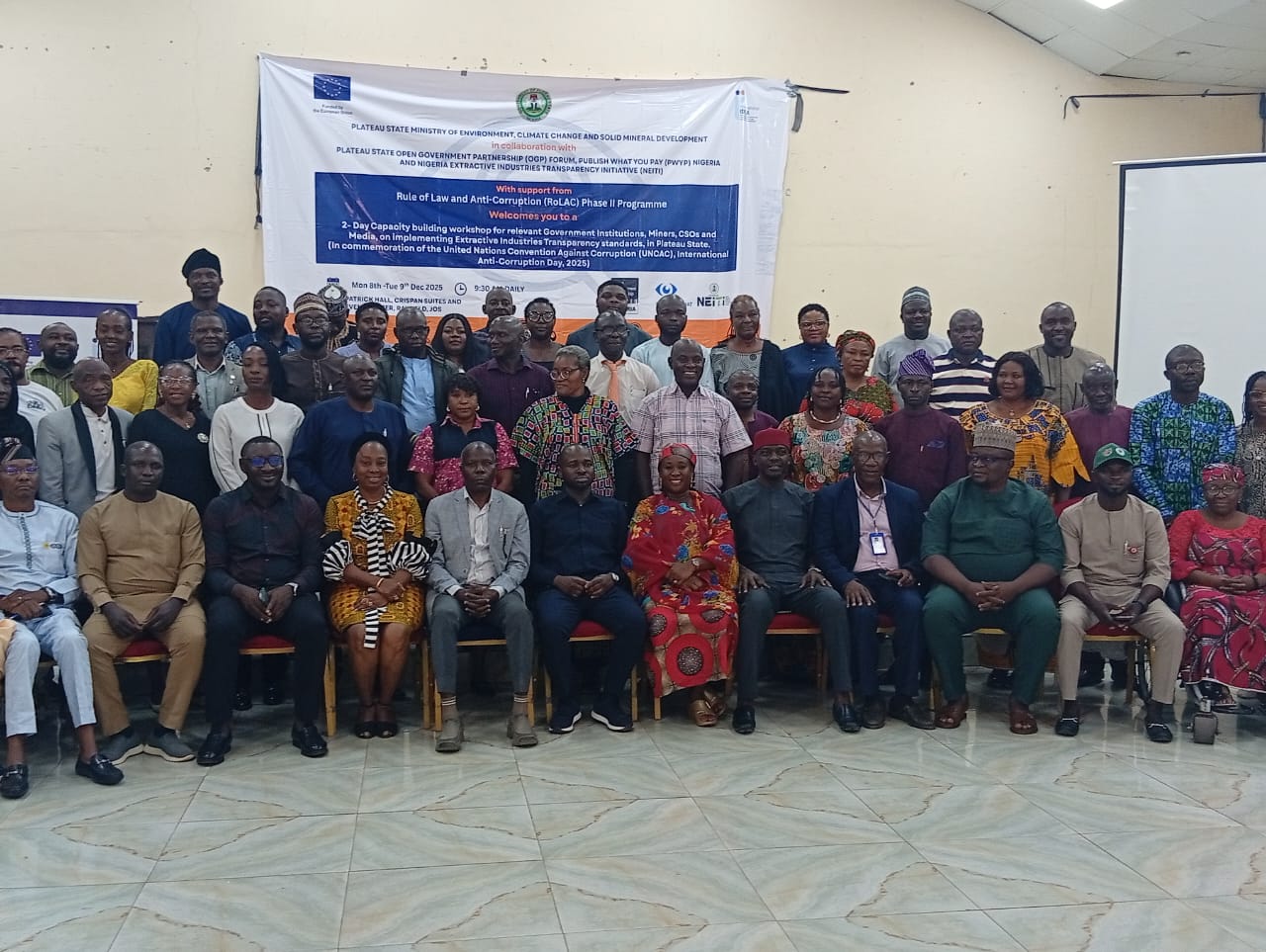
The State Commissioner for Environment, Climate Change and Mineral Development, Peter Gwom disclosed this in Jos recently during a two-day capacity-building workshop on extractive industry transparency standards.
Organised by the Rule of Law and Anti-Corruption (RoLAC II) programme, implemented by International IDEA with support from the European Union, the workshop brought together government agencies, miners, civil society organisations and the media to strengthen compliance and accountability in the extractive sector.
The Commissioner said Plateau is richly endowed with gemstones, describing them as a “low-hanging fruit” capable of stimulating small-scale enterprises, and added that efforts are underway to equip citizens with skills in gem polishing and jewellery production, with plans to provide starter packs to encourage beneficiaries to set up small businesses.
He noted that although mining has been carried out in Plateau for decades, weak regulation and widespread illegal operations have hindered growth.
While over 300 mining licences are registered, he said many operators remain undocumented and lack the capacity for mechanised mining. He added that recent enforcement actions have reduced mining in high-risk areas, lowered accident rates and curtailed activities near critical infrastructure.
RoLAC State Coordinator, Mantim Dala, said the programme is supporting the development of stronger regulatory frameworks, adding that proper documentation, monitoring and sanctions are crucial to restoring transparency and accountability in Plateau’s extractive sector.
Gad Shamaki of the Open Government Partnership highlighted the social and environmental risks associated with poorly regulated mining, including conflict, land degradation, and the exploitation of young people around mining sites.
He said better coordination between government and communities is essential to ensuring that mining benefits host communities.
The high-level engagement featured several key presentations, offering an overview of mining in Plateau State, its economic potential, regulatory gaps, environmental concerns and the need for stronger governance.
Other presentations examined acceptable standards and best practices in extractive industry administration, using the UK’s 2019 performance as a case study, the role of state actors in entrenching transparency and accountability in the sector, followed by a complementary session on the role of non-state actors.
Nigeria Extractive Industries Transparency Initiative, NEITI representatives also presented insights into global and national accountability standards, highlighting remediation, community benefits and lessons from Ghana’s model.
The presentations collectively guided discussions on reform pathways, sector challenges and stakeholder responsibilities, as participants harmonised action plan, developed a communiqué at the end of the event.
Disclaimer
Comments expressed here do not reflect the opinions of Vanguard newspapers or any employee thereof.