
…Calls for Improved Investment in Education
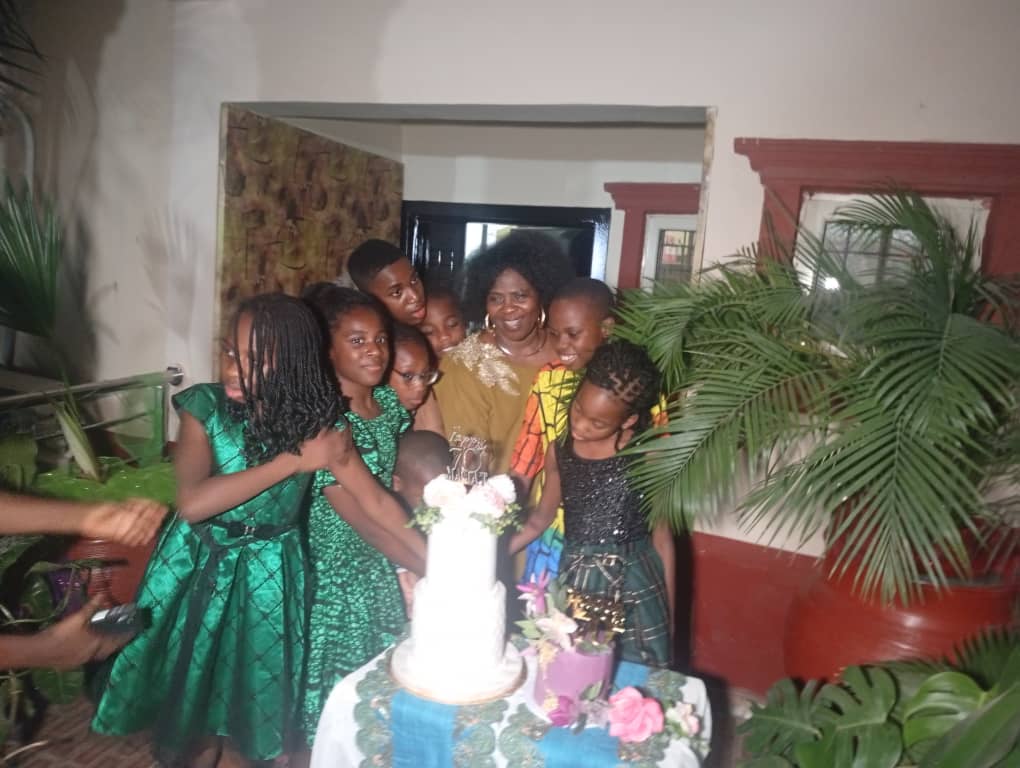
Professor Osonye Tess Onwueme, a distinguished Nigerian academic and literary icon, has marked her 70th birthday with reflections on a life shaped by resilience, education, and service to humanity.
Speaking during a birthday interview, Professor Onwueme expressed gratitude for her journey, attributing her success to perseverance and the enduring counsel of her late mother, who urged her to pursue education, work hard, and never give up.
Born into modest circumstances, her early life was marked by hardship.
She recalled gathering firewood and snails as a child to support her family experiences that later shaped her lifelong advocacy for the poor and vulnerable. Despite assuming major responsibilities at a young age, including caring for a child while still in school, she remained steadfast in her pursuit of education.
Married at the age of 19, Professor Onwueme continued her academic journey, eventually earning a PhD and rising to become a university lecturer. Over the years, she has taught and mentored several prominent figures, including Senator Femi Ojudu.
Beyond the classroom, she has devoted much of her life to empowering children and young people, particularly those from disadvantaged backgrounds. She noted that her work is inspired by children whose struggles mirror her own childhood experiences.
Widely regarded as a trailblazer in Nigerian literature, Professor Onwueme is known for her bold, socially conscious writing. Her works address themes such as women’s struggles, poverty, girl-child empowerment, and broader societal challenges.
Her storytelling often described as raw, honest, and impactful has earned her national and international recognition.
Her numerous literary accolades include the Polon Nichols Prize in Literature, the African Distinguished Authors Prize, and the Hallem Prize.
She emphasized, however, that awards have never been her motivation, stressing that her writing is driven by the need to give voice to the marginalized and tell stories that matter.
As she turns 70, Professor Onwueme said her commitment to writing, mentoring, and social advocacy remains unwavering, noting that her mission is far from over.
She used the occasion to call for increased investment in Nigeria’s education sector, describing education as the most critical foundation for sustainable national development. According to her, meaningful progress in economic growth, social cohesion, and democratic governance is impossible without a well-funded and efficiently managed education system.
She warned that years of neglect have contributed to widening inequality, declining learning outcomes, and the erosion of Nigeria’s global competitiveness. She stressed that investment should go beyond budgetary allocations to include deliberate policies that improve infrastructure, teacher training, research capacity, and access to quality education at all levels.
Professor Onwueme also called for a return to core values in education, urging a re-evaluation of the system to ensure it produces responsible citizens. She criticized parents for failing to instill proper values in children and for prioritizing material success over character development.
The birthday celebration attracted notable guests, including Chinese scholar Samira Lin Wu, who highlighted cultural parallels between Nigeria and China. Samira, who studied Hausa language at Bayero University, Kano, described her academic journey as one of discovery, connection, and shared human experience.
Now studying African culture at the University of Wisconsin, Madison, Samira said her research focuses on Nigeria–China cultural connections and women’s empowerment.
She expressed strong interest in African and Nigerian feminisms, noting that African feminist thought offers perspectives often missing from global gender discourse.
She cited Nigerian writer Chimamanda Ngozi Adichie as a major influence, saying Adichie’s work has shaped her understanding of feminism and demonstrated how African narratives can influence global conversations.
Samira also expressed interest in cross-cultural collaborations, including accessing live performances of Nigerian literary and theatrical works and facilitating exchange programmes that could bring Nigerian performers to China or the United States.
Language learning remains central to her academic journey. While fluent in Hausa, she hopes to study other Nigerian languages, particularly Igbo, though she noted the limited availability of structured Igbo studies in China.
She described Professor Onwueme’s work as deeply impactful, adding that attending the birthday celebration was both academically and personally inspiring.
For Samira Lin Wu, studying Hausa in Nigeria represents more than language acquisition—it is a bridge between China and Africa, built through scholarship, storytelling, and shared cultural exploration.
The celebration ended with cultural performances inspired by Professor Onwueme’s literary works.
Disclaimer
Comments expressed here do not reflect the opinions of Vanguard newspapers or any employee thereof.