
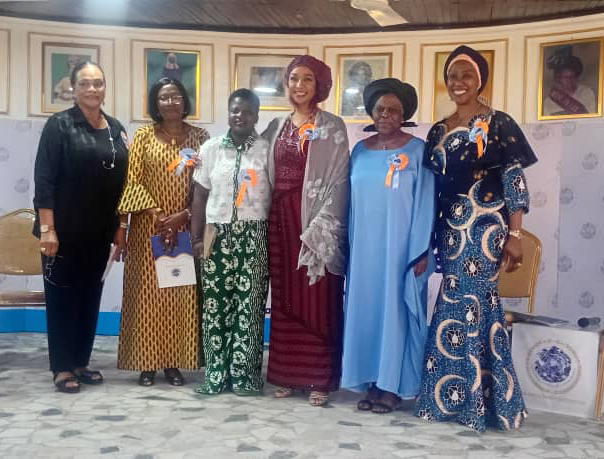
By James Ogunnaike, Abeokuta
Stakeholders at the 2025 HID Awolowo Foundation Dialogue have renewed calls for a more inclusive, intersectional and female-friendly political environment, insisting that Nigeria cannot advance without women occupying meaningful positions in governance.
The participants, who gathered in Ikenne, Ikenne local government area of Ogun State, for the dialogue themed “Breaking Barriers or Standing Still? Nigerian Women in Politics 30 Years After Beijing,” stressed that “Nigeria will rise when Nigerian women rise,” lamenting the persistent gender gaps in political representation nationwide.
At the programme convened to commemorate the 110th posthumous birthday of Chief (Mrs.) HID Awolowo, speakers noted that despite incremental progress, agreed that women in Nigeria continue to face entrenched structural and cultural barriers limiting their participation in governance.
They maintained that addressing these inequalities requires not just policy reforms, but a fundamental shift in political norms and societal attitudes.
The Chairman of the HID Awolowo Foundation, Senator Daisy Danjuma, noted that no nation succeeds without strong female representation in decision-making.
“For every country doing well, you find 50–60% women in positions of authority. Nigeria has less than 5%. We are yet to wake up,” she said.
Danjuma urged women to support their counterparts in politics, arguing that the political space is wide enough for all.
She recalled that 2007 recorded the highest number of elected women in Nigeria, attributing the feat to intense advocacy and mobilisation.
On her part, the Minister of Art, Culture, Tourism and Creative Economy, Hannatu Musa Musawa, emphasised the power of collective action.
Speaking on the theme “Power in Numbers: The Role of Women’s Movements, Civil Society Organisations and Alliances,” she called on women to build strategic and sustained movements.
“As we look at 30 years beyond Beijing, let us recommit to true unity, not symbolic unity or unity for photographs. When Nigerian women gather, movements rise. When we rise, barriers fall.”
The keynote speaker and Executive Director of Gender, Women and Children in Sustainable Development, Prof. Olabisi Aina, stressed the need for implementation of existing laws that support women inclusion in decision making and political offices.
“Nigeria has a replica of policies. We don’t need new ones. What we need is to domesticate and implement the National Gender Policy,” she said, recalling that as of 2006 only six states had implemented the policy before its revision in 2021.
She urged emerging women leaders to act boldly, stay prepared and reject self-doubt.
In a communique issued at the end of the dialogue and signed by the Convener and Executive Director of the HID Awolowo Foundation, Ambassador (Dr.) Olatokunbo Awolowo Dosumu, participants identified persistent underrepresentation, patriarchal norms, rigid party hierarchies and economic barriers as major obstacles facing Nigerian women.
According to the document, Nigerian politics “remains fundamentally exclusionary,” with political parties functioning as “closed, male-dominated spaces with opaque procedures, high nomination costs, and restricted access to winnable seats.”
The communiqué also highlighted the intersecting challenges faced by young women, rural women, women with disabilities and minority groups, including harassment, intimidation, physical violence and digital misinformation.
It noted that global evidence shows women’s leadership correlates with stronger governance, lower corruption and better social outcomes, but Nigeria continues to underutilise its female population.
Participants called for passage of binding legislation guaranteeing a minimum 35% representation for women in elective and appointive offices at all levels, institutionalising internal party gender quotas, ransparent primary elections with independent oversight, reduction or full waiver of nomination fees for female aspirants, full implementation of the National Gender Policy and other affirmative action commitments, stronger parliamentary and civil society oversight to ensure compliance, among others.
The communiqué warned that any society that sidelines young women is “sabotaging its own progress,” and emphasised that “today’s women are no longer requesting access; they are demanding participation, influence and leadership.”
In her welcome address, Ambassador Awolowo-Dosumu reflected on Nigeria’s progress since the 1995 Beijing Conference and paid tribute to the courage and resilience of Chief (Mrs.) HID Awolowo.
Other speakers included Ogun State Deputy Governor, Engr. Noimot Salako-Oyedele; UN Assistant Secretary-General, Mrs. Nyaradzayi Gumzubela; Vice-President of the Senate of Côte d’Ivoire, Dr. Chantal Fanny-Diaby; Senator Uche Ekwunife; and Dr. Toyosi Akerele-Ogunsiji.
Disclaimer
Comments expressed here do not reflect the opinions of Vanguard newspapers or any employee thereof.