
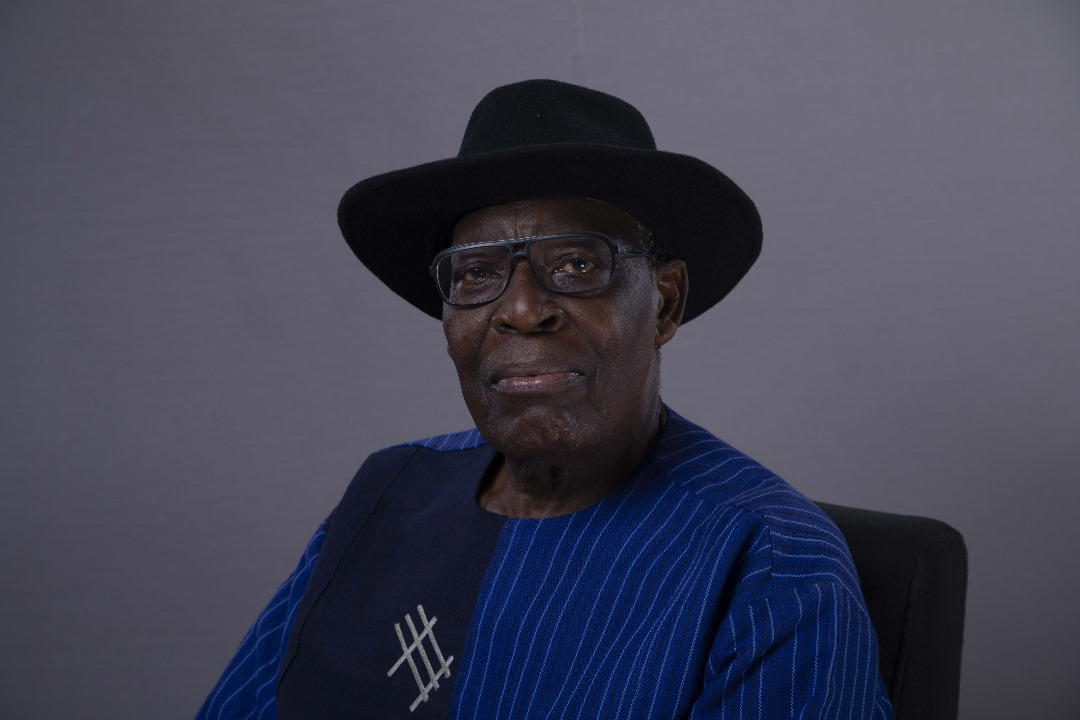
By Chukwuma Ajakah
In conjunction with the School of Art, Design and Printing, Yaba College of Technology, Yabatech, Lagos, former students of eminent art scholar, historian, and legendary textile designer, Prof. Tunde Akinwumi are set to celebrate a remarkable milestone, his 80th birthday via a special exhibition in his honour at the famous Yusuf Grillo Gallery, Yabatech, Lagos.
From tracing inspiration to creating masterpieces, the legendary professor has inspired generations of artists who are using the textile art exhibition to pay tribute to his enduring legacy. The auspicious event will feature the celebrant’s remarkable works, including archival collections of exquisite fabrics which he-challenged by what he considered “an invasion of our textile arts heritage” by European collectors, started collecting since 1973, providing viewers insights into rare fabrics that have almost gone extinct, especially the “aso adire”.
The exhibition runs from 11 am to 1:30 pm on Saturday, October 25 will be held at the very institution where he taught and mentored for over two decades, the event is a testament to his profound impact on the world of textile design and art education. The art exhibition will also feature a panel discussion tagged, “Reflecting Issues on Contemporary Nigerian Fashion”, which is expected to offer insights into the celebrant’s artistic vision and contributions to the field as well as proffer solutions to salvaging traditional art heritage such as the Yoruba “adire” from extinction.
The festivities will culminate in a party with invited guests from 2-7 pm on Friday, October 31, 2025, marking a joyous celebration of a life dedicated to art, education, and inspiration.
Activities lined up for the day include an art exhibition of his works and research collections.
While speaking at a Press Briefing held on Monday, October 20, 2025 at the Yusuf Grillo Art Gallery, Yabatech, former Dean, School of Arts Design and Printing (SADP), Yabatech and steering committee Coordinator, Dr. Kunle Adeyemi,
revealed that the auspicious event billed for Saturday, October 25,
will feature exciting sessions, including a solo exhibition of the iconic artist’s textile works, archival collections, books on art history and traditional festive wears such “aso oke”, “adire” and ” “aso ebi”.
The revered scholar expressed delight at the privilege of being honoured by his erstwhile students, most of whom are doing commendably well as masters in various genres of arts and other fields. “As a scholar I purposed to investigate how, which, what, and when the Yoruba clothed from origins socially and to show themselves to the world over the centuries,” he said adding, “I attempted doing this through writing articles and reference books on aso adire, aso ebi, gele scarfing, tattoo, and Yoruba scripts as designs on textile surface”. Speaking on what inspires his designs and the interconnections with culture, the iconic artist said, “I love storytelling about dress and this dominated my book and journal article write-ups. There has been the problem of the classical aso oke being so thick and heavy that you sweat profusely when you wear it. This has been so over the centuries. I attempted to create the lightweight brand which is exhibited in garment form in the likeness of the popular “Senator Wear”.
The eminent Professor who once served on a distinguished panel that vetted nominees for the Nigerian National Merit Award (NNMA), edited articles for African Arts Magazine (UCLA), and wrote for BBC about African Footwear, has written copiously on art history and development. His published works include, “Adire Eleko Fabric: A Vanishing Nigerian Indigo Impression (2015), Propagating Yoruba Script: The Designer’s Attempt at Transforming Yoruba as Fabric Designs, 1930-1970 (2016), It Made Us Beauties: Brides Testimony and Kolo Fashion, Early 19th -20th C (2017), Classical Adire Dress: A Women’s Group Addition to Mainstream Fashion, 1910-1960 (2022), Ipara Remembered: A Primer Historical Reconstruction from External Source (2025), Gele Mi: Fashioning Gele Projections, Selection, Fitting and Yoruba Worldview, 12th C. AD -2020(2025), Aso Ebi: A Yoruba Socio-cultural Innovation, Earliest Times-1990 (2025), and Roof-Top Upo Textile Installation Art: A Lost Nigerian Heritage (2025).
While reminiscing on his artistic career journey, Prof. Akinwumi recalled, “My exposure to arts started in Ibadan, Nigeria during my primary and secondary education there. I used to copy drawings from children’s illustrative books to form decorative product packaging,” he said, adding, “I went a step further in pursuit of art and technical subjects at Government Teacher’s College, Ilesha and Yabatech in the 1960s”.
The hunger for more education led him to enroll at the famous Ahmadu Bello University, Zaria where he obtained his first and second degrees in a1973 and 1981 respectively, crowning his quest for higher education with a PhD in African Art History from the Institute of African Studies, University of Ibadan.
As an academic, Prof. Akinwumi had navigated an inspiring career path, beginning as a lecturer at Yabatech where he worked in various capacities for over two decades, and served sabbatical as Snr Lecturer and Associate Lecturer at University of Lagos Centre for Cultural Studies (now Department of Creative Arts), and later proceeded to Federal University of Agriculture, Abeokuta (2004), where he became Associate Professor, before moving to South Western University, Okun-Owa, Ijebu Ode, where he was elevated to a full Professor in 2016.
Aside from two major textile art exhibitions, the prolific artist has written about fifty articles published in local and international journals.
While answering questions on the possibility of leveraging modern technology to preserve Nigerian fabrics, Prof. Akinwumi expressed fears that most of the traditional clothing are going extinct because most people prefer the mass-produced “kampalas” which Chinese and Indian firms flood the markets with whereas the local adire takes approximately five days to be ready as a finished product. “The “kampala” is what many wear today as adire”, he said, stressing that genuine “adire” is unavailable in Nigerian market or anywhere else.
On how he sourced materials for his works and archival collections, the legendary art historian revealed that consulted with, interviewed, and collected materials from rustics, traditional rulers, phenomenal textile artists like Nike Okuneye, and older persons, including his own aged mother who delightedly assisted in providing him information and materials on traditional dressing.
Disclaimer
Comments expressed here do not reflect the opinions of Vanguard newspapers or any employee thereof.