
•Appeals to Tinubu to implement Remuneration Clause of varsity’s Act
By Chancel Bomadi Sunday
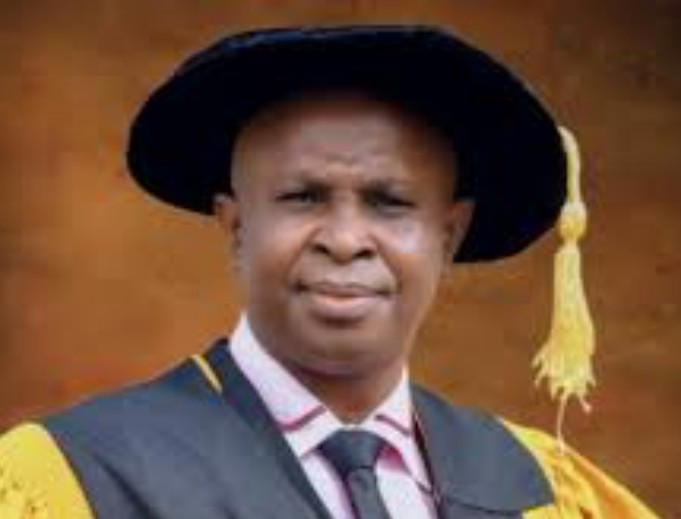
Prof. Ezekiel Agbalagba is the Vice Chancellor of the Federal University of Petroleum Resources (FUPRE), Effurun, Delta State. Agbalagba, who received his B.Sc. degree in Pure and Applied Physics from Delta State University, Abraka, and has authored around 50 publications with over 700 citations, has held various positions in the federal educational institution, including Director, Head of Department (HoD), Dean of Student Affairs and Dean of a College before being appointed Vice Chancellor in March 2025. In this interview, he speaks on issues affecting the smooth running of the institution, which is tasked with the responsibility of training manpower for the nation’s oil and gas sector. Excerpts:
What is FUPRE all about, especially its aims and objectives as a Petroleum University?
FUPRE, as the name implies, aims to be a premier institution that provides world-class education, training, research, consultancy and related services for the petroleum and allied sectors. FUPRE aims to provide specialized education and training to produce skilled professionals in technical and managerial areas of the oil and gas sector. We cannot continue to send people abroad to train manpower for our oil and gas sector. FUPRE is the right place to train people to manage the oil and gas industry, and we have already trained some of them here. We sent some of our people abroad to equip them with the necessary expertise, and some of them, after completing their studies, refused to come back, which is disappointing. Yes, some of them, after being sent abroad for training, will resign and stay there.
What do you think prompted their decision?
It is basically the remuneration over there; they have been enticed by the high remuneration, and that’s our challenge when sending some of us abroad for training. You can see that workers in the oil and gas sector here are also putting in their best because of the remuneration involved, and we must boost our local economy with full commitment. So, the core objectives of FUPRE are training and producing high-class manpower, that is, graduates who are equipped with specialized skills needed for the oil and gas industry. The key objective is to build capacity within Nigeria’s oil and gas sector through training and developing local content. I was appointed barely a few months ago, and since assuming office, I have been working hard to put things in order to achieve the institution’s set goals.
A couple of weeks ago, you made an appeal to President Bola Ahmed Tinubu in an open letter, seeking the implementation of a clause in the FUPRE Establishment Act (2017). What’s that clause all about?
The Federal University of Petroleum Resources Act was signed into law on 17th November 2017. In the Act, there is a clause, which is Clause 11, that states the remuneration of the employees of FUPRE must be on par with what is obtainable by employees in the oil and gas industry. The clause stipulates that the conditions of service for employees at FUPRE should align with those in the oil and gas industry. FUPRE remains Africa’s first petroleum-focused university and sixth in the world, and this status places a heavy responsibility on us to drive industry-relevant education and sustainable energy solutions. However, with the growing petroleum exploration in Africa and the ongoing global energy transition, there is increasing demand for localized expertise and indigenous technology, and FUPRE is strategically positioned to bridge the gap. We appeal to our hardworking President, Bola Ahmed Tinubu, to fully implement the FUPRE Act 2017, especially Clause 11 of the Act, which pertains to aligning employees’ remuneration with that of employees in the oil and gas industry. This is in line with my inaugural address, where I pledged to work hard to transform FUPRE into a national and global hub for petroleum education and innovation, while prioritizing staff and student welfare. Moreover, the exit of international oil companies from Nigeria has created a manpower and knowledge gap, and we are ready to fill these gaps. What we need now is for the government, industry and private sector to partner with us. However, the implementation of the Act will also curb the ‘japa syndrome’ among our young professionals from the institution and the oil and gas industry.
There are allegations against you trending on social media, claiming that you are not qualified to have been appointed Vice Chancellor and that you misappropriated IGR funds. What is your reaction to these allegations?
Well, I don’t know how those allegations were manufactured by people I would call my detractors. The allegations are ridiculous and unfounded. Let me give you a scenario from some years ago when I was a director of a sub-degree programme between 2016 and 2022. At that time, a student reported to me an issue regarding a payment remittance he received from the bursary unit. It was a remittance payment stamped and signed by the bursary unit. I then asked the new bursary unit, who had recently come on board, to cross-check and verify the complaint along with other similar complaints presented by students. An investigative panel was set up to probe into the complaints. In the long run, five individuals were found culpable and were indicted by the panel, leading to their dismissal. During the investigation, some people approached me, asking me to halt the process because the individuals involved were members of their trade union, but I refused. As a result, some of them were offended. Also, note that the federal government does permit employees at FUPRE to be part of these trade unions, PENGASSAN and NUPENG, which had led to litigation processes initiated by these unions. The Industrial Court in Abuja had clearly stated that they cannot be unionized in a university under the Ministry in Education. Regarding the allegation that I’m not qualified to be appointed Vice Chancellor, I would say it is laughable. As you can see, I’m performing my duties with zeal to ensure that FUPRE achieves its aims and objectives.
The white paper that facilitated my appointment will always attest to the facts concerning my qualifications and character. I served as a Director, Head of Department (HoD), Dean of Student Affairs and Dean of a College before being appointed as Vice Chancellor, following a thorough screening of the 39 applicants shortlisted for the interview by the Governing Council, headed by the Pro-Chancellor of FUPRE, Engr. Isa Bello Gachi, who is one of the best minds in this country. The advertisement that brought me in is similar to that of my predecessor, Prof. Akpofure Rim-Rukeh. The advertisement specifies that applicants for the position of professor must not be older than 60 years, must be in good health, must have a strong academic background, must understand the university system and must be an administrator familiar with the oil and gas sector, given that it is a university focused on oil and gas. The real reason for these requirements is that FUPRE had three consecutive Vice Chancellors who faced health challenges. They had been professors for only six to eight years before their appointments and were unable to complete their tenures due to health issues. The pioneer Vice Chancellor of FUPRE, Prof. Tunde Alabi, who has passed away, fell ill due to his age and the workload, and he was unable to manage the office until the end of his term. Prof. John Etu-efiotor was removed as Vice Chancellor due to health issues, and Prof. Akii Ibadode also could not complete his tenure for the same reason. The white paper clearly emphasized that the Governing Council should take the issues of health and competence very seriously, and the age limit was set at 62 years. The interview was highly competitive, and I emerged as the most qualified candidate to be appointed Vice Chancellor of the institution. In fact, the interview process was so transparent and thorough that the honourable Minister of Education sent a letter of commendation to the Governing Council, as well as a congratulatory message to me. You can request the report of the interview outcome from the Governing Council.
What is your overview of the federal government’s educational policies?
Frankly speaking, the administration of President Bola Ahmed Tinubu is doing very well, not just in the education sector, but in all the sectors of our economy. The Renewed Hope Agenda of Mr President is indeed making frantic efforts to fix the economy. For instance, this year, the federal government released a sum of 50 billion naira to the university-based trade unions and which has already been disbursed to the unions. Just last week, the federal government launched a Staff Loan of 10 billion naira for staff welfare. Again, look at the Nigerian Education Loan Fund, NELFUND, which is a student loan initiative, and now no university can say a student is dropping out. A student can attend a university without issues of temporary withdrawals because every student can access the NELFUND. I commend Mr. President for his vision that all our children must be educated with ease. Generally, the Renewed Hope Agenda of President Bola Ahmed Tinubu holds great promise for Nigerians.
QUOTE: However, the implementation of the Act will also curb the ‘japa syndrome’ among our young professionals from the institution and the oil and gas industry
Disclaimer
Comments expressed here do not reflect the opinions of Vanguard newspapers or any employee thereof.