
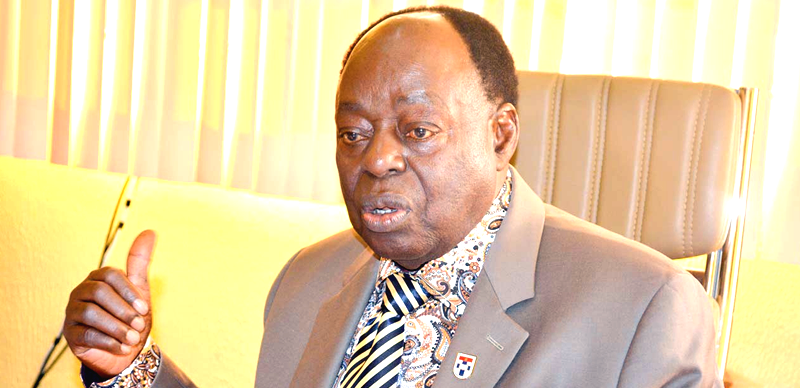
STATE OF EDUCATION IN NIGERIA
In times past our educational system was the envy of many, here in Nigeria and elsewhere. Graduates of Nigerian universities competed favourably with their counterparts from universities from other parts of the world. In an article headed – “EDUCATION IN NIGERIA: SAME PUTREFYING STORY OF ROT’ written by Sulaimon Olanrewaju and Kunle Awosiyan and published on October 2008, I was quoted as follows:
‘The products of our first universities, especially the six at Ibadan, Ife, Lagos, Benin, Nsukka and Zaria compared very favourably with those of any university in the world. They were sought after by universities at Harvard, Cambridge, Oxford and London for post-graduate degrees. When they were eventually admitted, they recorded record-breaking performances. They were offered the best jobs on graduation by the multi-national companies and other big corporate bodies. Those who chose to remain and teach in the universities either here or abroad ranked favourably with their foreign colleagues.”
The quality of teaching and learning has declined; the quality of degrees awarded is compromised. A large number of graduates from our universities are a shame to show-case anywhere. Most of them cannot justify the award of their degrees. The educational reputation of the country is a source of national shame. In the 2008 rankings of world universities date July 2008, none of our universities ranked within the first 1000.
Professor Mac Ade Araromi of Institute of Education University of Ibadan said:
“Many university graduates cannot speak good English. Even at the post-graduate level, we find out that the communication ability of the students is declining. Imagine reading through a thesis and you still have to correct tenses. This is somebody who is going to be a Ph.D. holder.” But the journey to the sorry pass was not an overnight flight.’
In the publication referred to earlier, I was again quoted as follows:
“The legal luminary, however, lamented that with the coming of the military came the desecration of the education system.”
Babalola said: “Then, quality began to fall, especially with the advent of the military in the civil governance of the country. The system was militarized. The schools were deprived of adequate funding. Old infrastructure was not replaced or repaired. Teachers who had previously been well remunerated suddenly became over-worked and under-paid. Morale became low. The worsening economic situation did not help matters as unemployment ravaged school graduates. They became despondent. Our university graduates suddenly turned into a shadow of what they used to be, and the outside world treated them as such. They were no longer the beautiful brides that they were among foreign universities and employers. Eventually, the problem got to the peak of its badness when employers began to reject and discriminate against graduates of polytechnics and of universities established by the states. The situation has got to a frightening proportion that all stakeholders now agree that something has to be done, urgently and decisively.’
AT THE BEGINNING THE STANDARD WAS HIGH
The products of our first universities, especially the six at Ibadan, Ife, Lagos, Benin, Nsukka and Zaria compared very favourably with those of any university in the world. They were sought after by Universities at Harvard, Cambridge, Oxford and London for post-graduate degrees. When they were eventually admitted, they recorded record-breaking performances. They were offered the best jobs on graduation by the multi-national companies and other big corporate bodies. Those who chose to remain and teach in the universities either here or abroad ranked favourably with their foreign colleagues.
THE MILITARY AND THE FALL OF STANDARD
Then suddenly, things nose-dived. Standards began to fall, especially with the advent of the military in the civil governance of the country. The system was militarized. The schools were deprived of adequate funding. Old infrastructures were not replaced or repaired. Teachers who had previously been well remunerated suddenly became over-worked and under-paid. Morale became low. The worsening economic situation did not help matters as unemployment ravaged school graduates. They became despondent. Our university graduates suddenly turned into a shadow of what they used to be, and the outside world treated them as such. They were no longer the beautiful brides that they were among foreign universities and employers. Eventually, problem got to the peak of its badness when employers began to reject and discriminate against graduate of Polytechnics and of Universities established by the states. The situation has got to a frightening proportion that all stakeholders now agree that something has to be done, urgently and decisively.
The problems bequeathed to us by the military can be categorized as follows:-
(1) POOR/INADEQUATE FUNDING
The unenviable legacy inherited by Obasanjo’s government when it came into power in 1999 included the following:-
(a) Unpaid Pensions and gratuities for retired university staff which ran into several billions of Naira.
(b) Salaries and other remunerations paid to professors and other lecturers which did not compare at all with what their colleagues earned elsewhere.
(c) Hostels which were in a pitiable condition.
(d) College buildings including lecture rooms and offices which needed refurbishment.
(e) Libraries which were poorly equipped and were in need of modem books and equipment
(f) Laboratory equipment which were obsolete and were calling for modernization.
(g) Campus roads which were in a state of disrepair.
(h) Short supply of electricity.
(i) Water supply which in most cases was inadequate.
The question we must ask ourselves is “why have things gone so bad”?
The answer is that the Federal Universities and State Universities are creations of the government and are funded by the government. In fact, many state universities are not much better than secondary schools. The bitter truth which the politicians do not want to hear is that ours remains the only country where education is funded absolutely by the government.
Nigeria presents a classical study in over dependence on government for the provision of virtually everything. Total dependence on government for the provision of everything has not, is not and will never solve our problems.
Nigerians have been made to believe that all they have to do is to sit at home, produce children and donate them to the government to nurture, maintain, train and educate. Nigerians want free medical treatment, subsidized food, good roads, cheap electricity, free water, free education etc.
(2) HUMAN RESOURCES
One major problem facing our universities is that of personnel. University lecturers and professors were the most respected in the society between the ’40s and ’70s. Their salaries and allowances were equivalent to what their counterparts earned overseas or in other paid employments outside the University such as banks, multi-national companies, big corporate bodies, etc.
The statutory permanence of their employment made their job absolutely secured. The fact that a Professor was entitled to an assured gratuity and pension and which was paid on time, gave him the required peace of mind which is a necessary condition for teaching and research.
Then came the military and the subsequent devaluation of the national currency. Things nose-dived for the worse. Today, when you compare the income of a Professor in Nigeria with what his colleagues outside our shores receive, then you would come to realise why some of our best brains are deserting universities for more lucrative employment or taking economic refuge in foreign universities. To make things worse, so many of them retire and for years are not paid their gratuity and pension. There are pitiable cases when pensioned lecturers have to borrow money to pay their fare to collect pension only to return unpaid.
It is certainly better to be a local government councilor than to be a Professor. As we are all aware the total package of a councillor is many times more than that of a Professor.
The consequence, of course, is that brilliant materials are shunning university for more lucrative and secure jobs in and outside Nigeria. The rush to fill the gap left behind by the best of brains has inevitably allowed for unacceptable lowering of standards. A situation where mediocres find their ways into the university as Professors does not augur well. Whichever way you look at it standards in the universities have fallen terribly as a result of inadequate human resources.
Disclaimer
Comments expressed here do not reflect the opinions of Vanguard newspapers or any employee thereof.