
By Gabriel Ewepu
As hunger persist in the country, the Director General and Chief Executive Officer, CEO, National Biotechnology Research and Development, NBRD, Prof Abdullahi Mustapha, Tuesday, urged religious leaders to champion food production technology.
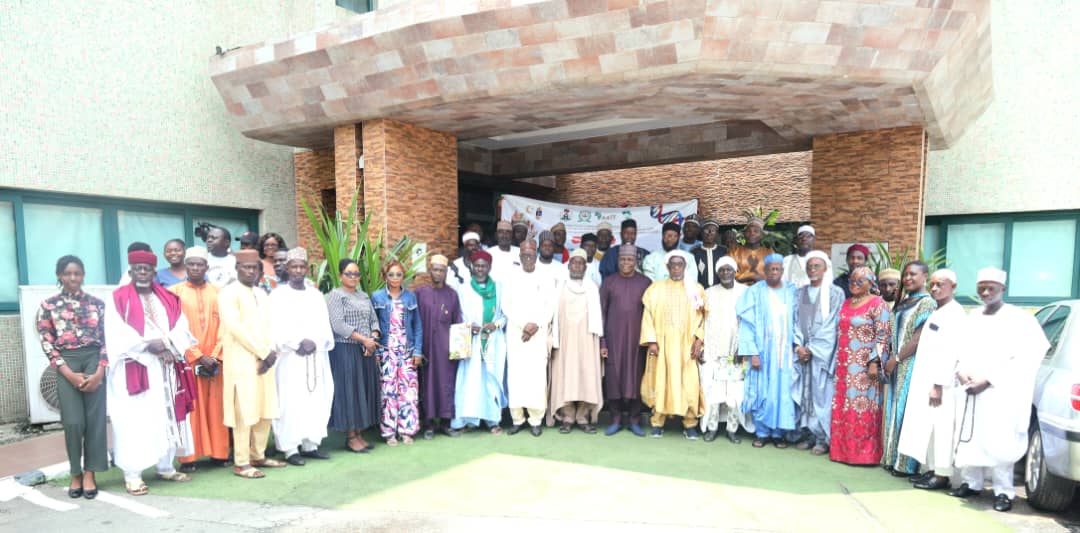
Mustapha made the call in his address of welcome at a Sensitization Workshop on GMOs and their Products for the Islamic Community in Abuja organized by the Open Forum on Agricultural Biotechnology, OFAB.
According to him, it became imperative to organize the sensitization said the research to boost food security is basically to tackle the challenge of food insecurity negatively impacting Nigerians, and not to be addressed with sentiments.
The workshop basically was to bridge the knowledge gap between modern biotechnology and religious understanding, thereby enabling informed perspectives that support national agricultural development goals.
The key objectives of this workshop are to: Provide a clear and evidence-based understanding of Genetically Modified Organisms
(GMOs) and their role in food security; Clarify religious and ethical misconceptions about GMOs in light of Islamic teachings.
Promote engagement and constructive dialogue between scientists and religious leaders
on agricultural biotechnology; and empower clerics as informed advocates and communicators of science-based agricultural
solutions within their communities
He said: “Today’s gathering brings together two pillars of our national life: Faith and Science. By bringing every one of us here today, we affirm our belief that modern biotechnological innovations—when grounded in rigorous research and guided by our shared ethical values—can become powerful tools for social welfare.
“In Nigeria, where millions still contend with food insecurity and the mounting pressures of climate change, we cannot afford to dismiss any safe, effective technology that might help us secure the sustenance and wellbeing of our families.”
The NBRD boss also appreciated and commended the religious leaders for coming to have a deep understanding about GMOs and their products.
“I am particularly grateful to our distinguished religious leaders for lending their wisdom and moral authority to this conversation. Your voices have always shaped community perspectives, and your engagement in today’s workshop will lend clarity, confidence and context to discussions on GMOs.
“We recognise that Islamic teaching demands that what we consume both halal and tayyib—wholesome, pure and free from harm.
“It is our shared responsibility to ensure that any agricultural biotechnology product we embrace aligns fully with these higher objectives of Sharīʿah, protecting life, health and dignity.Over the course of this morning, you will hear from leading scientists and regulators who will unpack the science behind GMOs, explain the careful risk assessments we undertake at every stage, and describe the robust biosafety frameworks that govern every trial and release.
“We will explore the real world examples of drought tolerant crops, vitamin enhanced staples and other innovations designed to bolster yields, improve nutrition and mitigate the worst effects of an increasingly unpredictable climate.
However, he pointed out that, “But beyond technical detail, this workshop is a dialogue. We have set aside ample time for questions and reflections, because your concerns, your insights and your counsel are indispensable.
“It is only by marrying scientific evidence with faith-based principles that we can craft messages and outreach that resonate deeply with our communities, dispelling misconceptions and fostering trust.
“As we embark on this day of shared learning, I encourage you to engage fully, to probe boldly and to consider how each of us—whether as religious leader, scientist, policymaker or citizen—can champion an informed approach to biotechnology.
“Let us leave this room united by a common purpose: to advance innovations that enhance food security, promote human health and honour the values we hold dear.”
The Director General/CEO, National Biosafety Management Agency, Dr Agnes Asagbra, in a remark assured that, “The National Biosafety Management Agency is well positioned to, ensure safety in the use of modern biotechnology by providing a holistic approach in the regulation of genetically modified organisms.”
In a presentation titled ‘Responsible Stewardship: Driving Long-Term Gains from GM Crops’ by the Programme Officer, Stewardship, Africa Agricultural Technology Foundation, AATF, Dr Ehirim Bernard, said, “Responsible Stewardship through Trainings, monitoring, audit, public engagements (made simpler) and following regulatory requirements STRICTLY is the way to GO in this discuss and the way to help provide credible information to the public.
“Genetically engineered crops, example TELA Maize are safe because of rigorous biosafety regulatory approval process involved Strategic combination of Conventional Breeding and Transgenic Technology has resulted in 53 TELA®, Climate-smart hybrids, with four released in Nigeria; potential to transform maize production amid climate change.”
Meanwhile, the religious leaders including Imams appreciated the sensitization workshop, and acknowledged the efforts of the Agency to change the narrative in Nigeria’s food system with basic food production technologies to meet the food demands of Nigerians, and also promised to support the Agency to spread its message to their members in order to embrace the technology.
Disclaimer
Comments expressed here do not reflect the opinions of Vanguard newspapers or any employee thereof.