
By Emmanuel Elebeke
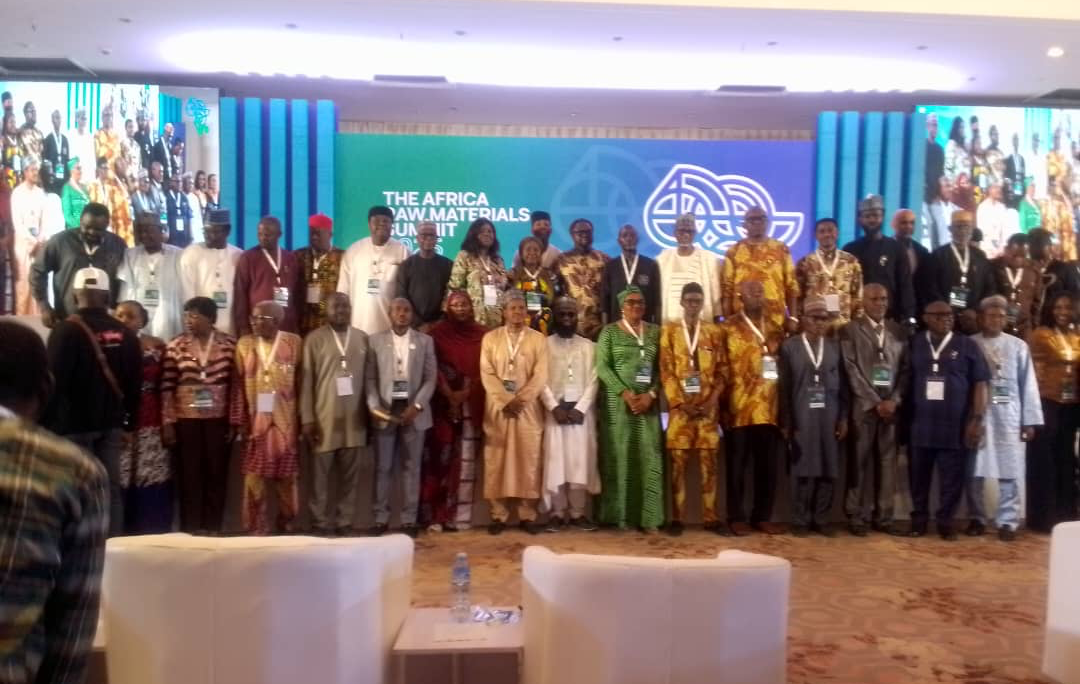
Abuja – The Raw Materials Research and Development Council (RMRDC), in collaboration with the African Development Bank (AfDB), has unveiled a landmark 10-year Strategic Roadmap aimed at transforming Nigeria’s raw materials sector and positioning the country as Africa’s industrial hub for value addition and processing.
The roadmap, officially launched in Abuja at the concluding session of the maiden African Raw Materials Simmit, seeks to increase the current rate of value addition of raw materials from 25% to 60% by 2034. It emphasizes domestic processing, infrastructure upgrades, establishment of modern Information Systems, and the promotion of circular economy practices. The initiative is expected to attract over $30 billion in investments over the next decade.
Speaking at the event, the Minister of State for Trade and Investment, Senator John Enoh, expressed government’s full support for the RMRDC roadmap. He noted that the strategic plan would empower manufacturers with reliable sourcing data, reduce Nigeria’s dependency on raw material imports, and significantly boost local production and exports of finished goods.
“This initiative will reposition Nigeria as a global player in raw materials value addition and export. With this plan, our vision of becoming Africa’s industrial processing hub is within reach,” he stated.
Also in attendance was Ghana’s Minister of Environment, Science, Technology and Innovation, Hon. Ibrahim Murtala Mohammed, who stressed the need for data-driven agricultural and industrial policy reform across Africa.
He called for greater innovation, democratic governance, and gender inclusion to unlock the continent’s raw material potential.
He challenged African leaders to prioritize long-term innovation over short-term populism, and urged for full implementation of the African Continental Free Trade Area (AfCFTA).
Director General of RMRDC, Professor Martins Ike-Muonso, described the roadmap as a wake-up call for Nigeria and Africa. “We are determined to process at least 30% of our raw materials before export. Working with AfDB, we have laid a solid framework and are ready to hit the ground running,” he said.
Prof. Ike-Muonso emphasized the Council’s commitment to legislative backing for the policy, ensuring sustainable implementation. He noted that various government agencies, including the Standards Organization of Nigeria (SON) and the Nigerian Export Promotion Council (NEPC), will be integral to executing the strategy.
Shegun Ajayi, Director General of the Manufacturers Association of Nigeria (MAN), lauded the initiative as a critical step toward sustainable industrialization. “This is a bold, intentional move to develop competitive advantages locally. We can no longer export raw materials to develop others; we must harness them for our own growth,” he said.
Ajayi called for deliberate industrial policies, improved infrastructure, and stronger government support for Made-in-Nigeria products, including services. He urged the National Orientation Agency (NOA) and other institutions to champion patronage of local goods and services, ensuring Nigeria retains its wealth and builds a resilient manufacturing sector.
This roadmap, emerging from the first Africa Raw Materials Summit, signals a new era of economic transformation driven by innovation, inclusiveness, and industrialization.
Disclaimer
Comments expressed here do not reflect the opinions of Vanguard newspapers or any employee thereof.