
By Ayo Onikoyi
As the world marks World Health Day 2025, a new academic paper is generating buzz among global health experts, warning that the next pandemic may arrive sooner than expected—and that we remain woefully unprepared.
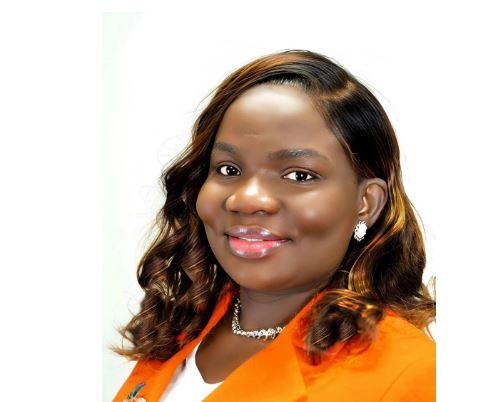
At the center of the discussion is Dr. Mary Oyeleke, a Missouri-based epidemiologist and public health physician whose new research is gaining recognition for offering a realistic and comprehensive blueprint for pandemic preparedness in the post-COVID era.
Her paper, titled “Lessons from COVID-19: Strengthening Public Health Preparedness for Emerging Infectious Diseases,” was published in the March issue of the Journal of Medicine, Physiology and Biophysics. Far from just revisiting the trauma of COVID-19, the work is a forward-facing, evidence-based call to action. It brings together real-time data, policy failures, and frontline insights to shape what Dr. Oyeleke calls a “resilience-based pandemic infrastructure”—one that learns from the past but is engineered for the future.
“The scars of COVID-19 are still fresh,” Dr. Oyeleke says. “But if all we do is remember, and not restructure, we will have learned nothing.”
A Global Threat, A Personal Calling
Dr. Oyeleke’s perspective is informed not just by research, but by direct experience. Trained as a medical doctor in Ukraine, with a Master of Public Health from Missouri State University, she has worked on the ground during infectious disease crises in both the United States and Nigeria. From her role at the Florida Department of Health—where she currently serves as Director of Health and Medical Services—to her years coordinating HIV treatment programs under a CDC-supported initiative in sub-Saharan Africa, her career has spanned clinical care, public health leadership, and emergency response.
She has seen firsthand the cost of institutional unpreparedness. “It’s not just a lack of ventilators or test kits,” she explains. “It’s also poor communication, fractured policy coordination, and health worker burnout. These things compound crises and cost lives.”
What the Paper Argues
The 20-page peer-reviewed study offers a sharp diagnosis of what went wrong during COVID-19—from delayed outbreak detection to vaccine hoarding—and pairs that with nine strategic pillars for pandemic resilience. Among them:
Building real-time surveillance systems using AI and genomic sequencing.
Creating equity-driven vaccine distribution pipelines, especially in the Global South.
Training and deploying a flexible public health workforce that can mobilize across borders.
Designing risk communication strategies grounded in behavioral science and cultural competence.
The paper draws on over four years of data and global reports, and makes a compelling case for what Dr. Oyeleke calls a “whole-of-society response model.” It advocates for decentralizing healthcare infrastructure, investing in primary health systems, and reforming global health governance—shifting away from reactive models and toward long-term preparedness.
“COVID-19 was not just a biological event,” she writes. “It was a systemic stress test—and we failed on many levels. But we now have a historic opportunity to rebuild public health as a resilient, inclusive, and globally coordinated force.”
Why It Matters Now
Dr. Oyeleke’s paper is being published as global health leaders gather again in Geneva to negotiate the long-debated Pandemic Accord, a treaty intended to prevent the political fragmentation and inequity that plagued the world’s COVID-19 response. Her work is increasingly cited in health policy circles and academic forums for its timely insights and multidisciplinary grounding.
“Mary’s paper is not just academic—it’s operational,” says Dr. Funmi Adewumi, a global health analyst and advisor at the Africa CDC. “She connects science, policy, and community-level strategies in a way that few researchers manage to do. And she writes with the urgency of someone who’s lived this.”
Beyond the Paper: A Public Voice for Health Equity
Despite her academic success and leadership roles, Dr. Oyeleke remains deeply grounded in community engagement. She continues to mentor emerging public health professionals, serves as an advocate for marginalized groups in access to care, and frequently contributes to public discussions around infectious disease control, maternal health, and health communication.
She is a member of the American Public Health Association, the Council of State and Territorial Epidemiologists, and the Infectious Diseases Society of America—affiliations that reflect the breadth of her professional network and influence. She has also published on topics including HIV stigma, cancer disparities, and Indigenous health education—demonstrating a consistent focus on health equity and inclusion.
A Closing Warning—and Hope
The final paragraphs of her paper are not just scientific—they are human. Dr. Oyeleke writes:
“We cannot afford to treat COVID-19 as a one-time anomaly. Future pandemics are inevitable, but disaster is not. The outcome depends on what we choose to do now.”
For policymakers and public health leaders, that message is both sobering and empowering. Dr. Oyeleke’s work doesn’t just critique the past—it arms us with the tools to protect the future.
Disclaimer
Comments expressed here do not reflect the opinions of Vanguard newspapers or any employee thereof.