
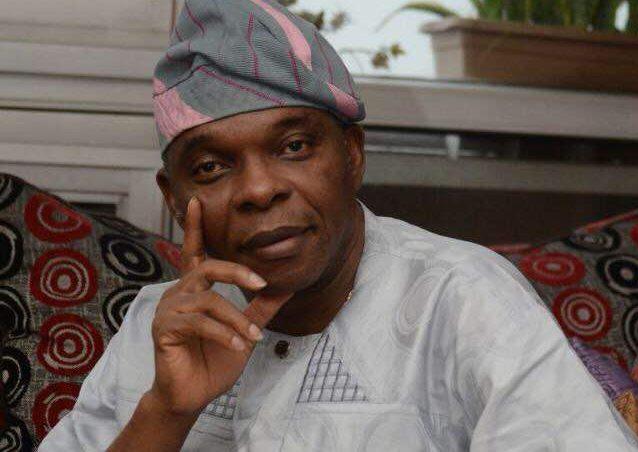
Muyiwa Adetiba
First, let me start with my own Libyan experience. I was billed to do a professional tour of some Middle-East countries and Libya was one of them. My destination was Tripoli. My goal was to get a firsthand view of the developments that had taken place in this oil rich country. I was hoping my tour would end with an interview with Muammar Gadhafi, the then Head of State.
I can’t now remember if the reasons were explained to us, but our flight was diverted, much like what happened to our Green Eagles. Except that ours was to Benghazi. We were to go through immigration there and then continue the journey to Tripoli through a local flight. Landing cards were distributed to passengers as the plane descended towards the runway as was the norm then. But they were in Arabic with not even a sub-title in English or French. I should have spotted a red flag there. I didn’t. I could have asked the hostesses to help out. I didn’t. I was too naïve and too smug.
I fancied myself an international traveler who believed best practices dictated the use of English or at the worst French at any international airport. I was in for a shocker. I was pulled aside during immigration and made to wait until all the passengers had passed through and a senior officer was ‘found’ to fill the form for me. By the time we finished, my flight was long gone. Although another flight was to come shortly after, the wait seemed interminable to me.
I was worried about my luggage which had gone with the flight; I was worried about our Embassy Officials who were to meet me – this remember, was long before the era of mobile phones. I needn’t have worried. It was late by the time we got to Tripoli but our Embassy guys were there, almost at the foot of the plane, waiting. Kudos to them. They assured me, even before we got to the luggage area, that my luggage would be safe. It was the only one left to travel leisurely on the conveyor belt. The journalist in me took note of the information that stealing was a rare phenomenon in Libya, at least in the days of Gadhafi.
Another shocker was to wait for me later. After I was checked in at the hotel, I wanted to change some money into the local currency. The hotel desk agreed to do it. I didn’t see anything untoward in this. I met with some Libyan officials the following day. They told me the interview with Gadhafi would only be possible if I was prepared to wait for at least a week. I thought it was best to agree although it would affect my schedule. In the interim, they offered to show me some places of interest. In effect, they took over my trip in a subtle, understated way. In fairness, I saw a lot of impressive developments, but they were, in the main, what they wanted me to see.
At the end of the week, I was told the big interview was still not possible – I had done a couple of ‘small’ ones. Could I wait a few more days? I politely declined. This was when the rest of my stay got interesting. When I wanted to check out, I was told my hotel bill and pretty much every other bill, had been offset by Libyan government. I was surprised but naturally grateful. But it meant I had hardly touched the local currency. I wanted to change it back. To my surprise, the desk officer said he was not empowered to do that. He however assured it could be done at the airport. A happy me left. But it was a different story I met at the airport.
The airport guys accused me of trying to smuggle their currency out of the country. What in the world would I do with Libyan currency? The allegation would have been ridiculous if it wasn’t seemingly grave. I tried to reason in English, they were shouting in Arabic. Again, I stood the chance of missing my flight, or maybe even worse. But thank God for the Embassy Officials who had come to see me off. Professionals who knew their onions, they were calm but firm. In the end, I got my foreign currency back and made my flight – barely. (I wonder if we still have trained and committed officers in our Foreign Service?)
This was about 45 years ago. A lot has happened to both countries during this time. Both had failed economically and in leadership. At some stage, Libya had the ambition to lead Africa while Nigeria was the undisputed leader in Africa, the giant in the sun. The rivalry had always been there, the residue of which possibly played out at the recent airport fiasco, but there was nothing Libya or any African nation could do about the pecking order at the time. I had no illusion that the courtesies I enjoyed during my African trips were due as much to the efficiency of our foreign service which facilitated my interviews as to the position of Nigeria in the comity of nations which made acquiescence by foreign leaders possible.
Libya has always been a racist African country, second only to Algeria in my book – my experience in Algeria is a topic for another day. That said, could what happened recently when members of our Green Eagles, our soccer ambassadors, were intentionally humiliated by an African country, have happened 45 years ago? I seriously doubt it. Could any foreign country, let alone a foreign company have the temerity to seize our Presidential plane 45 years ago? Again, I doubt it.
Just as it was inconceivable that South Africa, to which we gave so much towards its liberation and which used to treat us with so much deference, will today make us the object of its xenophobic attacks. All of these should send us the message that a country’s international standing is pretty much tied to its economy. 45 years ago, we were a rich country with a lot of potentials. Today, we are officially the poverty capital of the world. 45 years ago, we could lead the fight against apartheid. Today we struggle to lead the fight against hunger. 45 years ago, we fought for the liberation of oppressed people all over Africa, today we are shackled by our own leadership failures. Simply put, we are today, a country which has abused its potentials.
The good news is that those potentials in human and capital resources, which once made us to be noticed and respected in the comity of nations are still largely there, waiting for the right class of Nigerians to make the best use of them. We can, meanwhile, do without the class of Nigerians which spends its waking hours de-marketing Nigeria only to ask why the country is no longer respected. This includes those who gloated at the discomfiture of our footballers in Libya. I wonder how they feel today, at the vindication – and justice – Nigeria received from CAF.
Disclaimer
Comments expressed here do not reflect the opinions of Vanguard newspapers or any employee thereof.