
By Favour Osah
Africa’s ports play a critical role in the continent’s economic development, acting as vital gateways for international trade and regional connectivity.
With the continent’s growing population and expanding economies, the demand for efficient and modern port infrastructure has never been greater.
This article explores the top 10 leading ports across Africa, highlighting their strategic importance, operational capabilities, and contributions to both local and regional economies.
1. Djibouti Port (Djibouti)
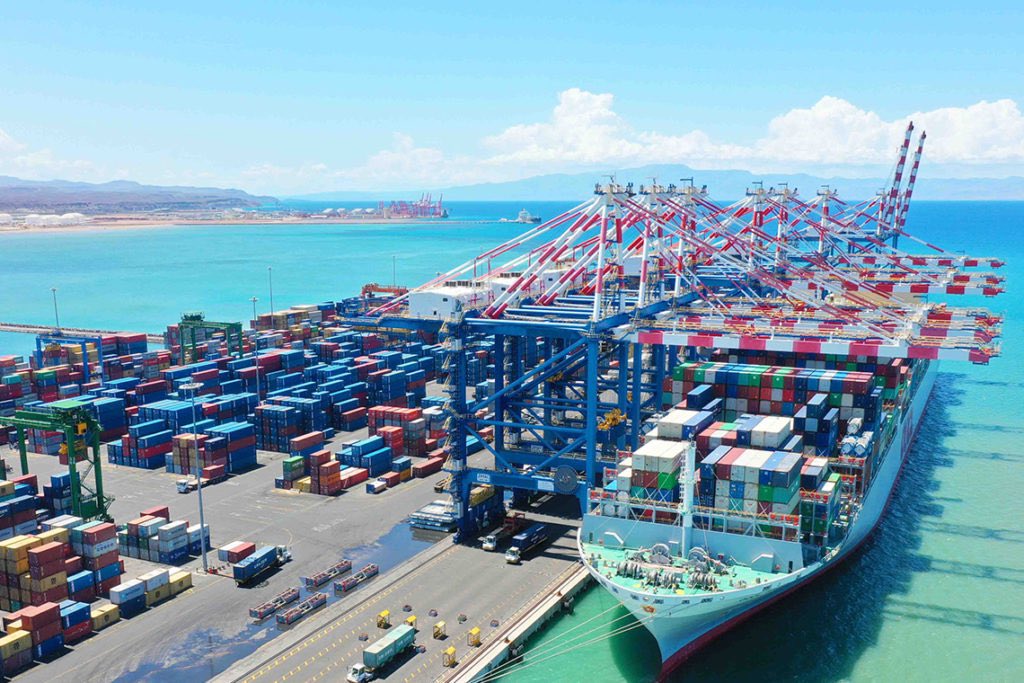
Djibouti’s port, located in the capital city of Djibouti, is one of the most strategically important ports in the world due to its position at the entrance to the Red Sea and the Gulf of Aden. The port serves as a key refueling and transshipment and also transport means center, and is the principal maritime outlet for imports to and exports from neighboring Ethiopia.
The main commercial port handles a variety of cargo, including containers, bulk goods, and oil. It is equipped to handle large volumes of trade due to its modern facilities.
Its operations contribute significantly to Djibouti’s economy, creating jobs and supporting various industries
2. Berbera Port (Somaliland)
Berbera Port, located in Berbera, the largest city in Somaliland (a self-declared but internationally unrecognized state in northern Somalia), is a key maritime gateway in the Horn of Africa.
It historically served as a naval and missile base for the Somali central government. Following a 1962 agreement between the Somali Republic and the Soviet Union, the port’s facilities were upgraded and patronized by the Soviets.
Berbera Port lies on the Gulf of Aden, providing access to the Red Sea and important shipping routes connecting the Middle East, Europe, and Asia.
The port handles various types of cargo, including containers, bulk goods, and livestock. Its facilities support trade for Somaliland and neighboring regions.
3. Conakry Port (Guinea)
The Autonomous Port of Conakry is a bauxite exporting and container port in the city of Conakry, Guinea.
It is situated on the Atlantic coast of West Africa, making it a key entry and exit point for maritime trade in the region and was ranked first port of West Africa in 2021 by the World Bank and S&P Global Market Intelligence.
The port is run by private operators who are responsible for making the necessary investments for the development of port infrastructure and equipment.
It is crucial for exporting Guinea’s mineral resources, which are a significant part of the national economy and also supports the import of goods necessary for domestic consumption and industrial use.
4. Port of Dakar (Senegal)
The Port of Dakar, located in Dakar, the capital of Senegal, is a major maritime hub on the west coast of Africa. It serves as a key gateway for international trade and has significant economic, strategic, and logistical importance.
The port has one of the largest deep-water seaports along the West African coast. Its deep-draft structure and 640-foot-wide (200 m) access channel allows round-the-clock access to the port.
It is vital for landlocked countries like Mali and Burkina Faso, which rely on it for their imports and exports. This role enhances its importance in regional trade networks.
5. Matadi Port (DR Congo)
Matadi Port, located in Matadi, the capital of the Bas-Congo province in the Democratic Republic of the Congo (DRC), is an important seaport in Central Africa.
Matadi Port is situated on the Congo River, near its mouth at the Atlantic Ocean. This position makes it a vital gateway for the landlocked DRC to international maritime trade.
The port functions as a vital gateway for the DRC’s exports and imports, handling minerals, agricultural products, and also facilitating transit trade for neighboring countries.
6. Port of Tema (Ghana)
Tema Port, located near Accra, Ghana, is a pivotal maritime gateway on the Gulf of Guinea. As one of the busiest ports in West Africa, it plays a critical role in Ghana’s economy and regional trade. The port handles diverse cargo, including containers, bulk goods, and petroleum products, and serves as a major transit point for landlocked countries like Burkina Faso, Niger, and Mali.
Recent expansions and modernization projects have significantly increased its capacity and efficiency. The port’s development includes new berths and advanced facilities, enhancing its ability to manage larger vessels and higher cargo volumes. Its well-connected road and rail networks facilitate smooth logistics to and from the interior of Ghana and neighboring regions.
7. Port of Mogadiscio (Somalia)
Mogadishu Port, located on Somalia’s Indian Ocean coast, is essential for the country’s trade, linking it to global markets. Serving as the primary maritime outlet for Somalia, it handles imports like food and fuel and exports Somali products.
The port has faced significant challenges, including infrastructure damage from conflict and security issues, but ongoing rehabilitation efforts aim to modernize and expand its facilities.
Despite these challenges, Mogadishu Port remains vital for Somalia’s economy, supporting local businesses and regional trade. With continued investment and improvements, the port is set to enhance its capacity and efficiency, playing a key role in the country’s economic recovery and growth.
8. Beira Port (Mozambique)
The Port of Beira is a Mozambican port located in the city of Beira, capital of the Sofala Province. It is located in Sofala Bay, which forms a huge complex with the mouth of the Pungo River, known as the Beira estuary, facing the Mozambique Channel.
It is the second largest port in Mozambique, built to replace the port of Old Sofala in the 1890s.
The port handles diverse cargo, including containers and bulk goods, and supports regional trade.
9. Port of Freetown (Sierra Leone)
The Port of Freetown, located in Freetown, the capital city of Sierra Leone, is a vital maritime facility on the West African coast.
It serves as a major entry and exit point for international trade and plays a key role in the country’s economy. Situated on the Atlantic Ocean, the port provides crucial access to global shipping routes and is the primary seaport for Sierra Leone, handling most of the country’s imports and exports.
Besides serving Sierra Leone, the port also supports trade with neighboring landlocked countries, contributing to the regional economic network.
10. Toamasina Port (Madagascar)
Toamasina Port, located on Madagascar’s eastern coast, is the island nation’s main seaport and a crucial hub for international trade. It handles a wide range of cargo, including containers, bulk goods, and petroleum products, playing a central role in Madagascar’s economy.
The port faces challenges related to aging infrastructure and capacity constraints. Continued investment is necessary to modernize facilities and improve operational efficiency. However, recent modernization efforts aim to expand capacity and improve efficiency, with ongoing upgrades to infrastructure and facilities. The port is key to Madagascar’s trade, supporting both imports and exports, and its strategic location enhances regional connectivity.
This article was culled from Business Insider Africa
Disclaimer
Comments expressed here do not reflect the opinions of Vanguard newspapers or any employee thereof.