
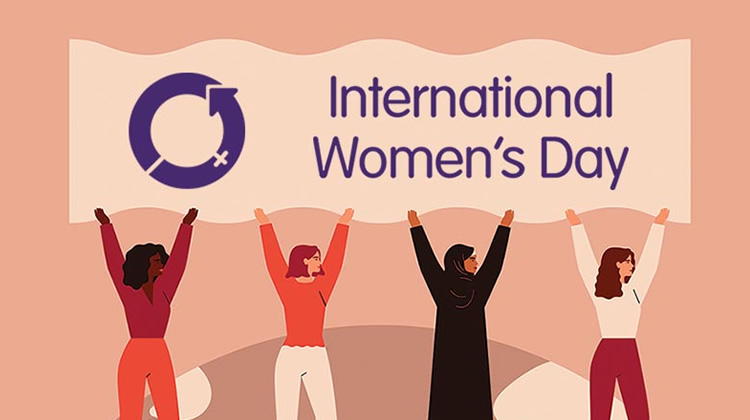
Friday, March 8 was the International Women’s Day, IWD, for 2024. The day is set aside every year to mark the trajectory of women’s struggle for equality to enable them develop their enormous potentials to help make the world a better place. This year’s edition marked the 114th edition of an event that has been celebrated since 1910.
It all started from a mass action by women in the needles trade who marched through New York City’s Lower East Side, clamouring for better working conditions and demanding for women’s right to vote. With the ratification of the First Amendment of the American Constitution, women gained the right to vote in 1920.
Here in Nigeria, following the Clifford Constitution of 1922, indigenous suffrage, limited to some privileged male Nigerians, was introduced. Nigerian women in the South gained their right to vote in 1954. Further progress was made 25 years later when the 1979 Presidential Constitution extended voting rights to Northern women due to its full adult suffrage provisions.
Since then, Nigerian women have progressed in leaps and bounds, producing the first female Senator (the late Franca Afegbua, 1983); first female Speaker of the House of Representatives, Patricia Olubunmi Ette (June 2007) and numerous presidential candidates. They have occupied virtually every topmost position in the professions, bureaucracy and even the military.
The World Conference on Women, which held in Beijing, China in 1995, added more spur to women inclusion worldwide and Nigeria in particular. The attention strongly focused on the Girl-Child and has led to greater positive action on their education. This, in turn, brought out their hidden potentials which are evident today in every sphere of our national endeavour.
In fact, we now see a situation whereby the balance appears to be gradually turning against the Boy-Child even while a lot more action is still needed to liberate the Girl-Child where they are culturally challenged, especially in the North. Young women have virtually seized control of the lower to middle cadres of our corporate and business offices to the detriment of the male folk.
The boys are increasingly falling behind in access to the few employment opportunities that are available. If care is not taken to restore parity, the current scourge of poverty afflicting our young men might impact negatively on family culture and social stability.
Generally, eligible young men are now too poor to prioritise marriage and family life. Society will be the worst for it unless care is taken to foster equilibrium or inclusion between the two gender groups.
As a newspaper that has, from day one, been renowned for its special place for women, we congratulate our womenfolk and urge them not to relent until full inclusion is inspired and activated throughout the world.
Disclaimer
Comments expressed here do not reflect the opinions of Vanguard newspapers or any employee thereof.