
By Ikechukwu Okereke
Abstract
As the global shift towards sustainability intensifies, mechanical engineers play a pivotal role in environmental protection and emissions reduction. They have a unique opportunity to drive change in the oil and gas sector, where environmental concerns are critical. Despite their central role in developing technologies that reduce emissions and enhance environmental management, their contributions are often overlooked. This article focuses on the Nigerian context, aiming to explore how mechanical engineers can significantly influence sustainability efforts within the oil and gas industry.
Introduction
The oil and gas industry is one of the most important sources of energy supply in the world, but it is equally one of the most polluting industries. Lately, there has been increased pressure to cut emissions and enhance sustainability due to increased awareness of environmental issues, changes in climatic conditions, and increased regulatory norms. It is here that mechanical engineers are central to meeting these needs. Their involvement in the oil and gas projects not only entails the efficiency of delivering the projects, but they also play a critical role in ensuring that any negative impact is eliminated and sustainability is embraced.
The call for a reduction in emissions is even more apparent in Nigeria, one of Africa’s largest exporters of crude oil. The industry is one of the most critical for the nation’s economy but subjects the environment to high emissions of greenhouse gases, methane, and pollutants. Consequently, this paper aims to discuss the possibility of mechanical engineers’ contribution to the mitigation and enhancement of emission reduction and environmental control improvement within the operational practices of the oil and gas industries in Nigeria. It assesses and analyzes the kind of technical inventions offered by mechanical engineers, their participation in sustainable project implementation, and how they have complied with legislated and moral obligations on the environment.
Current Challenges in Emissions and Sustainability
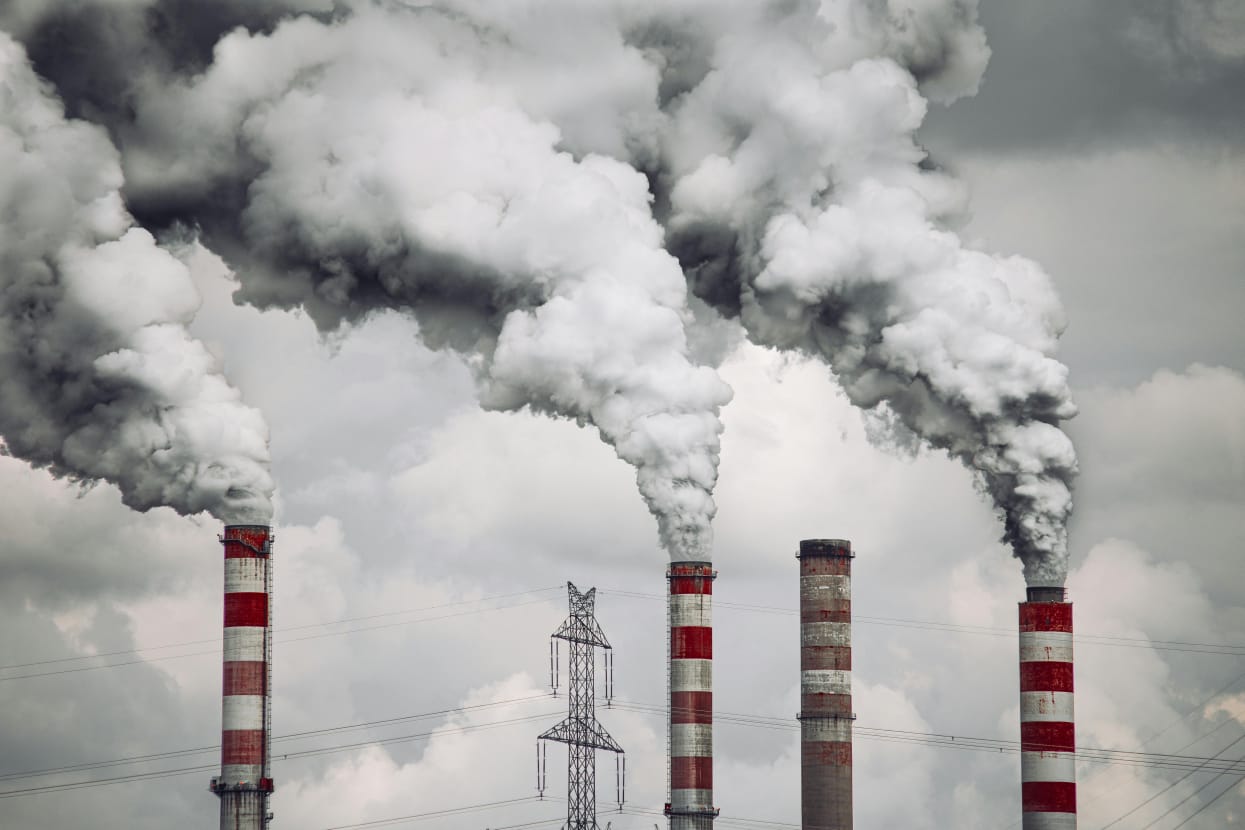
Environmental issues related to oil and gas operations can be considered significant and complex in nature. The main concerns are GHG emissions and carbon footprint marked by CO₂ and CH₄ emissions that occur in the extraction, production, and transportation of hydrocarbons. Methane flaring carried out in the oil fields is another factor that increases CO₂ and CH₄, both of which are potent contributors to global warming. Consequently, Nigeria’s oil and gas sector has considerable flow impacts on the country’s emission of GHG. For instance, the Nigeria National Oil Spill Detection and Response Agency (NOSDRA) estimates that the country flared about 9.76 billion standard cubic feet of gas in 2021 only, which is a loss in both the environment and the economy (NOSDRA, 2022).
Other environmental effects include water pollution from drilling activities, accompanying loss of soil quality, and pollution of the air through the emission of VOCs and SOx. These challenges are made worse by old age; most facilities in the oil have, and most of them are now decrepit and leaky, hence great environmental risks. As the oil and gas industry strives to produce energy and reduce harm to the environment, mechanical engineers need to fill the gap with practical solutions that reduce the carbon footprint of these operations and sustain the environment. It is crucial since, in Nigeria, oil contributes about 90% to export earnings, and the socio-economic implications dictate that sustainable practices cannot wait.
Mechanical Engineering Innovations for Emissions Reductions
Over time, mechanical engineers have developed several technologies with the objectives of emissions minimization and project sustainability in the oil and gas sector. A major focus area is the utilization of efficient systems that considered the overall energy use within the manufacturing chain. For instance, the application of high efficient compressor section, pump as well as turbine decrease the power required for extraction and processing, hence reduction in emissions. These systems are developed to work at maximum possible coefficients, with minimum losses and wastes dangerous to the environment.
Another key development is carbon capture and storage CCS technology, in which mechanical engineers can prevent and confine CO₂ emissions before they join the atmosphere. Through trapping of CO₂ at source,’ ” CCS technology can eliminate massive quantities of carbon from being released into the atmosphere common during combustion or industrial processes. The captured carbon can be transported and injected into deep geologic formations to remain trapped for years. Some of the current projects in Europe and North America have incorporated CCS in their oil and gas projects and have some quantifiable changes in greenhouse emissions.
Similarly, emission-controlling technologies based on IoT and machine learning algorithms applied to advanced monitoring and diagnostics significantly reduce emissions. These systems supply continuous information about the working conditions of equipment, the rate of emission, possible dangers to the environment, and much more to enable an engineer to fine-tune the plant.
For instance, smart technologies in manufacturing, such as sensor-based updates indicating equipment failures, can be useful in cutting downtime on equipment and reducing inefficiency and environmental pollution that is likely to arise from leaks, among other factors.
The level of adoption of such technologies in Nigeria is gradually rising, though the following challenges still exist: high costs of implementing these types of technology and infrastructure constraints.
Mechanical engineers have also been playing a great role in minimizing flaring, which has frequently been a source of emissions in oil fields. Flaring is a process in which natural gas associated with crude oil production is burnt or set on fire when there is no market or production facility for the collection of the same. Through engineering practice, engineers have been able to design methods by which they can recover this gas and sell it either by putting it back into the reservoir for enhanced oil recovery (EOR) or converting it to liquefied natural gas (LNG).
These innovations not only minimize emissions but also create incremental revenue sources for oil corporations.
Case Studies: Mechanical Engineers at the Forefront of Sustainable Oil and Gas Projects
Mechanical engineers have been at the forefront of implementing emissions and environmental solutions in different Oil and Gas projects across the world. A current, well-known, successful case is Chevron Escravos Gas-to-Liquids (GTL) in Nigeria, which deals with the conversion of natural gas to synthetic liquid fuel. Mechanical engineers employed in the execution of this project have aided in decreasing the level of gas flare in the Niger Delta area by utilizing the flared gas in this project. The GTL technology is also environment friendly in terms of energy consumption and emission of CO₂ compared to flaring that is used in conventional methods, hence promoting economic development.
An example is the application of the gas re-injection technology in the Nigerian Agbami oil field. The oil companies in the region have collaborated with mechanical engineers to curb flaring by reinjecting the excess gas into the reservoirs, thus increasing the recovery factor of the oil and decreasing CO₂ emissions. From these case studies, one can appreciate how mechanical engineering solutions are involved in countering environmental effects in areas where the effects of environmental degradation have gone high.
Regulatory and Ethical Considerations
Mechanical engineers come across a number of compliance frameworks for reducing emissions and environmental compliance within the oil and gas sector. Currently, the Nigerian legal framework includes The Petroleum Industry Act 2021(PIA) as well as the guidelines provided by the Department of Petroleum Resources (DPR), which requires emission reduction and sound environmental management standards. It is required that oil and gas companies adhere to these regulations, and mechanical engineers work towards making the company’s projects conform to such regulations while maintaining its functionality.
From an ethical issue, mechanical engineers are charged with ensuring that their innovations/products do not cause harm to the environment. The contest between the direct need for economic development and the interest in preserving the environment is very tense, especially in such countries where the resource-dependent economy plays an important role, for instance, in Nigeria, where the key source of economic stability is oil revenues.
Engineers must therefore strike a balance that will meet the objectives of sustainability, while at the same time supporting the economic prosperity of the nation. Ethical responsibility to future generations calls for emission cuts, resource conservations and promotion of sustainable energies which are critical in the oil and gas industry.
Future Trends and Opportunities for Mechanical Engineers
The future of mechanical engineering in the oil and gas industry remains informed by the following emerging trends that are set to further improve sustainability. AI and automation are some of the advancements at the center of these advancements because they can make new options available when it comes to improving work and lessening the environmental effects. An example of AI as a tool for productivity, therefore, is using machine learning algorithms for the prediction and diagnosis of oil and gas equipment with a view of preventing equipment failure that leads to emissions or other hazardous effects on the environment.
Mechanical engineers are also looking at ways of incorporating of renewable energy forms such as the solar and wind energies to oil and gas industries. To minimize the degree of carbon footprint, it is possible to integrate renewable energy with conventional energy platforms.
Furthermore, the increased focus on circular economy as a model of operations – aiming at zero waste and continual reuse – creates new opportunities for mechanical engineers, who can adapt those principles to the practice of waste management and preserving the minimization of resources in the oil and gas industry.
Conclusion
Mechanical engineers can contribute to the enhancement of emission reductions and favourable environmental impacts in oil and gas projects. Given the pressures of the oil and gas industry towards decarbonization and meeting global environmental standards, mechanical engineers, industry players, and policymakers must embrace environmental conservation. New investment in research and development with the use of new technologies is key to helping achieve the intended emissions reductions and, hence, depicting a sustainable future for the sector.
References
*Petroleum Industry Act 2021(PIA)
*Egboboh C, “Gas Flaring: Nigeria Loses $22.9 Billion in 10 Years -NOSDRA – Businessday NG” (Businessday NG, September 12, 2023) https://businessday.ng/news/article/gas-flaring-nigeria-loses-22-9-billion-in-10-years-nosdra/
*”The Role of Mechanical Engineers in Sustainable Development and Green Technology” (CWRU Online Engineering, August 27, 2024) https://online-engineering.case.edu/blog/role-of-mechanical-engineers-in-sustainable-development-green-technology#:~:text=Mechanical%20engineers%20are%20developing%20advanced,reduce%20waste%20and%20lower%20emissions.
(Okokpujie, Imhade & Fayomi, Ojo Sunday Isaac & Oyedepo, Sunday. (2019). The Role of Mechanical Engineers in Achieving Sustainable Development Goals. Procedia Manufacturing. 35. 782-788. 10.1016/j.promfg.2019.06.023.
Disclaimer
Comments expressed here do not reflect the opinions of Vanguard newspapers or any employee thereof.