
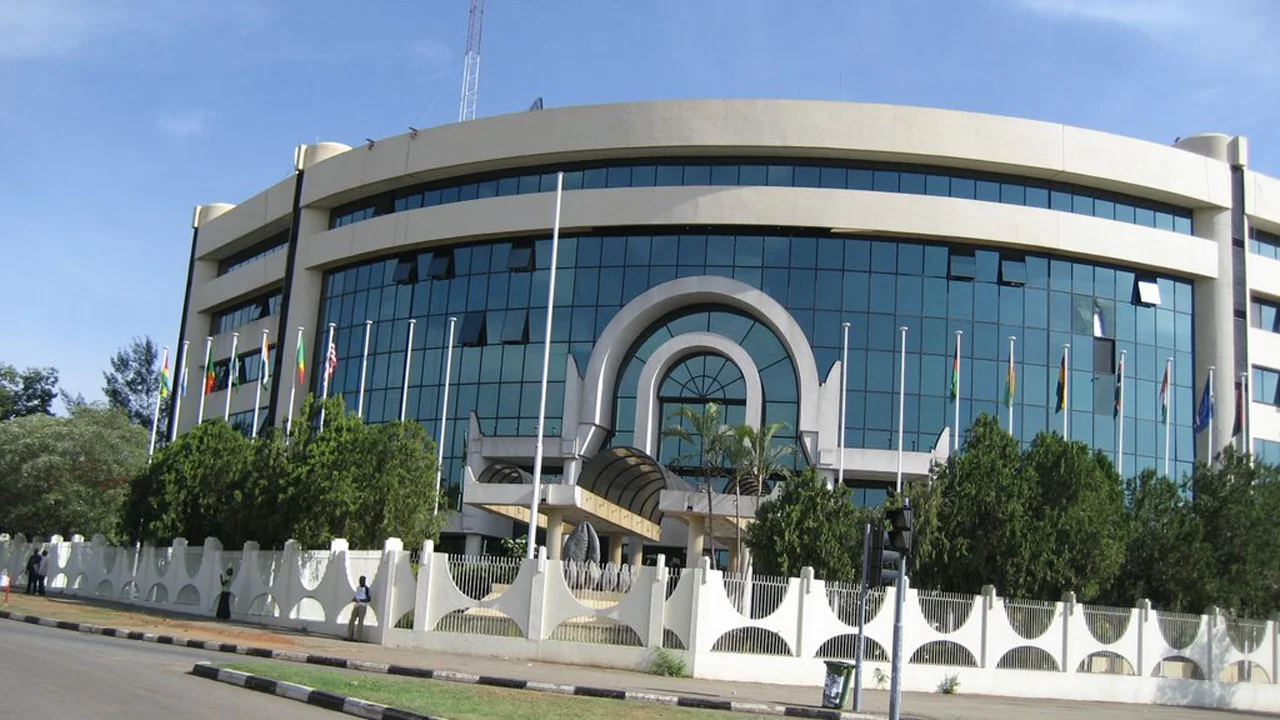
The stupefying “I don’t care” attitude with which Nigerians have greeted the terrible news that three West African nations have taken their exit from the Economic Community of West African States, ECOWAS, is alarming. Hey, why would we have so under-appreciated the idea of ECOWAS? Or is it because ECOWAS never really achieved what it was designed to do; open up the entire West African market to Nigeria –the strongest economic force within the sub-region?
Had Nigeria met her responsibility, had Nigeria risen to the challenges since ECOWAS was formed, 49 years ago, the Nigerian Naira would never have become a worthless currency because the Eco would have become the ECOWAS currency.
Just Nigeria and Ghana could have kick-started the Eco in 2004 as the Obasanjo administration had promised, and Cote d’Ivoire’s former President, Gbagbo, would have brought in his country as the third one to come under the Eco umbrella. It is likely that by now Guinea could have joined us. Then, when the coups took place in Mali, Niger and Burkina Faso, the ultimate acts of defiance those countries would have directed at France would have been to dump the French-Franc to embrace the Eco. But that wholesome dream of having the Eco as Wes Africa’s
common currency did not materialize during the Obasanjo administration, and France moved swiftly to remove Gbagbo from power.
Is ECOWAS and its common currency important to Nigeria? I’ll illustrate that answer with a story. The year was 2002. War was still raging in Sierra Lone though some peace had returned to Liberia.
Nigeria was the veritable Big Brother in the West African sub-region and was key player in the attempt to bring real peace to Liberia and Sierra Leone, two countries devastated by civil wars. I was a member of the late Ambassador Raph Uwechue’s entourage to Liberia. Prof. Sylvester Monye who would later serve as Special Adviser to President Jonathan on Project Monitoring was in that team, too. Uwechue, perhaps Africa’s most accomplished diplomat and conflict negotiator, though aging, was still in his elements and I was thrilled watching the charmer play his favourite game; diplomacy.
Liberia’s then President Charles Taylor was the first person we visited. He received us in his personal home, a shimmering wonder straight out from some Arabian Nights story, so beautiful it took one’s breath away. We were still drinking in the beauty of that poetry in marble, when Mr. Taylor appeared, all smiles, ever gentle, innocent looking, such that I wondered if that was a retired war lord.
He shook our hands gently, a smile decorating his rather handsome face. As he sat down the smile exploded into a full-throated laughter and he spoke to Chief Uwechue; “I hope my brother, Mr. President, is not angry with me. I hope he is not raving mad”.
Smiles, whether diplomatic or real, fled from our faces. Had President Taylor already defeated the aim of our visit and still allowed us to embark on a fool’s errand? Nigeria and Britain were engaged in a diplomatic struggle to prove that each of them was exerting the greatest influence to end the Sierra-Leonean conflict. And Uwechue had come to perfect another opportunity for Nigeria to trump Britain once
again by getting Charles Taylor to convince a side in the Sierra Leonean conflict, to make an important concession to Obasanjo and Nigeria by having Obasanjo broker the release of some prisoners. Had
Britain beaten Nigeria in that totally secret and undeclared war of influence between Nigeria and Britain?
Uwechue’s face darkened and contorted. Charles Taylor’s guttural laughter became even louder. He held the stage for a minute or so until he saved us from heart attack when he said; “I hope my brothe, the President has forgiven me…for Liberia’s trashing Nigeria last weekend”. That was when we all joined him in a rib-cracking laughter.
Yes, in 2002 Liberia defeated Nigeria 2-1 in a World Cup qualifier. May we please forget Liberian newspapers celebratory stories, with headlines such as “The Day Eagles Mama Die” and “Eagles Teeth Break”, for this is no laughing matter but a deep cry from the heart. So, what has that match got to do with ECOWAS? Plenty! We later learnt that the Liberian fans thronged the stadium decked in their team jerseys.
And those jerseys were bought in bulk from Aba, Nigeria! That was an ECOWAS economic gain for Nigeria! There was a time traders swopped on Aswani Market, Lagos, from all parts of West Africa every Tuesday – to buy clothes produced in Lagos textile mills. Once, Kano markets drew crowds from the entire West Africa. Once, Nigeria supplied foot wares to the entire West Africa. Cellophane (shopping) bags produced by SIO Industries, Asaba, were distributed across West Africa. West African footballer used to pour into Nigeria. Nigerian universities used to cater to West African youths. When ECOWAS incepted, toilet papers, bottled table water and even loafs of bread were being imported into some West African Franco-phone countries and it was taken for granted that Nigeria would elbow France away from such economic niches.
Nigeria was supposed to be ECOWAS economic engine room. The late Prof Ali A. Mazrui predicted that “In the 21st century France will be withdrawing from West Africa. France’s West African sphere of influence will be filled by Nigeria—a more natural hegemonic power. .
. . It will be under those circumstances that Nigeria’s own boundaries are likely to expand to incorporate the Republic of Niger (the Hausa link), the Republic of Benin (the Yoruba link) and conceivably
Cameroon.” Mazrui, Kenyan academic, is safely dead and cannot be harmed by Nigeria’s gargantuan disappointments and failures or he would be mortally disappointed. Now, Nigerians will need visas to take goods for sale into Mali, Burkina Faso and Niger. And ECOWAS can’t discuss common currency with them; Russia must have already made them to commit to the BRICS currency that would jostle with the American dollar.
Next year, ECOWAS 50th anniversary will be muted because the organization which incepted in 1975 lost three of its founding members on January 28, 2004.
Disclaimer
Comments expressed here do not reflect the opinions of Vanguard newspapers or any employee thereof.