
By Prisca Sam-Duru
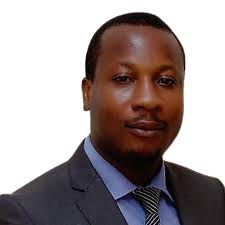
Poet, playwright and Associate Dean of Humanities at the University of Port Harcourt, Obari Gomba is one of the three playwrights with eyes on the NLNG’s $100,000 cash prize of the Nigeria Prize For Literature 2023.
In this interview, Gomba who is also an Honorary Fellow in Writing of the University of Iowa (USA), shares interesting details of his works, thematic concerns of Grit, the publishing industry and a lot more. Excerpts.
Though this is not your first time getting far into the competition, still, tell us how it feels being a finalist this year?
Actually, this is my first time making the final list of three. Previous occasions I’ve been in the list of eleven. Four previous occasions and now I’m in the finals; so I’m excited.
Just excited?
I’m excited and consciously optimistic. From the beginning, everybody who gets into a competition hopes to win so I’m consciously hopeful because the jury has the final say in a business like this.
Are you likely to take a break if you win?
If I win the prize, I won’t stop writing. If I publish a book in a year and the book is relevant to the category being awarded that year, I’ll enter the book. I’ll keep writing and competing if I have a book that is relevant to the category for which award is given that year.
Tell us about Grit and what inspired the theme?
I wanted to write a play about family and politics and I wanted both to be interwoven. So I took family as the history of activism and placed them in a political process. There’s disagreement between brothers about the space in the political process; the elder wants to run as the flag bearer of a political party they believe killed their mother. The younger says no, you can’t run as the flag bearer of that party because that party has hurt our family before. What they didn’t know was that while they had the disagreement, there are powerful actors within the community that want the two brothers to clash. So what they did was to recruit the younger one to run on the opposing platform. They fell into the trap and the family, community suffer.
Even though the play is set in a fictional community, it’s hard not to see Nigeria’s predicament resonating all through?
It’s a play that many people can connect with on different levels. Nigeria is my immediate environment and Africa, my continent. I assume that if you are familiar with the kind of politics on the continent, you’d see many aspects of the play that’ll speak to some of the issues that we are familiar with. Much more than that, it’s a play that’ll speak to people in a very toxic, dysfunctional political environment anywhere in the world.
Is it right to say then, that the play addresses issues of politics in Nigeria?
Whatever there is to be known about Nigeria is already in the public domain; we know that politics is toxic. The primary work of the artist is to produce an artistic work of excellence. Also, if the work is good enough, it can speak to issues. It makes the people look at themselves and act, and appraise where they stand in relation to art. My message is to present that kind of political situation and call our attention to what can happen when we run politics in that manner. If you read Grit, you’d see characters in action and you’d see how blind they are about their own affairs. A great deal of what happens in our society happens because we are not as aware as we claim to be and when we are aware, we are not as morally smart as we claim to be. And there’s a sense in which the victims of power become the enablers of their abusers. That’s also one level of the government you see in Grit; people who are victims enable the evil that befalls them. If you look at our political culture, you’d see that it’s dominant. People do that due to a number of factors; greed, poverty, fear etc, all sorts of factors contribute to the reason citizens who are victims of toxic power, enable that system and when that happens, they suffer.
Grit could have been produced as a novel, why play?
I have not published a novel before and I have not set my mind to writing a novel. So far, my creative writing has revolved around three categories; poetry, drama and nonfiction. I believe I’m going to write a novel someday but as of now, I have not published a novel or collection of short stories. Ultimately I’ll make a transition to writing fiction. I’m beginning to feel that I’ve done quite a number of works as far as poetry is concerned. I don’t think there’s any poet in Nigeria at my age that is more published than I am. My body of work as a poet is very significant and it’s been rewarded too.
So I can tell myself confidently that I have contributed to the traditional poetry in Nigeria. It’s left for readers in the present or future, to evaluate that significance. But I can’t say the same thing as drama, so I have to work harder. I want to produce a very interesting body of plays. I have done five plays before; this is my 7th full length play. The first five are not full length, only two are. So, I think between now and next year, I have to revisit the first five plays and if there’s a need to edit them, I’ll edit and reissue them so that people can look at them.
Most times people hear that Obari Gomba has been longlisted for drama, they say, ‘does he write drama too?’ That’s because they do not know that before Guerrilla Post, I have published and produced some sets of plays. So, maybe I need to give more visibility to drama and once I have produced a significant body of drama, I’ll start looking at fiction. I want to be able to produce work in those categories. So I’ll do fiction at some point; for now, the inspiration came to me to write a play on the subject and that’s why I wrote Grit.
What kept you going after being longlisted four times?
What is primary to me is creative writing. The prize is secondary. That’s to say I don’t pray that this should happen; I have challenged the NLNG to keep the prize alive. I want to look back, 100 years from now and be happy that NLNG has kept the prize running for generations of Nigerians. But even if NLNG wakes up one morning, God forbid, and says we don’t have the prize in place again, are we going to stop producing literature? No! The primary responsibility of the writer is to produce literature with excellence. When you do that and there’s a reward system in place as good as what the NLNG is doing, the least you can do is to participate in that process. Frankly, it will be a shame if Nigerian writers who are capable of producing great literature do not enter their works for the competition; it will be terrible. So, if I write a piece of work that coincides with the category that’s being awarded, I’ll enter my work and I’ll keep doing that as long as I keep writing.
What do you have at the back of your mind, while writing?
For you to succeed as a writer, you have to have a certain presence of mind that makes you understand that you have to improve consistently. You have to evaluate and evaluate what you’ve done before you put it out to the public. For me, when you have produced a work, self-editing is important. And when that’s done, you should also submit the work to other people competent enough to look at it and give you basic feedback before you put the work to the general public. Passion for writing is also very important. Whatever we do, we cannot excel if we are not passionate about it. It’s passion that sustains you through difficult periods, and brings you back to the point of creativity.
What are your thoughts on the publishing industry?
Let me start with one of the motivations behind this prize. When NLNG set out to institute this prize, they wanted to put a prize in place that would energise the book chain- from authorship to distributorship; everything in between. That is important. The publishing industry in Nigeria went very low in the 80s into the early 90s. luckily for us, since 98, 99, there’s new momentum in the industry and thank God for the likes of Farafina, Cassava Republic, Paressia, Narrative Landscape, Book Craft; people who have brought in fresh energy into the publishing space. But if you look at what they’re doing critically, they are small presses by global standards. Their capacity is small compared to the big publishing houses around the world. So that’s to say that they can only publish a certain number of books in a year. The Nigeria publishing industry is still largely dependent on the capacity of the author to write and fund the production of the book. Every year, the higher percentage of the books produced in Nigeria are funded by the authors; that’s where we are now. It’s not a peculiar problem; it’s actually a global problem. There are more self-published books in the US on a yearly basis too because as large as their publishing industries are, they cannot cater for all the books produced. So the larger the literary culture, the larger the demands the writers will place on the publishing industry and that’s why people take advantage of publishing on Kindle, Amazon, etc.
So, I don’t think there’s any publishing house that has the capacity to publish all the books that are coming to the publishing house so they have to evaluate and look at which book will stand the best chance in the market. Sometimes, they reject books that have capacity, and some other publisher publishes those books and they become mega sales. What do we do? Well, the publishing industry is growing. It’s important that creative people continue to do what they are doing. We cannot stop creating, till a point where every good writer I’ll have a traditional contract. That will be a disservice to our creativity, a disservice to our literary culture. So let’s keep producing work and where we have money, let’s self-publish or do subsidy publishing and let those who can get traditional contracts do so but let’s keep the literary climate alive. Hopefully, as the economy becomes more and more robust, more businesses will spring up.
What are the challenges of self-publishing?
There is a burden that self-publishing places on the writer. The writer who is self-publishing has all the leverage but at the same time, has the burden of making sure the quality of work is good. He takes care of proofreading, pays attention to the design and layout of the book and ultimately, takes care of distribution. If a writer is perceptive enough, he can produce a good work even when it is self-published or not. Let them not assume that because they are the ones who have control over the process that they can put anything into the public space. They should follow through rigorously, get good copy editors to look at their works and when copy editors have done that, do the corrections that very knowledgeable copy editors have advised them to do. That will be fantastic because even if they were not published by traditional publishers, at the end of the day, they will put out works that will not be embarrassing to them.
Are you planning to adapt the play into screen?
Yes but you know that script for screen is different from script for stage. That is to say there will be some form of adaptation. The primary responsibility of playwrights is to make sure people get to see the plays not just on stage but as texts. We need to take our books, our plays’ distribution very seriously. We need to take them t o the public. A good play can be as interesting as a good novel. Anyone who can read and enjoy a good novel can also read and enjoy a good play.
What the publishing industry and playwrights have done over the years is to emphasise the stage which is very cost intensive. Once they do the stage, the book becomes a second thing. If there are few secondary schools or tertiary institutions willing to read the book, so be it. Sometimes playwrights don’t emphasise production of books as texts but the text is another medium for distributing the plays, in fact the text has more capacity to bring the play to visibility than the stage, because the stage is tied to a location. If I’m staging a play in Lagos, only those in Lagos or have visited Lagos can watch it; but if I do the book and after the premiere, if I do it as a book, people can read it anywhere in the world.
Then, is the screen better?
Well, if I see someone who is willing to make an investment in the film production of the book, I’ll accept that. But as a small writer in Nigeria, I do not have the budget to produce that.
How do we address the menace of piracy?
Piracy is a problem in the book industry. And it’s surprisingly so for a country where they say people don’t read. So who are the pirates making the books for if people don’t read them? That’s part of the complexity of the problem. Most people in such business do not pirate plays unless the plays make it to WAEC or JAMB Syllabus. And for any person who has his book on such a recommended list, you have to put your eyes down. Unfortunately, even the publisher does not have the capacity to police his space. For now, the laws against piracy are there, the enforcement of that law is not. The problem is not enough to scare us, writers are very bold people, they will keep doing what they have to do regardless of what the challenges in the environment are.
What are your favourite books?
I’m a Soyinka fan any day, anytime. But it is interesting that what I’ve done is to also get some of those plays on the longlist and read them, including the ones on the shortlist. I read fiction, essays.
What will you do with $100,000 if you win?
What I’m sure I want to do is to dedicate a portion of the money to the promotion of the book itself. I have found out in the past that people have not paid attention to promotion of the books that made the money. There are lots of things in our lives so once the money comes, we put the money in those things. Those who want to travel, will travel, house, cars etc, but the book itself, there’s always very little or no investment by the authors in the books that won the prize and I intend to change. If I win the prize, ill set aside some money to make sure the play is in every house.
So far, I have distributed more free copies than I have sold. The reason I do this is; it may not make business sense but, it makes a fantastic cultural sense. It makes a lot of sense that people get to read. Give them free copies, let people read all the plays, let there be conversations around them. There are some people who say, people should not speak about the plays until the judges make their pronouncements. But I say no literary culture works like that. The reason why you have the longlist and the shortlist is so that people will make comments; there will be literary conversation everywhere. In fact the best reviews I get now are people who make very short reviews on facebook. You don’t have to make something as lengthy as one thousand words. No, just read the book and say, oh I like that character, why didn’t that character die? I like that statement. That small snippet of conversation is what shows that the public is involved in their cultural space.
Disclaimer
Comments expressed here do not reflect the opinions of Vanguard newspapers or any employee thereof.