
- ‘We emulate world-class varsities
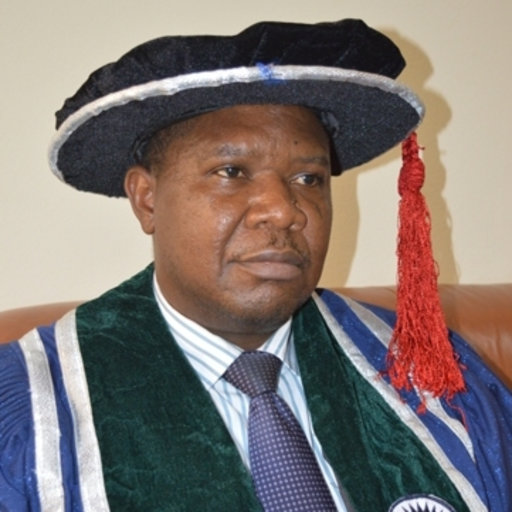
Focused, intelligent, hardworking and blessed with ingenuity to achieve uncommon feats, Professor Emmanuel Aluyor, Vice Chancellor, Edo State University, Uzairue, is a versatile and enterprising academician who has shown the stuff he is made of through initiatives and visionary leadership that has changed the face of university administration in Edo State and Nigeria. For the record, his university stands tall among the best ranked universities in Africa despite its young age. In 2018, it emerged the best State University in the ranking of universities by the National Universities Commission (NUC) for the Open Educational Resources (OER). The university emerged third out of the 160 assessed universities. This feat was seen as huge, considering the fact that the institution was barely two years old at the time. In 2021, Edo University, Uzairue went international, still under Aluyor, when it was ranked 4th in Nigeria in that year’s World Impact Rankings of Universities. The ranking was done by the Times Higher Education (THE) Impact Rankings’ global performance tables that assess universities against the United Nations’ Sustainable Development Goals (SDGs). The institution has achieved no less feat this year (2023) after it was listed among 51 Nigerian universities ranked in the Times Higher Education (THE) Sub-Saharan African Rankings. In this interview, the Vice Chancellor reveals the secret behind the speedy growth of the 7-year-old institution, identifies challenges in the nation’s education sector and proffers solutions. Excerpts:
Kindly give us a brief insight into your background?
I am a Professor of Chemical Engineering. I was the Head of the Department of Chemical Engineering at the University of Benin when I was appointed Acting Vice Chancellor of then-Edo State University, Iyamo on February 15, 2016. I was appointed substantive Vice Chancellor by His Excellency, the Executive Governor of Edo State, Mr. Godwin Obaseki, on November 29, 2018. That essentially is my background and present position.
Can you tell us more about your academic qualifications?
I have a Bachelor of Science in Engineering, a Master of Science and, of course, a PhD in Engineering from University of Benin. I started my lecturing career as Lecturer II in 1994 at University of Benin and moved from Lecturer II to Lecturer I to Senior Lecturer and was promoted as Professor on October 1, 2010.
What are those other factors that have brought you this far in your career?
The greatest factor that has brought me this far has been the grace of God. Without the grace of God, I will not be able to point out what influenced then-Edo State Governor, Comrade Adams Oshiomhole, to appoint me as Acting Vice Chancellor. Of course, I will also recognize the mentorship I have received from very great mentors, people like my present Chairman of Council, Professor Emeritus U K Audu. Without being immodest, hard work contributed and, most importantly, is the crop of personnel that I have had to work with as Vice Chancellor. God has always been my great helper and, when you have good ideas, you pass the ideas to the people that work with you, who have the business to implement. They will bring in their own perspectives to it, and yours is essentially to monitor and provide guidance. If you don’t have good personnel working with you, it is very difficult to achieve the level of success that we have achieved at Edo State University, Uzairue.
What are the important lessons that have helped to shape your career and what are the innovations you have brought on board since you became the Vice Chancellor of Edo State University, Uzairue?
When we asked about the things we needed to do to ensure that the Edo State University, Uzairue is able to upgrade, we identified a few items which we have tried to pursue since inception. Firstly, we identified the need for quality staff and, based on that, we advertised widely, we knew that it was going to be difficult to get quality staff as of that time for a university that was just starting. But we were able to ask for qualified lecturers, where ever they were, to come to Edo State University, Uzairue. So, we put in place an enhanced remuneration and went out of our way to headhunt for staff we thought was good enough and we also would love to have in the university. At the lower levels, we had a lot of staff willing to come but at a higher level of Senior Lecturer or Professor, we needed to make attractive offers. At the lower levels, we conducted examinations, identified those that were good and went on to interview them. Based on that, we picked some staff and put a policy that only those with Masters Degree who had already enrolled for their PhD Programs would be employed. Of course, there were some Departments where that policy faced serious challenges, such as Nursing, because of the ‘Japa Syndrome’, but we were able to break the jinx to the extent that they had Professors. After employing those staff, particularly the young ones, we realized that one could be excellent in his or her field and not necessarily be a good teacher, so we needed to have our staff trained in teaching and we found University of Ibadan very useful in this direction and approached them to train our young staff. We also decided that infrastructure was very important. That is why if you come to Edo State University, you will see the massive investment of government into the institution in terms of infrastructure, we have very beautiful infrastructure. If you go to our Mass Communication Studio, journalists who have been there affirmed that it’s world-class, just as we also have technologically advanced equipment in all our Science Departments; we were the first university in the whole of West Africa to get an Anatomage Table, an advanced technological tool used in training of medical students in the field of anatomy. We also have a power laboratory for practical training in the field of Physiology. For our engineering works and laboratory, we went out of our way to get modern digital equipment to the extent that when the Council for the Regulation of Engineering in Nigeria, COREN, came for a program and later for accreditation, our school was chosen as one of the four pilot universities to introduce Outcome Based Education, OBE, in Nigeria, which is gradually taking root now. So, we have paid attention to technological enhancements for practical training of our students. We made a deliberate effort to look at world-class universities, to find out some of the things they have that made them world-class. We identified two things: one, we discovered that all of the universities have a very functional management system; 60 to 70 percent of those universities made a deliberate effort to acquire canvas management system, we have it today in Edo State University, Uzairue. We also identified discipline; that, for example, cultism was a major issue in many Nigerian universities. We did a study to find out how we could ensure cultism does not happen at Edo State University. We identified that cultism rate was lower in institutions where students are fully residential, hence we decided quite early, that, within available resources, we were going to keep all students on campus as long as we could and, today, all our undergraduates at Edo State University, Uzairue live on campus. On security, we also ensured that across our university, there are Closed Circuit Television (CCTV) cameras to monitor activities, and also identified that, for us to have better behaviour of students, there was need to add substances. We decided quite early, too, that any student found to be in possession of any hard substance, including Indian hemp, will be expelled. We have kept to that and this has helped in keeping our student away from drugs. Again, we started entrepreneurship training with eight Units of entrepreneurship training across their programs. The entrepreneurship training is tailored along their fields of specialty and then we instituted a N5 million prize for the student with the best entrepreneurial idea. So, every year, students engage in competition where they task their brains and develop entrepreneurship ideas and the panel picks the student with the best entrepreneurial idea and that person gets the N5 million prize. The idea is not necessarily for the N5 million prize to set up a business but also to task their brains to develop ideas, they can then set up businesses up and become employers of labour. So these are some of the things we have done across the last 7 years of the existence of the institution.
Given the peculiarities of the Nigerian academic environment, what are the challenges facing the educational sector and how do you think they should be tackled?
The number one challenge facing the educational sector in the country is funding. Of course, you really can never have enough funds but in the Nigerian education sector, funding is a major challenge. For instance, because of students’ inability to pay for quality education, you find out that in Nigeria today, we have over 100 public universities and over 150 private universities and all the 150 private universities put together admit less than 20% of the population of students admitted into the Nigerian universities. That is because these private universities have to charge fees to enable them operate but for public institutions, government provides funds. You will also find out that in these public universities government funds, he who pays the piper dictates the tune, they appoint those who manage those places which, most of the time, is based on patronage and not quality. There is often times no proper monitoring or KPI, so, it is not just about providing funds but also monitoring the application of the funds provided to ensure that they are used judiciously. I think that the provision of the loan scheme is not a bad idea but I think that the loan should not be used as an excuse not to provide funding for our universities, so students can decide whether to go to a private or public institution. If the public universities are made more accountable for the funds they receive, government may not need to spend as much as they presently do. Funds are also needed in universities to carry out research; government must make funds available for research in the universities, they should also encourage the private sector to do same. We have so many academics who have to conduct researches and over 90% of researches in Nigeria are privately funded but if government can encourage the private enterprise through tax rebate, tax holidays or deliberate efforts to get people to commit funds to research in the universities, the academics would be busier than they are now and, ultimately, it benefits the country. There is also the need for funds for infrastructural development of our universities, government also needs to improve the provision of power and quality of leadership, particularly in public universities. Government must also look into the issue of indigenization of Vice Chancellors; the system whereby a Vice Chancellor must be an indigene of the state where the university he is heading is located is not ideal. That university is universal is an idea that university is a place where you have an agglomeration of academics of all use and kinds in a place, rubbing minds together. So, there are many challenges in the sector but those are ones that require immediate attention.
Can you shed more light on your take on the proposed students’ loan?
Yes, like I said, it is a good idea but the manner in which the law on it is presently proposed, there is still a lot of work to be done to make the loans available to those that really need it. In the present Nigeria with the use of Biometric Verification Number, BVN, government does not really need guarantors to be able to give anybody loan. It is just to make our laws to give the necessary bites. If you flag somebody’s BVN, automatically, the person does not have access to the banking sector, he cannot carry out any financial activities in Nigeria today. So, the biometrics of any individual should be enough to qualify any student for the loan. As I stated earlier, the loan should not be used by government to abdicate their responsibility of funding the education industry. It should rather be a complement that would enable everyone who wants to acquire university education to do so, instead of dropping out due to lack of funds to pay school fees. It would also make private universities to thrive since the loan is not restricted to students of public universities.
Edo State University, Uzairue made the last ranking of universities in Africa after two other ones. That means you have three rankings in seven years, a rare feat. What is the secret?
The major secret is quality staff that is encouraged and engaged in quality research. We have visibility and with your visibility you are likely going to be ranked favourably. In our university, we made a deliberate effort to engage quality staff, train them and also appreciate them by giving a token to our staff when they publish in journals as a reward. So, that essentially is what we have done.
Leadership must have contributed a lot to the level of success being recorded at ESUU. Can you share with us how your leadership style has helped in raising the institution’s flag?
I think I have talked extensively on that but, in addition, followership is a very important factor in leadership, to get the appropriate followership and get them to follow is a major aspect of leadership that ensures success. I am grateful for the kind of followers or staff we have at ESUU. A leader, no matter how versatile, he or she can’t do it alone. Unfortunately, in Nigeria, we blame our leaders a lot and fail to see that we are all leaders in our various endeavours; if you are a teacher or lecturer with students under you, you need to lead them. So, if all of us bring good leadership to bear in the various areas we lead, our country will be better than it is presently. In fact, you will find out that it will be harder for a leader to be a bad one, if all his followers are good leaders in their various areas of endeavour.
What is your advice to young Nigerians on the need to imbibe the values of integrity towards achieving success?
I think that while advising our youths, our leaders probably need to pay more attention to what we teach our children. In most countries, Civic Education is compulsory and teachers of Civic Education are well trained to ensure that, at a very young age, the children are taught the values of being patriotic citizens. Ethical values are taught in schools but, today, you will find out that people who teach our children in primary and secondary schools are not the right people. First of all, when you go to our colleges of education, you will find out that it is those who are unable to get admission into the universities and polytechnics that are schooling there, that is something the government needs to reverse, consciously, and there are many ways of doing that. The first one is that if government decides that everyone who goes to college of education do not only have free education but would also be receiving a stipend of as little as N50, 000, you will find out that some of the best candidates for universities will go to college of education and that would have shown that government attaches value to teaching. If we have people who have chosen teaching as their career, you will have less of people that will venture into internet scam ‘Yahoo Yahoo’ and all that. But, today, accessing free primary education is a problem, the quality is very poor, we just give kudos to Edo State government which has started to reverse the trend with the Edo Best Programme, where you now have people withdrawing their children and wards from private schools and putting them in public schools. I think that is the direction to go. If you go to most of the private primary schools, many of the teachers are either secondary school drop-outs or those waiting to proceed to higher institutions, there you will find teachers earning less that N15, 000 monthly. What quality of education can somebody earning such amount deliver? So, first of all, our leaders need to provide quality education at the basic level, for our children, once that is done, you will see that the quality of adult that will be produced will greatly improve. However, as a general advice to youths, fear God, work hard, and avoid the get- rich- quick syndrome. It is difficult to advice youths not to try to get rich quick when they see people who are wealthy and the society glorify them even with questionable wealth. They say you learn faster by what you see than by what you hear; a picture tells a thousand stories, so if the society continues to glorify those who have gotten rich quick, how do you now advise the youths not to emulate them? Government has a lot of role to play. We as leaders have also a lot of role to play.
How is your school handling the challenge of students’ examination misconduct?
In Edo State University, examination misconduct is at the lowest level because of our use of technology. In all the classrooms where we write examinations, we have CCTV cameras. The mere knowledge of the fact that we have CCTV mounted in the examination halls discourages our students from engaging in examination misconduct. On the other side, when a student has been well taught, the necessity to cut corners reduces; where you also have a motivated work force, proper mentors, you will find out that examination misconduct has been reduced to the barest minimum. That is not to say that we don’t have some cases of examination misconduct as most institutions does but when we have that, depending on the level, students are rusticated and by the time they return, they have learnt their lessons.
Is there any other thing you wish to add to this discussion?
Yes, I would like to talk more about Edo State University where we ensure that students who come to study in our institution complete their programs as scheduled; they spend 4 years if they are doing a 4-year- program, 5 years if they are doing a 5-year-program, and so on. In fact, we just graduated our first set of medical students and, at the event, I publicly apologized to the students because we were unable to graduate them at 6 years on the dot, we graduated them in 6 years two weeks. So, I apologized to them. We have brought that to bear on our Post-Graduate Degree (PGD) programs. If you are enrolled in a 2-year PGD program, on the dot of 2 years you will get your PGD certificate, unless you didn’t pass all your examinations. If you don’t work hard, then that’s your fault. It is like entering into an agreement with our students that we will deliver on our promise. All our staff knows that and they work towards realizing it. At Edo State University, we keep a digital log of interaction between supervisors and students to ensure that where a student who ought to graduate is not graduating, the supervisor will be able to show to us that the student has not completed his or her part and, if a student doesn’t fulfill his part, he doesn’t merit it and, if he doesn’t merit it, he can’t get it as our degree is in character and learning, both at the under graduate and post-graduate levels. We ensure that we do our part to ensure that we fulfill our promise. If the student does not complete his part he would not graduate. Those are some of the things we are trying to do at Edo University and we have opened our admission portal to conduct our Post-UTME on September 7. I am grateful for the kind of students that we have had and Edo State government for giving us all the support that we need and has continued to give to us. You need to visit our campus to see the quality of infrastructure that’s on ground; some people have compared our university to Stanford University. Well, I haven’t been to Stanford, but I am looking forward to going there and see what they saw that brought about the comparison. We are sincerely doing our best to see that our university is not just competing with other universities in Nigeria but competing globally. That’s our mandate, to see that no student should leave Nigeria to go to another country on the basis that quality education is not available in Nigeria. Come to Edo State University and I can assure you that we have quality education in Nigeria.
Disclaimer
Comments expressed here do not reflect the opinions of Vanguard newspapers or any employee thereof.