
By Ochererome Nnanna
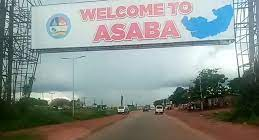
ASABA, the Delta State capital, is a town whose contemporary story I have followed closely since General Ibrahim Babangida created the state and made it the seat of government on August 28, 1991. Delta was one of nine states, including Abia, Enugu, Jigawa, Kebbi, Osun, Kogi, Taraba and Yobe, which Babangida created, apparently to celebrate the sixth anniversary of his regime.
Delta stood out as the only state where an uproar arose over Babangida’s choice of capital. During the agitations for state creation, there were two major movements in the state which was created out of the former famous Bendel State.
These were the movement for the creation of Anioma State, comprising the Igbo-speaking local government areas of Delta North, and the movement for Delta State comprising the Central and South zones populated by Southern Minorities – Urhobo, Isoko, Ijaw and Itsekiri. The Anioma Movement wanted Asaba as their capital while Delta State group wanted Warri as their seat of government.
Babangida incurred the red eye of the Delta State agitators by putting the two groups into Delta State and making Asaba, the birthplace of his wife, Mariam, the state’s capital. All hell was let loose. The Delta State agitators, who now termed themselves the “True Delta”, after realising there was nothing they could do about what Babangida had done, swore to render Asaba nothing more than a glorified village. It would be capital only in name.
The True Delta section was a powerful bloc, united by their shared cultures and common resolve to keep the Anioma at an arm’s length. They had over 80 per cent of the oil that at that time ranked Delta only behind Rivers State among oil producing states. More importantly, they had the overwhelming population advantage which, if deployed the way the Tivs had done in Benue State, they could effectively render the Igbo speaking Anioma section permanently irrelevant.
When James Ibori emerged as the first elected governor of the state, he pretty much implemented the True Delta agenda of Anioma/Asaba isolation, pandering more to Warri and even rivalling Warri with his hometown, Oghara, in the heart of Urhoboland. To his credit, however, Ibori succeeded in building up a sound pan-Delta political family which has endured till date. It was this family that decided to ensure a smooth rotation of power among the Central, South and North zones.
One of the dividends of democracy is that if properly and faithfully practised, it unites people and attenuates primordial political reflexes. Delta people have found the working formula for a harmonious coexistence through power sharing. The dichotomies of the past have taken the back seat. Everybody knows what belongs to them will be theirs, even when power is not in their hands directly. Each section has enjoyed eight years through Ibori (Central), Dr. Emmanuel Uduaghan (South) and Dr. Ifeanyi Arthur Okowa (North). Power has already returned to where it started from – Central – through Hon. Sheriff Oborevwori.
Uduaghan was the real gamechanger. He refused to go strictly with the core agenda of the True Deltans. He believed in equity, and he was very liberal towards Asaba. His construction of the Asaba Airport and opening up of Asaba land for development from all willing investors practically helped “blow up” the state capital. Before now, Asaba indigenes had this myopic attitude of refusing to sell land to their fellow Igbo kinsmen from across the Niger for fear of “domination”.
Uduaghan’s plan was to encourage economic integration of Delta and the South-East through trade, commerce and industrialisation to reduce Delta State’s oil dependence. To cap it all up, Uduaghan gave up power to Okowa rather than deny the North as some elements were agitating. It was this factor that has fully positioned Asaba as an accomplished and worthy state capital. Uduaghan did not give power to just any Delta North hungry politician that could be manipulated. He gave it to Okowa, an Igbo man to the core.
Okowa comes from the Ika section of Anioma nation (Agbor). In his eight years, he followed the footsteps of his predecessors by ensuring each section of the state got their fair share while his own section got the lion’s share. Asaba has expanded and grown into one of the most beautiful capitals in Nigeria, with well-laid urban roads, efficiently functioning drainages and quality public or government buildings and establishments.
Under his watch, Asaba’s status as the home of Nollywood and leisure is assured. Today’s Asaba is better seen than described, with its Stephen Keshi sports complex, the Recreational Park/Zoo, State Secretariat, upgraded Asaba International Airport and emerging armada of flyover bridges.
When Delta State was created in August 1991, the first Military Governor, Group Captain Luke Ochulor, described me as the first journalist he exclusively spoke to when I visited on August 31, 1991. Apart from my tour of the state as Uduaghan rounded off his stewardship in 2015, my third missionary journey to the city and its environs almost a fortnight ago gave me an opportunity to see how the state and its capital had grown from grass to grace.
What gladdened me even more is that development in Delta State is not only about roads, bridges and flyovers. Massive investment in the people is evident. Imagine establishing three universities at a time and bringing the number of universities to nine, minus other higher institutions! Delta is proving its worth as being among the educational giants of Nigeria and the number state in sports.
Equally impressive is the training, job creation and establishment of youths in various vocations. Manpower that used to be sourced from Benin Republic and Togo is now fully homegrown through various capacity building initiatives. Delta is a state government by truly homegrown leadership. They have managed their diversity so well. Where there were once wars, there is now peace and harmony.
Bravo Delta!
Disclaimer
Comments expressed here do not reflect the opinions of Vanguard newspapers or any employee thereof.