
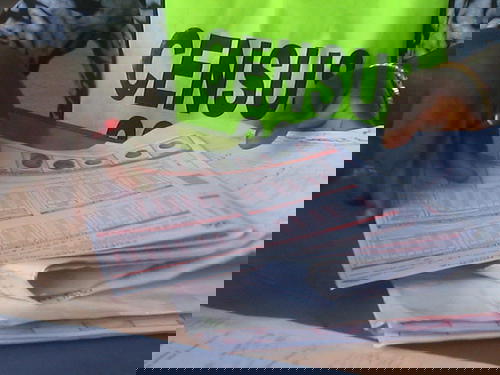
MANY well-meaning Nigerians heaved sighs of relief when the Federal Government announced in April 2023 its decision to postpone the proposed national population census. The exercise, which was conceived five years earlier, was billed for March 29, 2023. It was initially shifted to April 2 and finally to May 3, 2023 before the outright indefinite suspension. Information and Culture Minister, Lai Mohammed, said the Muhammadu Buhari regime was leaving it for the incoming government to decide when to hold it.
It is unfortunate that the project was not properly thought through. Otherwise, how can a population census be scheduled around the same period that the country was going through a transitional general election? Everything about the programme was wrong-headed.
For instance, the Executive Chairman of the National Population Commission, NPC, Nasir Kwarra, told newsmen that the exercise, which was billed to cost N800 billion, had already gulped about N200 billion before its postponement. That is scarce funds down the drain because whenever the census is restarted, it would be from square one.
Why should the type of census we conduct in Nigeria be given a priority attention at a time the country could ill-afford to foot its bill? Throughout the eight-year Buhari regime, Nigeria’s average oil earning of about two million barrels a day was rarely met, what with severe oil theft and insecurity in the creeks.
Poor revenue profile forced the nation to engage in mindless borrowings, including from the Central Bank of Nigeria, CBN. Also, our security challenges which the administration responded to incompetently (until about a year ago) gave us an additional priority area to focus our spending on.
In other parts of the world, routine population censuses help to keep track of population size and plan for development and the people’s welfare. Since the end of British colonial rule, how have censuses contributed to our economic planning and development? How have censuses worked for us?
We could not keep pace with an exercise that was originally billed to take place every 10 years. The last census was held in 2006 after several postponements. Since our first indigenous census of 1962 which was politicised and led to a nationwide crisis that remotely triggered the first military intervention and eventually the civil war, our censuses have been more about politics of ethnic and regional domination than economic planning.
Every region or state inflates its figure to get more allocation from the federal purse. Nigerian population figures are based on estimates. The exclusion of ethnic and religious identities and the use of State of Origin do not give an accurate picture of the complexion of our diversity.
Before the next census, we must return to the core principles of enumeration, using census to plan for our future, and not merely to fight for a lion’s share of the nation’s resources.
Disclaimer
Comments expressed here do not reflect the opinions of Vanguard newspapers or any employee thereof.