
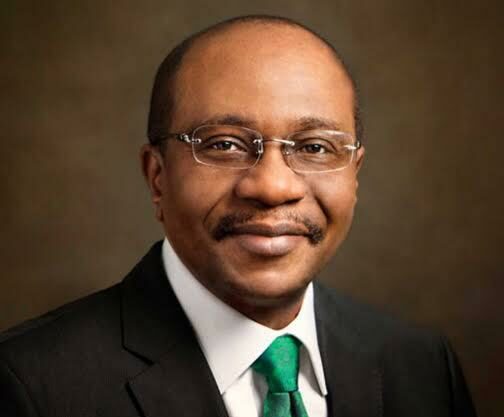
Godwin Emefiele
“Leadership is the creation of an environment in which others are able to self-actualize” — John Mellecker
By Nasir Dambatta
Just like the respected thinker Mellecker said, the derivative of societal advancement is when those in charge of mankind’s welfare provide window of opportunities for the people to achieve self-fulifillment or self-actualization.
On matters of economic stabilization, President Muhammadu Buhari will go down in history as one African leader who gave his all, to the empowerment of the poor in our midst. It is to his eternal credit that many Nigerians went back to farm, notwithstanding the general laziness brought about by overdependence on petroleum resources since independence.
Buhari has repeatedly underscored the importance of agriculture to national economic advancement in the future. On March 21, 2016, during a two-day Presidential Retreat in Abuja, his message was loud and clear: ” For too long government policies on agriculture have been half-hearted, suffering from inconsistencies and discontinuities”.
Little wonder that he sought for a more robust CEO to drive the reforms of the sector with a pointsman who also sees agriculture and industrial sectors as key to economic development. Buhari knew right from the beginning that he needed a proactive, result-oriented man to take charge of Nigeria’s apex bank – the CBN – as a major pillar of the nation’s monetary policy. Godwin Emefiele turned out to be the man for the daunting task – a reputable banker, management strategist and composed.
But unexpected challenges cropped up on the path to achieving the beautiful dream of a new era of economic diversification. That devastating challenge was global and many economies of the Third World were suddenly wobbling. What are these mind-boggling, unforeseen challenges and how did Emefiele surmount them?
Covid-19 led to a 60 per cent decline in crude oil prices in the first half of 2020 leading to an unprecedented downward slide in revenue and foreign exchange earnings. The output of key sectors like manufacturing and service industries and the economy fell into recession in the third quarter of 2020 after two consecutive quarters of negative growth of 6.1 per cent in the second quarter of 2020 and 3.6 per cent in the third quarter of the same year.
Take it or leave it, from the very day he swung into action, Emefiele has done his best to help poor Nigerians, especially Northerners with start-up capital for small-scale agro-allied businesses, thereby creating a new reservoir of young millionaires. He then introduced special grants to cushion the effects of the covid-19 pandemic on households’ income and pumped N23 billion into providing isolation centres and some billions more into efforts towards stabilizing the national economy in more ways than one. He expanded the policy thrust to include BDCs, to try to boost the exchange rate, and this has been a success story.
There was a recent report that the loans granted to the private sector increased by N3trillion between July 2020 and July 2021 due to the non-stop LDR policy.
A close look at the agricultural sector would reveal the deployment of over N756 billion to 3.7million farmers cultivating over 4.6 million hectares of farmland under the Anchor Borrowers Programme.
Few Nigerian commentators have paid attention to the deployment of N440billion to 711,706 beneficiaries under the Agribusiness/Small and Medium Entreprises Investment Scheme ( AGMEIS) and the Targeted Credit Facility (TCF) being run by NIRSAL Microfinance Bank.
Furthermore, I read elsewhere in a secial report, that N98.41billion was disbursed in support of 103 healthcare projects of which 26 are pharmaceutical companies and 77 are for healthcare institutions. It is obvious that these funds account for the expansion and strengthening the capacity of these healthcare institutions.
Local manufacturing and production across critical sectors got a boost with N923billion loans for over two hundred real sector projects.
It is my honest view that the Emefiele’s interventions have led to a surge in GDP output as the nation’s economy grew by 5.1 per cent in the second quarter of 2021, up from 0.51 percent in the first quarter of 2021.
In summary, Mr. Godwin Emefiele has efficiently and effectively delivered on his assignment by giving teeth to President Muhammadu Buhari’s economic reforms in moments of global economic downturn. How Emefiele did it, still beats my imagination. What this tells me is that he has remained the arrowhead of the present administration’s economic stabilization strategies.
Dambatta wrote from Kaduna and can be reached on editor@politicstoday.ng
Disclaimer
Comments expressed here do not reflect the opinions of Vanguard newspapers or any employee thereof.