
…Fingers owners, drivers over accidents
By Olasukanmi Akoni
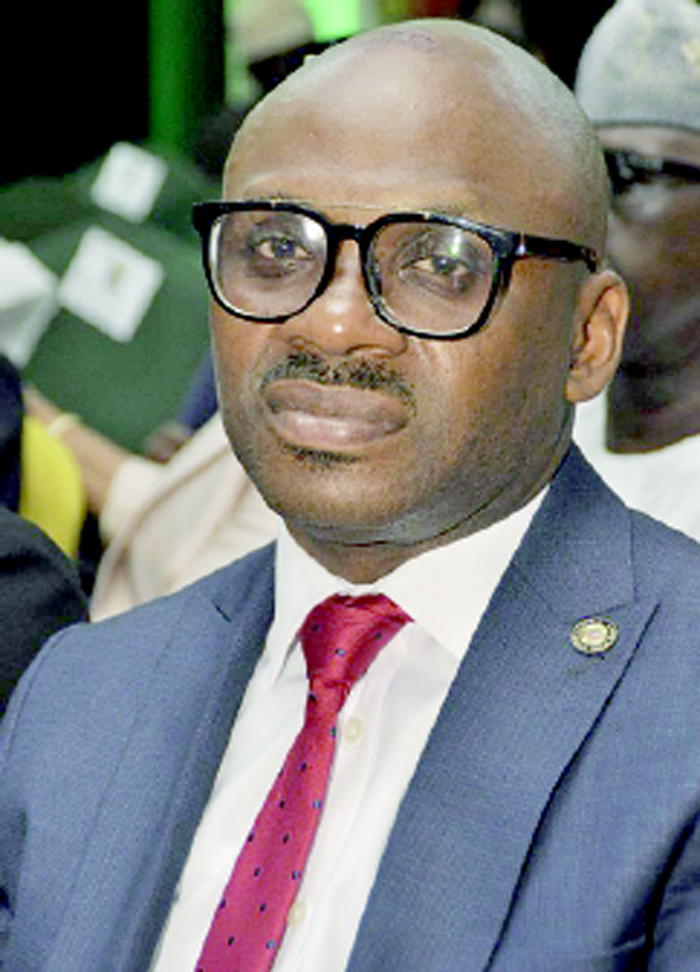
Permanent Secretary, Lagos State Ministry of Transportation, Mr. Olawale Musa, in this interview, reveals why fuel tanker accidents are on the rise. Musa, a former General Manager of Lagos State Transport Management Authority, LASTMA, suggests solutions.
Some of the tankers operating in the country are believed not to be roadworthy. How do you ensure that tanker owners and drivers adhere to safety standards?
I must say that majority of fuel tanker operators in the country do not adhere strictly to safety standards due to improper monitoring and enforcement by relevant authorities. Before fuel tankers are allowed to leave the loading bay, there are officers whose duty is to ensure that safety standards are complied with such that the braking system is in order and the drivers are in stable condition, especially their mental fitness.
BREAKING: Another fuel tanker tumbles, explodes in Onitsha(Opens in a new browser tab)
The tankers must carry along fire blankets and mechanical tools in case of any breakdown on the road. Most of these checks are carried out at the loading bay because if we want to conduct checks on the road, how many of them can we intercept without compounding traffic gridlock? This is one of the challenges we have with tanker owners in Lagos.
Beyond the checks you carry out on the roads, why are tankers that are not roadworthy not impounded?
Of course, the state government has the power to impound vehicles that flout traffic rules and regulations to prevent the dangers they pose to lives and property. Men of the Lagos State Traffic Management Authority, LASTMA, are well equipped and mobilised to do the job. But, as I said earlier, how many of them are we going to intercept and impound on the roads without causing gridlock?
And when we want to enforce fully, union leaders and members will take up arms against government, protesting what they call highhandedness. They even threaten to embark on strike. However, we are partnering with the leaders of the unions to further orientate their members on the need to comply with safety standards. We often hold sensitisation programmes for tanker operators. The current administration is focusing on voluntary compliance and not enforcement for the common good.
It is believed in the public domain that the poor state of roads in Lagos and other parts of the country is a major contributor to fuel tanker accidents. How true is it?
I quite disagree with this claim in spite of the fact the some of our roads are under reconstruction. Governor Babajide Sanwoolu just declared a state of emergency on roads. For example, can the fuel tanker fire at Otedola Bridge be blamed on bad roads? Do you want to blame bad roads for the fuel tanker accident along Funsho Williams Avenue, formerly Western Avenue? The blame is on the operators and drivers of those vehicles. They are often impatient on the road and ignore safety measures.
The governor, realising the importance of good roads as critical to the development of the economy and bearing in mind that Lagos is the economic nerve centre of Nigeria, made transportation one of the six pillars of his agenda. Without good roads, no economy in the world can survive. That is why the administration ensures that the poor road infrastructure we inherited becomes a thing of the past.
Expert blames frequent burning of fuel tankers on non-compliance with standards(Opens in a new browser tab)
Can you give us the figures of fuel tanker fire incidents from January till date?
On fire tanker incidents, I do not have the figures but I must say that the development is highly disturbing and government is committed to checkmating it. I can confirm to you that at least seven to eight tankers break down daily in the metropolis. Of course, in most cases, it leads to gridlock.
Tell us the fire-fighting equipment that should be installed in every fuel tanker…
A fuel tanker should have various types of fire retardant and other equipments to fight fire before it becomes a major catastrophe. As I mentioned earlier, the fire-fighting equipment that fuel tankers must have include fire blanket, fire extinguisher and basic mechanical tools.
It is a common sight to see tankers spilling their contents on the road through holes or cracks on the surface. Why does that happen unchecked?
Most of the accidents involving fuel tankers, both as a result of breakdown and fire breakouts, are due to human factors on the part of owners and drivers.
For example, the Otedola Bridge incident and others were due to carelessness on the part of drivers. Most of them are under the influence of hard drugs because they believe they need it to be agile behind the steering. About 90 percent of fuel tankers on the roads of Lagos are not based in the state. They come from outside the state, particularly from the northern part of the country. In Alakija and Satellite Town, there are more than 20 fuel depots that have degraded the road infrastructure in the area.
(VIDEO) Lagos fire service prevents tanker explosion at Mile 2(Opens in a new browser tab)
Most of the drivers spend three or four days. After spending days on the road, fatigue sets in when conveying their products. That is why we see carnage on our roads, not only in Lagos but in other states. The recent one at Upper Iweka, Anambra State is an example.
On spillage, there are two factors. It is either the valve is weak due to tear and wear without the owner fixing it tampering by the driver in the process of siphoning fuel for whatever purposes. However, drivers, unions and owners must agree on the way forward to ensure sanity and a safer environment in the fuel and cargo haulage system.
Disclaimer
Comments expressed here do not reflect the opinions of Vanguard newspapers or any employee thereof.