
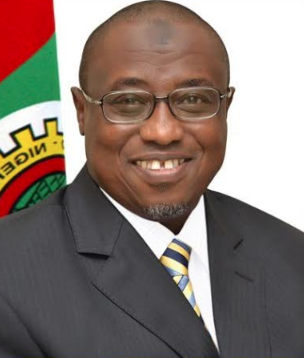
Nigerian National Petroleum Corporation (NNPC) Group Managing Director, Dr. Maikanti Baru,
By Sonny Atumah
It is almost three years when Dr. Maikanti Baru assumed the headship of the national oil company, the Nigerian National Petroleum Corporation, NNPC. One recalls on this column a message to Baru to reengineer the NNPC. The July 30, 2016 edition of this column made reference to Ptolemy’s response to Euclid the Greek mathematician that there is no royal road to geometry when tasked on easier way to solve theorems. Ptolemy’s belief is that the reality in solving complex problems had never been with impressive generosity since time immemorial. Asking what the problem is expands the frontiers of knowledge. In context, it is difficult to situate our problem; whether the government or the people. Not oversimplifying it as it sounds petroleum management has become a sing along for Nigeria’s economic diversification. The procedure to tackle identified problems is what makes the difference. One was not putting the new GMD of the NNPC, Dr. Maikanti Baru on the spot in 2016,but to draw his attention to the fact that our four refineries were idle and becoming decaying infrastructures that can be rehabilitated and possibly upgraded and should not be sold.
Baru, a first class engineer and an insider knew that the national oil company, like some state owned enterprises, SOE has been mired with corruption, inefficiency, underinvestment, underutilization of staff and research laggards. Apart from the activities of militiamen in the Niger Delta, we produce less crude and more expensively than we should through unrealistic joint venture agreements and production sharing contracts. We could squeeze more revenue from each barrel if we are more efficient. That was the situation in 2016. To what extent has Baru really reengineered the NNPC? As the 12-man national leadership of the Nigeria Union of Journalists led by Christopher Isiguzo, came calling at the NNPC last Tuesday, Baru gave a detailed account that looked like a treatise but extemporized, on his achievements at the NNPC. Baru appeared frank on the state of affairs at the NNPC. According to Baru, NNPC has been collaborating with oil communities to stem the tide of militiamen that target critical oil infrastructures that reduced production to very low levels in the early years of President Muhammadu Buhari’s first tenure. The cases of pipelines vandalism has reduced from 2600 to less than 1000. Again, the cases of oil theft for illegal and illicit refining are also on the downward trend. This he challenged the Nigeria Union of Journalists to educate and enlighten host communities that there is more destruction to the environment than the physical theft of crude. The crude that is spilled pollutes the environment that becomes difficult to remediate.
The relative peace in the Niger Delta has made crude oil production to rise to about 2.1 million barrels per day, mbpd and 2.3 mbpd with condensate. The Nigerian Petroleum Development Company, NPDC, wholly NNPC subsidiary has also ramped up to about 300,000 bpd. Baru again disclosed that they have not been in the media on the Frontier explorations in the Gongola Basin because they are still doing extensive testing which they hope to hit 14,000ft in the coming week. Transparently, the cost of producing a barrel of crude has dropped from US$27 to US$22 and moving towards the US$20 mark. With NIETI, BPP, ICPC and EFCC all looking into the activities of the NNPC in open competitive bidding processes, the country is getting its value worth in the oil sector. It has encouraged Foreign Direct Investment, FDI that has hit US$7 billion by 2019. The monthly unaudited financial report is published as the NNPC is becoming more accountable to the government and the people. Can the NNPC become an integrated oil company? Yes! With over 80 percent of gas supply to the 21 gas driven power generating plants in the country, the NNPC is contributing significantly to power supply. With the Direct Purchase Direct Supply regime that replaced the Offshore Processing Agreements; where crude is sold in a barter arrangement for negotiated products with reputable refineries and traders, NNPC is saving the country over US$1.2 billion annually.
But the downstream sector is still teetering between refining locally and importing products. There is a huge daily arbitrage in smuggling with about 10 million litres of gasoline across Nigeria’s borders to contiguous countries of Niger, Chad, Cameroon, CAR, Benin, Togo and Ghana. For two years NNPC contemplated and sought offshore funding to revamp the refineries without success because of the onerous conditions that are more disadvantageous than advantageous to Nigeria, as demanded by the proposed financiers. NNPC may have resorted to direct funding from internal cash flows and debt financing from the financial markets for the four refineries rehabilitation. That may be the next best alternative to prevent being held by the jugular. These may be Baru’s regrets. One may equally suggest seeking intervention from the Central Bank that has funds for such. Again, the Excess crude account can be utilized to rehabilitate our refineries. It is an investment that is worth it and can be repaid if well managed. One billion dollars was taken from that account about a year ago to fight insurgency. If done Baru would have achieved significantly.
Disclaimer
Comments expressed here do not reflect the opinions of Vanguard newspapers or any employee thereof.