
UN Ad hoc Interagency Coordinating Group warns of looming global crisis
24m risk extreme poverty by 2030
By Sola Ogundipe
DRUG-RESISTANT diseases caused by Antimicrobial Resistance, AMR, including multidrug-resistant tuberculosis, MDR-TB, respiratory tract infections, sexually transmitted infections, STIs and Urinary Tract Infections, UTIs, have become a major threat to life globally.
In view of this development, the UN Ad hoc Interagency Coordinating Group, IACG, on Antimicrobial Resistance has called for immediate, coordinated and ambitious action to avert a looming,potentially disastrous global drug-resistance crisis.
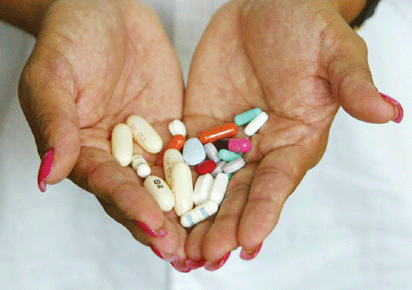
Drugs
In its newly released report, the Group warns that the menace of AMR, is getting out of hand, and that if no action is taken – drug-resistant diseases could force up to 24 million people into extreme poverty by 2030, and cause 10 million deaths each year by 2050.
According to the Group, currently, at least 700,000 people die each year due to drug-resistant diseases, including 230,000 people who die from MDR-TB even as other common infections are becoming untreatable and lifesaving medical procedures are becoming riskier, and food systems are increasingly precarious.
“The world is already feeling the economic and health consequences as crucial medicines become ineffective. Without investment from countries in all income brackets, future generations will face the disastrous impacts of uncontrolled antimicrobial resistance.
Recognising that human, animal, food and environmental health are closely interconnected, the report calls for a coordinated, multisectoral “One Health” approach and recommends , among others, countries to prioritise national action plans to scale-up financing and capacity-building efforts; put in place stronger regulatory systems and support awareness programmes for responsible and prudent use of antimicrobials by professionals in human, animal and plant health.
https://newlive.vanguardngr.com/2018/10/fighting-cyber-terrorism-and-the-nigerian-army-example/
“Antimicrobial resistance is one of the greatest threats we face as a global community, said the UN Deputy Secretary-General and Co-Chair of the IACG, Ms. Amina Mohammed. “This report reflects the depth and scope of the response needed to curb its rise and protect a century of progress in health.
“It rightly emphasises that there is no time to wait and I urge all stakeholders to act on its recommendations and work urgently to protect our people and planet and secure a sustainable future for all,” she noted.
The Report reflects a renewed commitment to collaborative action at the global level by the World Food and Agriculture Organisation of the UN (FAO), the World Organisation for Animal Health (OIE) and the World Health Organisation (WHO).
“The report’s recommendations recognise that antimicrobials are critical to safeguard food production, safety and trade, as well as human and animal health, and it clearly promotes responsible use across sectors,” said José Graziano da Silva, Director-General of the FAO. “Countries can foster sustainable food systems and farming practices that reduce the risk of antimicrobial resistance by working together to promote viable alternatives to antimicrobial use, as laid out in the report’s recommendations.”
“Antimicrobial resistance must be addressed urgently, through a One Health approach involving bold, long-term commitments from governments and other stakeholders, supported by the international organisations,” said Dr. Monique Eloit, Director General of the World Organisation for Animal Health (OIE).“This report demonstrates the level of commitment and coordination that will be required as we face this global challenge to public health, animal health and welfare, and food security. We must all play our part in ensuring future access to and efficacy of these essential medicines.
“We are at a critical point in the fight to protect some of our most essential medicines,” said Dr. Tedros Adhanom Ghebreyesus, Director-General WHO, and Co-Chair of the IACG.
“This report makes concrete recommendations that could save thousands of lives every year.”
The report highlights the need for coordinated and intensive efforts to overcome antimicrobial resistance: a major barrier to the achievement of many of the UN Sustainable Development Goals, including universal health coverage, secure and safe food, sustainable farming systems and clean water and sanitation.
Disclaimer
Comments expressed here do not reflect the opinions of Vanguard newspapers or any employee thereof.