
Water
3rd largest population without adequate water supply, sanitation coverage
Lacks physical infrastructure to harness rainfall, ground water effectively
60,000 children die of diarrhoea annually
High cost limits access of many families
By Sola Ogundipe, Chioma Obinna & Gabriel Olawale
THE water problem in Nigeria has reached crisis point. No day passes without stories or news about cases of water borne diseases caused by chronic shortage of safe water making the rounds.
It is no longer news that this problem has remained hydra-headed despite colossal sums of money budgeted by past and present governments.
For instance, in Lagos, about 90 per cent of the residents do not have daily access to clean and safe water.

Water
Daily water needs
Meeting the daily water needs of the average family in the city is a difficult task. Safe water is expensive and almost unaffordable for many.
Findings by Good Health Weekly reveal that for an average family of 4 in Lagos, a sizeable portion of their income is utilized to meet water requirements.
A conservative estimate shows that such family would require between three to six packs of water daily. At N150 per pack , approximately N450 -N900 is expended daily on drinking water.
For their domestic water needs such as washing and cooking, the services of the Mai Ruwa (water seller) to supply them an average of five to 10 (25-litre) jerry cans of water at N50 per jerry can daily.
The prevalence of water borne diseases in most Nigerian cities does not come as a surprise. This can explain why some students of Queen’s College, Lagos died in circumstances linked to contaminated water. Nationwide, more than half of Nigeria’s population has no access to clean water and more than two thirds has no access to sanitation, according to official statistics.
Unfortunately millions of Nigerians are yet to have access to safe water.
In 2012, the World Health Organisation, WHO, and United Nations Children’s Fund,UNICEF ranked Nigeria 3rd behind China and India as countries with the largest population without adequate water supply and sanitation coverage.
According to UNICEF Executive Director, Anthony Lake, millions of children in Nigeria and the world at large lack access to safe water which in return endangers their lives, undermines their health, and jeopardizes their future.
For him, the water crisis will continue unless collective action is taken urgently. Nigerians say he may have been proved right.
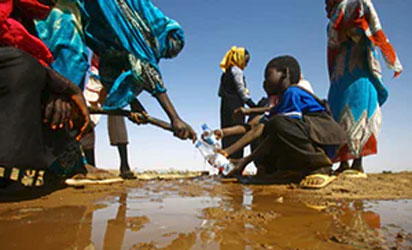
Today, millions are groaning under the burden of unsafe drinking water. It is also a common sight to see women and children moving about with buckets and jerry can in search of illusive safe water.
Water stress: The latest UNICEF report says Nigeria and 36 other countries are facing extremely high levels of water stress and there are fears that water-related diseases in these countries may double but there are more fears as it concerns water in plastic bottles.
The report also revealed that about 600 million children worldwide (1 in 4) will be living in areas where water demand outstrips supply by 2040 In all of these, children will be most affected.
From the remotest part of Lagos to the farthest communities in Maiduguri, the story is the same, there is no safe water anywhere.
Worse still, reports by UNICEF have shown that that the greatest challenge facing the country is non availability of physical infrastructure to harness rainfall and ground water effectively.
Today, there are huge variations in rainfall between north and south Nigeria, making it more important to better plan and manage water resources to minimise the impact of floods and drought. Unfortunately, these factors force children and adults to use unsafe water, which exposes them to potentially deadly water related diseases like cholera and diarrhoea.
It is unarguable that Nigerians constitute significant percentatge of the 3.4 million people that WHO estimates die annually as a result of water borne diseases, associated with inadequate provision of drinking water and sanitation.
This is not unexpected because statistics from WaterAid show that over 63 million Nigerians have no choice but to get water from wherever they can.
Also statistics show that about 130,000 Nigerian children die annually because of water-related infections.
However, in view of these staggering revelations, experts say the situation at hand is escalating waterborne diseases in the country.
According to them, contaminated water can cause different types of diarrheal diseases, including cholera, and serious illnesses such as guinea worm, typhoid fever, dysentery and hepatitis A.
In the views of a Consultant Epidemiologist and Public Health Physician, Prof Akin Osibogun, poor water supply in terms of quantity and quality can increase the risk of various types of water related diseases classified as waterborne, water impounding, water vector, water shortage and water chemical diseases.
Bottled water
Health watchers are also worried that even as shortage of water has remained the norm across Nigeria, and even where available, the safety remains questionable.
Even for Nigerians trying to meet their water needs through purchase of sachet water and table water, there appears to be no reprieve. Recently, members of the National Assembly expressed fears about safety of packaged water.
A motion raised by Sergius Ogun (Edo-PDP) entitled: “Need to Regulate the Use of Bisphenol “A” (BPA) Plastics in the Production of Bottled Water, noted concerns over the effects of drinking water in plastic containers that had been left under the sun or near a heat source, which had been linked to degenerative diseases.
Ogunin explained that most plastics contain the chemical which causes reproductive defect and neurological abnormalities and prostrate issues.
“During the hot and humid weather, the demand for water is on the increase and as such, production of bottled water is on the rise.
“The production of bottled water in most parts is unregulated.
“As a result, the use of BPA plastics, which are by far cheaper than the non-BPA, is generally used by companies producing bottled water,” he said.
Health watchers say all these point to an urgent need for all hands to be on deck especially as the causative factors of waterborne diseases and water shortages are known.
They maintain that there should be stronger political will and better coordination in the water resources management sector to meet the defined national access targets for sanitation and drinking water.
Disclaimer
Comments expressed here do not reflect the opinions of Vanguard newspapers or any employee thereof.