
By Afeez Mustapha
There is no gainsaying that the coming on stream of the Presidential Amnesty Programme greatly reduced the uncertainty and danger in doing business in the Niger Delta, which hosts the oil and gas exploration and exploitation on which the Nigerian nation depends for its economic survival. Comparatively, in the 2006/2008 period, a maximum of 800,000 barrels per day was attainable because of the strident dangerous environment in which the multi-national petroleum companies were working in the militants-infested creeks while the figure rose to a peak of 2.3 million barrels per day after the setting up of the Amnesty Programme. This increment of 1.5million barrels per day brought the nation’s oil and gas daily revenue to $120.45m.
In spite of the direct consequence of the new conducive environment in the creek that commensurably increased the nation’s revenue earnings, there was the largely-held view (which persists to this day) that the funds allocated for the Amnesty Programme annually is mainly used to offset the monthly stipends of the ex-militants whose number runs into almost 30,000 persons. Not many are aware that the Programme is more than a veritable social welfare scheme designed to sate the anger of militant warlords and their foot soldiers
The Programme was designed, partly, as a holistic package of human capital development modem to train the teeming but unemployed restive youth and tap their latent energy and employ it for avenues of human endeavours. At inception, the Presidential Amnesty Programme (PAP) was divided into three segments viz:Disarmament, Demobilisation and Re-integration (DDR), which were implemented sequentially with the ongoing reintegration of the disarmed, and demobilised militants into the larger society so that they can participate fully and actively in the economy and consequently eke out a living.
It is gratifying to note that that the Federal Government has earmarked the sum of N65bn in the 2017 budget for the re-integration of the transformed ex-militants under the Amnesty Programme. Though it is not true that the Buhari Administration has set aside the sum of N29bn to tackle the resurgent militancy in the region, it is pertinent to say that the federal government should increase the allocation to the Amnesty Programme which has, to a large extent, curtailed militancy and pipeline vandalism in the hitherto volatile Niger Delta region.

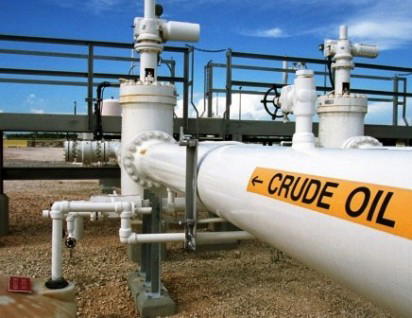
Oil pipeline
With the emerging scenario of some ex-militants who were not captured in the first phase of the programme and the rising cost of training those in institutions of learning here and abroad, there cannot be a more appropriate time for the operational allocation to the Presidential Amnesty Programme, to be increased to meet the exigencies of the current dire economic situation in the country.
As a further mark of government’s sincerity and commitment to the implementation of the tenets of the Programme, it directed that the, monthly stipend due to all the ex-militants be paid directly to them in order to eliminate diversion and misappropriation, as was the case in the past. In addition to the monthly stipend, the eligible ex-militants were also entitled to the human capital development segment of the PAP, which has, undoubtedly, created a new cadre of Niger Deltans who will drive the economy of the region and engender better living conditions and standard among the people which has worsened since oil was discovered in Oloibiri in 1956.
This cadre of ex-militants were enrolled in many schools and institutes in Nigeria and abroad i.e. Russia, United States of America, United Kingdom, Malaysia, South Africa etc, to learn some technical trades, acquire vocational skills and liberal education that will be useful in the general uplift of the people of the region and even beyond. These includes welding, fitting, diving etc while some others with basic educational qualifications were trained (or undergoing studies) as marine engineers, welders, flight attendants, divers, pilots etc.
The commitment and roadmap of the present administration to increase the budgetary allocation to oil the greater responsibilities being borne by the Presidential Amnesty Programme is laudable. Concurrently, the hue and cry for the upward review of the total allocation for the implementation of the Presidential Amnesty Programme in the Niger Delta, is largely predicated on arresting and/or truncating the violent confrontations between aggrieved militants and the regular security personnel of government who are deployed to protect the personnel and the operations of the oil and gas multi-national in the Niger Delta creeks.
In view of the foregoing, any proposal to increase the funding of the PAP will invariably reflect in the gains reaped from the relative peace and security that has replaced the kidnappings, murder, wanton destruction of corporate installations and personal properties, by the then rampaging militants. It is, therefore, advisible for the government to take the issue of developing the Niger Delta Region more seriously to stamp out any form of civil unrest in the Region and other parts of the country.
- Mustapha is a Kano-based social commentator
Disclaimer
Comments expressed here do not reflect the opinions of Vanguard newspapers or any employee thereof.