
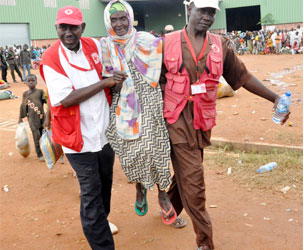
RED CROSS OFFICIALS HELPING AN OLD WOMAN AT THE NEMA TRANSIT CAMP IN ADAMAWA RED BRICK FACTORY IN MUBI ON SUNDAY.
Wednesday, August 19, 2015, Nigeria joined the rest of the global community to mark World Humanitarian Day. For obvious reasons, the country readily identified with the celebration which had as its theme, Inspiring the World’s Humanity. Apart from the fact that Nigeria is a major contributor to global humanitarian causes, the country is said to currently harbour some 3.3 million internally displaced persons, which is considered the third highest in the world.
The figure represents those displaced on account of attacks by armed Islamist group, Boko Haram, counter-insurgency efforts of the military in Borno, Adamawa and Yobe States as well as religious/communal violence in the Middle Belt zone. There are also other factors which include flooding and desertification.


NIGERIAN RETURNEES FROM CAMEROUN RECEIVING THEIR MEAL AT THE NEMA TRANSIT CAMP IN ADAMAWA RED BRICK FACTORY IN MUBI ON SUNDAY.
It has been established that only about six per cent of the IDPs are those who fled their homes due to inter-communal clashes and natural disasters. Frequent brutal attacks by insurgents in Nigeria’s North East accounts for a significant percentage of the internally displaced in the country.
Indeed at the World Humanitarian Day celebration in Abuja, the United Nations Resident Coordinator in Nigeria, Daouda Toure, informed that 1.5 million persons in the country have so far been displaced by terrorist activities and pleaded for more resources to meet their needs. According to him: “(Available resources are) not commensurate with the situation on ground as the crisis in the North-East is not publicised enough”.
It is obvious that government will need to adopt more proactive measures to check the alarming rise in the population of IDPs in Nigeria. It should also compel the Nigerian Immigration Service and the security agencies to intensify efforts towards identifying genuine Nigerian displaced persons to prevent foreigners with questionable intents and even terrorists and suicide bombers from infiltrating the camps and causing havoc to lives and property.
With the telling effects of the military campaigns, more efforts must be directed at the IDP camps round the clock to keep unwanted elements at bay. At the same time, the federal government should evolve a coordinated system of effective humanitarian responses at all levels of governance, as well as contributions from the private sector, religious charities and the international community towards maintaining basic services in the IDP camps. They must be properly catered for, and an orderly process of returning them to their communities after the defeat of insurgency, mapped out.
Given the changing complexity of modern society, it is pertinent for Nigeria to set up a permanent commission to look after citizens routinely uprooted from their homes by factors beyond their control and provide the financial and logistic frameworks to respond to such circumstances beyond the temporary efforts of the National Emergency Management Agency (NEMA).
Disclaimer
Comments expressed here do not reflect the opinions of Vanguard newspapers or any employee thereof.