
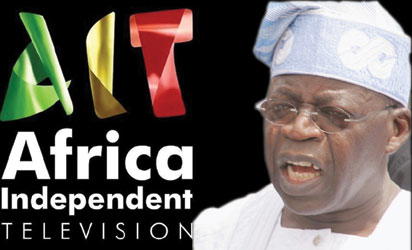
National Leader of All Progressives Congress, APC, Asiwaju Ahmed Bola Tinubu
By Douglas Anele
Rapacious “authority stealing” by top government officials has crippled Nigeria, and it must be stopped. Yet, the President-elect should be clear in his mind about his motivation and overriding goal. If the driving force of probes launched by him is for revenge against enemies, real or imagined, he should be ready for the repercussions. This is because, supposing the outcome of any investigation establishes culpability for corruption by his political opponents,” the perception that it was persecutory will engender resentment and compromise the trust Nigerians repose on the in-coming government to reduce corruption drastically.
Consequently, Gen. Buhari must not repeat the costly mistakes of former President Olusegun Obasanjo who is widely believed to have used the Economic and Financial Crimes Commission (EFCC) to hound his political rivals, which ultimately led to the erosion of public confidence in its ability to perform effectively.
We now consider reports that African Independent Television (AIT) has been banned by the President-elect from covering his activities. Probably, the proscription is retaliation for the damaging information contained in documentaries broadcast by the television station about him and Bola Tinubu, a chieftain of APC. To be candid, if the documentaries in question disseminated falsehood against these individuals, AIT should be condemned because malicious character assassination is morally unacceptable. On the other hand, if they are based on verifiable facts, AIT deserves commendation for courageously exposing the dark sides of a retired former military ruler who would soon be President and a prominent member of APC, the dominant political party in Nigeria presently.
Whatever the degree of antipathy by Buharimaniacs and supporters of Tinubu towards the television house because of the documentaries, Nigerians should be well-informed about prominent politicians and those aspiring to public office so that they can make rational choices especially during elections. Those who cannot endure the heat should leave the kitchen although, as we have already pointed out, peddling falsehood deliberately against anyone is wrong. Of course, Tinubu exercised his right to seek legal redress by dragging AIT to court, before the APC belatedly overruled the ban. Buhari himself has denied ever issuing such an order; still, the very idea of occluding a media outfit from the activities of a President-in-waiting because of a matter already in court is very disturbing in a fledgling democracy that depends heavily on robust professional media reporting to promote transparency and accountability in governance.
At any rate, notwithstanding that the President-elect has disowned the ban, there is some anxiety because his military dictatorship was infamous for its brutal crackdown on press freedom. Hence, he must distance himself from any action that might bring back into public consciousness the ugly spectre of obnoxious Decree 4 of 1984. In that connection, and given Buhari’s concerted efforts with APC to project an image of a democrat different from his dictatorial military antecedents, it is better to drop the military title and address him simply as Alhaji Muhammadu Buhari from now onwards, a move that also captures the fact that the President-elect is a devout Muslim. When Alhaji Buhari eventually assumes office on May 29, his attitude to media outfits that did not support his presidential aspiration will be one of the factors sceptics like me would consider in judging whether his claim of being a converted democrat is genuine or a mere campaign gimmick and shibboleth intended to deceive gullible Nigerians.
Meanwhile, Prof. Itse Sagay’s reaction to the ban drips with irrationality and vindictiveness. Sagay, who seems to be a sympathiser crying more than the bereaved, reportedly said, “I agree absolutely with Buhari on the issue. AIT is not fit to be a practical organisation in Nigeria. An organisation which worships money and would sell its soul to the devil for money and would abandon every ethics of its profession should not exist. If I were in Buhari’s position, I would be harsher.” This is remarkable, especially coming from a respected Professor of law and a Christian. Sagay’s outburst reminds me of the reaction of the scribes and Pharisees to the woman accused of adultery in John 8: 3-11. In the biblical story, Jesus used a simple but powerful strategy to teach the moral cum spiritual significance of tempering justice with mercy and as a warning to those too eager to exact extremely harsh punishment against an offender. Aside from his irrational pharisaic stance, Sagay went too far by accusing AIT, without presenting any evidence, of worshipping money and abandoning the ethics of journalism.
I watch AIT regularly; nothing in its programming supports Prof. Sagay’s argument. The conviction that Buhari is an incorruptible leader who would rescue the country from the cesspit of arrested development has triggered in Buharimaniacs all sorts of hyperbolic expectations of what the new President can accomplish and malicious recriminations against individuals and organisations that did not join the Buhari bandwagon. But the countdown has started already; twelve days from today the President-elect will take over from Goodluck Jonathan, and the challenge of providing good governance begins in earnest from then onwards.
In that regard, Buharimaniacs should start reassessing and recalibrating their exaggerated hope in the in-coming government, because Buhari is gradually stepping back from his fantastic campaign promises, many of which were made without prior rigorous thinking about how they can be actualised in the context of current drastic reduction in oil revenue. Now, Buhari is worried about how best to tell Nigerians that his promise of revamping the economy quickly when he assumes office may not materialise after all. “The expectation is too high,” he laments, “and I have started nervously to explain to people that Rome was not built in a day.” Buhari’s predicament is understandable. Before the elections, he and his party demonised the government of President Jonathan and he was relentlessly propped up as the messiah that would lead Nigeria to the promised land, so to speak. As a result, having won the elections, they should blame themselves for the boomerang effect of building castles in the air as victims of their own questionable electoral victory partly derived from skilful manipulation of the suggestibility of Nigerians. Alhaji Buhari believes he can pay for his populist programmes with monies saved by blocking financial leakages in the system, but unfortunately things are not as simple or as straightforward as that.
First, no one in APC knows exactly how much would be saved from Buhari’s intended anti-corruption measures and the cost of implementing the programmes in the party’s manifesto. Second, Buhari is yet to reckon fully with the big difference between fighting corruption as a military head of state who issued decrees that can be implemented with “immediate effect” and doing so as a civilian President that must carry along members of the National Assembly and wait for the outcome of litigations in courts. Besides, even when perpetrators of corruption at the highest levels of government are prosecuted, sometimes after lengthy investigations spanning several years, there is no guarantee that judgment would always be expeditious and in favour of government since the judiciary has been compromised by corruption as well.
I am convinced that the incoming government would achieve better results if it focuses more on finding bold and imaginative avenues to boost wealth creation instead of preoccupying itself obsessively with endless probes of past governments. Despite my well-founded doubt as to whether Buhari would have the guts to probe Ibrahim Babangida, Abdulsalami Abubakar and Olusegun Obasanjo, I fully support any well thought-out plan for fighting corruption, particularly from 1985 to date. However, that can never eliminate the necessity of urgent geopolitical restructuring together with the creativity and hard work required to bring about revolutionary changes in managing human and natural resources which the country desperately needs at this time. Concluded.
Disclaimer
Comments expressed here do not reflect the opinions of Vanguard newspapers or any employee thereof.