
By Ikenna Asomba
Since November 28, 2014, when the Nigerian Meteorological Agency, NiMet, issued an advisory forecast for dust outbreaks to affect several parts of the country during the December to February dry season, residents in Lagos State have continued to express mixed feelings over the dry and hazy weather condition that has continued to bite harder on them.

It had also stated that the increase in concentration of the dust particles will lead to colder and drier atmosphere as well as increase in incidences of respiratory disorder.
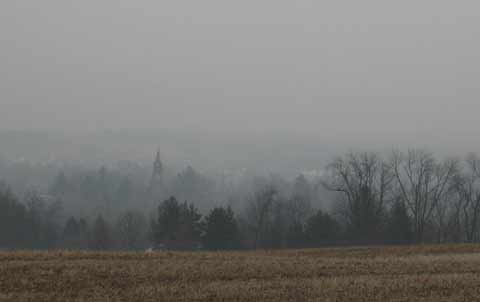
True to this forecast, in the last couple of weeks, severe and widespread dust haze has affected most parts of the country, particularly Lagos, owing to the dust plume raised over Niger/Chad republic and transported by north-east wind over the country.
During a season like this, aside the flight delays and cancellations in airports, increase in incidences of respiratory disorder, incidences of air, road and water accidents are usually on the increase, even as fire outbreaks proliferates.
At press time, Lagos just like other major city centres such as Asaba, Calabar, Ibadan, Port Harcourt, Uyo and Warri share similar temperature in Degree Celsius of 25, 22, 23, 23, 24, 23, 22. This is even as other major city centres like Jos and Kano have the lowest temperature in Degree Celsius of 11 and 12. For other city centres their temperature in Degree Celsius are Enugu (19), Ilorin (19), Maiduguri (15), Owerri (20), Sokoto (14), Yola (13) and Zaria (13).
Against the backdrop of the hazy harmattan, the Lagos State Government, Wednesday, urged residents to take precautionary measures, as the state will be experiencing dusty warm days early in the morning and fog expectedly in the evenings.
The state Commissioner for the Environment, Mr. Tunji Bello who stated this, disclosed that the weather forecast from his ministry indicated that the maximum temperature expected all through this week is 31 Degree Celsius while the minimum temperature of 25 Degree Celsius is expected.
Bello, who warned that visibility will be impaired, however, advised motorists and other road users to be cautious, reduce speed limits, observe road signs, so as to prevent unwarranted accidents.
This is even as the commissioner warned residents to avoid bush and waste burning during this period to avoid incidences of fire outbreak. He also advised them to ensure that drains around their homes are cleaned regularly to prevent the breeding of malaria parasites-infested mosquitoes.
According to health experts, Harmattan affects people’s health in many ways, especially as the skin, eyes and respiratory tract are most vulnerable.
It is expected that the skin suffers dryness with accompanying cracking of lips, soles of the feet and sometimes the skin itself. The eyes also suffer from the abundance of dust particles carried along by the winds, thus itching, foreign body sensations and redness may be common especially in those with allergic eye diseases. A lot of diseases are easily triggered due to this change in weather and lots of care must be taken to avoid fatal consequences.
To reduce the adverse effect of this hazy period, here are few tips from pharmacologists. Drink lots of water; avoid carbonated soft drinks as they dehydrate your skin quite bad; avoid antiseptic soaps during this weather, but use them only when you have a skin infection it is meant to treat. Use it even then for a short period and stop.
Also, keep the skin healthy by applying oily creams and wearing weather friendly clothing; use lip balms and apply Vaseline to the soles of the feet to prevent them from cracking; remember to keep your hair moisturised and also do hairstyles that keep your hair ends hidden. You can also wrap up your hair to protect it from the dust.
Wear warm clothes as they will protect you from the severe cold; rinse your eyes with clean water and reduce the exposure to the dust by wearing protective spectacles; asthma patients or those with chronic respiratory conditions should pay special attention to their health and take all possible and practicable measures to reduce exposure to the dusty atmosphere. They should carry their inhalers with them at all times.
Disclaimer
Comments expressed here do not reflect the opinions of Vanguard newspapers or any employee thereof.