
ship
By Godfrey Bivbere & Olaitan Ayoola
The delay in the commencement work on the proposed Ibeka deep sea port, Akwa Ibom, has been attributed to the long distance away from the site of the project which is about 200km from the sea.

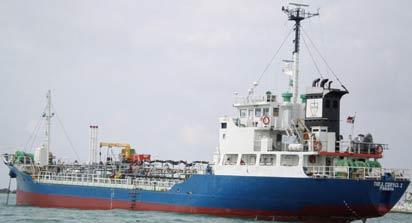
File photo: The e-waste-laden ship at the Tin-Can Port Lagos.
Vanguard gathered that the project analysis done by a foreign consultant and Transaction Advisers, FELAC Concept and Marine and Transport Business Solutions, MTBS, of Netherlands, showed that the port project would not be commercially viable if sited at Ibaka.
A source close to Ministerial Steering and Delivery Committee for the port who spoke to Vanguard, explained that the project had to be moved to Okposo. The source further noted that the same problem of distance from the sea as well as the densely population, made it non-viable.
The source also said that the soil analysis on Okposo showed that the earth there is marshy which would further drive up the cost of construction should it be sited there.
The source pointed out that the project had to be moved again to the third site at Ibenor Local Government Area and the name had to be changed from Ibaka to Ibom like all other projects of the state to give it a state colourition.
The distance from the new site to the sea is about 20 nautical kilometers and also it is closer to the connecting expressway for quick evacuation of consignments from the port at completion, the source disclosed.
The source also said that the area is less populated making compensation for displaced persons easy, as well as making the new site for the project commercially viable.
The transport ministry source said that one of the major challenges face by the Committee at the new site was the presence of under-ground oil pipelines. The source explained that the Committee held several meetings with the Department of Petroleum Resources, DPR, National Petroleum Investment Management Services (NAPIMS) and the various oil companies on how to work around the pipelines.
The oil companies agreed to relocate some of the pipeline that were no longer active away from the area to aid quick construction of the port.
The source explained that construction work on the project is expected to commence sometime next year on a Public, Private Partnership, which will make it the next big thing as it concern ports operations in the country.
Disclaimer
Comments expressed here do not reflect the opinions of Vanguard newspapers or any employee thereof.