
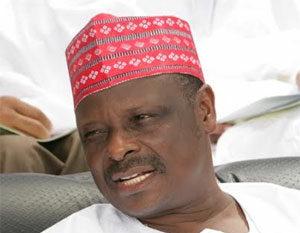
Kwankwaso
By Is’haq Modibbo Kawu
IN the past two weeks, I have been travelling in Kano and Kogi states. Two weeks ago, we were back in Kano along with colleagues from other parts of the country, to see the fast paced developments of the past three years in the city.
I go to or pass through Kano very regularly to know that it is one of the most impressive construction sites in Nigeria today: new housing estates or brand new cities springing up around the great commercial city; the various institutes offering training opportunities to young people and opening entrepreneurial apertures; the network of roads and overhead bridges; street lighting on the broad avenues of the city and the general feel good factor that has become central to life in Kano.
These were the scenes and ambience that we soaked in during the two days that we were in Kano. The extra dimension was the unfolding buzz around the presidential ambition of the governor, Rabiu Musa Kwankwaso.


Kwankwaso
There is no gainsaying the fact that the man’s strength of character and sheer force of personality have been central to the remarkable modernization that Kano is witnessing over the past three years and it became clear that the man was not only renewing his community, but was also looking forwards the possibilities of engaging with Nigeria.
Kwankwaso has become one of the major factors in the political permutations in Nigeria as we move forward towards the 2015 elections. And if what he has achieved in Kano was used as areference point, then the last has certainly not been heard of Governor Kwankwaso. In Kano, there is a lot that has been achieved in three years and they show what leadership can actualize when there is commitment and a sense of purpose. That was the frame of mind that I took out of Kano.
Last week, I was also in Lokoja, the capital of Kogi state. There are strong emotions for me about Kogi state. Afterall, it had been created out of the old Kwara state and many of the childhood memories that I cherish had been shared with contemporaries who were hitherto from the old Kwara but have now become citizens of Kogi state.
And apart from passing through to or from Abuja, it was the first time that I was returning after a few years. It soon became clear that in Kogi, there is a lot of work to do in the struggle for modernity and development. The slogan that hung on the wall in the Government House, in Lokoja, described Kogi as a Confluence of Opportunities, and indeed that is what it truly is! The state capital is a city of very challenging topography, which can be both a threat and opportunity.
In the hands of a visionary leadership, there are tremendous opportunities to create a genuinely modern Nigerian city. One got the impression that it is the foundations of the modernization of the city that are being laid by the government of Captain Idris Wada.
Frankly, things are far from being easy or rosy. We were informed that there are a total of 58 ongoing projects in the state and given the topographical challenges, a conscious effort is being made to take development towards the Ganaja direction of the city, on the Ajaokuta road. New road bypasses are being flagged off in that direction; a new housing estate is also being constructed and the Greater Lokoja waterworks has been fortified to prevent the flooding which almost consumed it in the recent past.
There are hopes for tourism, including the plan to regenerate the Mount Patti residence of Lord Lugard; the contract for the road to that height has already been awarded and the governor told us of the efforts being made to address the issues of youth unemployment and the empowerment of the poor.
There is a lot of work ahead for the people and government of Kogi state, in the struggle for modernity and development. There were false starts in the past and the political situation has often been very adversarial. But at the end of the day the duty of government is to plant that mustard seed of development and the hope that the people can be galvanized to achieve visions of development they can be proud of and be willing to buy into.
Governor Idris Wada is a soft spoken, old pilot who seems far too gentle for the cloak-and-dagger world of Nigerian politics. But he consciously chose the vocation and has surrounded himself with many people from all backgrounds, to help actualize the vision, including our own colleague, Zainab Suleiman Okino, who has temporarily traded the world of newspaper editing for the political world of Commissionership in the Kogi state’s ministry of Information.
We had a long night of interrogations with the governor on all the issues arising from our trip round Lokoja earlier in the day and left with the hope that the will power will be mustered to translate into reality the opportunities that Kogi state possesses. We were already in the mode for the Sallah celebrations and very early the following morning, the eve of the Eid, I hit the roads to get to Ilorin, for my first Sallah celebration at home, in the past three years.
As usual at this time of the year in Nigeria, the roads were clogged up with traffic; trailers have broken down on several stretches of roads desperately in need of maintenance and reconstruction. And because each vehicle is packed with passengers eager to arrive at different destinations, drivers became a bit more careless; two lane roads suddenly morph into four even five lanes from each direction, and everybody gets hooked up in a logjam!
People curse under their breadth; local people from communities on the roads takeover the control of traffic, with unconcealed efforts to extort the road users. The state seems totally absent, infact, useless in these settings, unable to provide the leadership that such moments require. Self-help is the central motif in the Hobbesian state of nature!
Hours on end are spent on these roads and the most annoying thing is that this is a national cycle of logjam that we all know will take place each year, at least four times: the two Eid holidays; at Easter and Christmas/New Year festivities. Yet, we are unable to remedy the situation. If ever there is a country that doesn’t learn lessons taught by the social processes of existence, that country is Nigeria.
Thank God though that after the frustrating sojourn on the roads, we arrived all aching in joints and exhausted in limbs and body, but in one piece, able to participate in the Sallah festivities. We will go through the same cycle at Christmas.
Remi Oyo: My sister, my friend
REMI OYO, former MD, News Agency of Nigeria; former Senior Special Assistant to President Olusegun Obasanjo and a former President of the Nigerian Guild of Editors (NGE), died on October 2nd, of cancer-related ailment in England, a few days before her 62nd birthday.
She has rightly been mourned by people from all over the country, but especially by her colleagues in the media and top representatives of officialdom. Remi Oyo was one of the most generously spirited human beings I ever met.
And we first met in March 1980. I was a near-twenty year old, and had been sent from Ilorin to Lagos to become one of the newsreaders on the National Network Service of Radio Nigeria.
That evening of our first meeting, Remi Oyo was the News Editor on duty and I was the newsreader for the Seven PM, half-hour NEWSPANORAMA news programme.
Soon as I finished reading the news segment, Remi walked up to me to tell me how well I read news; I was slightly embarrassed and she then asked where I came from. When I told her I was from Ilorin, her face lit up, telling me she had also been born in Ilorin and that her mother still lived there. And to make it even more interesting, she lived not too far from my family’s compound!
In the next couple of weeks of my engagement on the Network Service, I saw Remi Oyo every week and we became very close friends. There were far too many tales of Ilorin childhood, in the same neighbourhood of the city that we could share and when I returned home after my tour of duty, I went to see her mother; it was remarkable to discover that she knew my parents and practically every member of our family. The Ilorin town of those years seemed to be so close-knit, that families literally knew each other and the children were collectively taken care of, by everybody.
It was that sensibility that Remi Oyo belonged to, and I used to tell her that she formed her persona and her humane spirit in the wombs of my hometown that she was equally so proud of.
Over the years, our different career trajectories took us in different directions and we were not as in touch as hitherto; and I think my very critical pieces against President Olusegun Obasanjo, especially in the months of struggle against the Third Term Agenda, affected our closeness somewhat, but Remi Oyo was always a dependable sister whose support I could always take for granted, no matter the anger she felt about my writings.
In 2004, when my twins were born and there was a problem with passport formalities in England, it was Remi Oyo I turned to, in order to get our old boss at Radio Nigeria, Dr. Christopher Kolade, who was then Nigeria’s High Commissioner to the UK, to help sort out the logjam.
She obliged with tremendous efficiency and passion just as our boss, Dr.Kolade ensured that the problem was cleared within 24 hours and my wife and twins could return safely home to Nigeria. I am therefore not surprised that practically everybody has had a very good thing to say about a truly remarkable Nigerian woman; a mother and wife; top notch professional journalist, broadcaster, editor and media leader; and for me, a wonderful sister and friend.
May the Almighty God give former ace Announcer/Newsreader, Vincent Oyo, Remi’s husband and the children and the entire family, the fortitude to bear Remi Oyo’s tragic passing.
Disclaimer
Comments expressed here do not reflect the opinions of Vanguard newspapers or any employee thereof.