
•Says Nigeria not prepared for terror, suicide bombings
•‘Why retired military officers can’t be deployed against insurgents’
•His perspectives on Kogi politics; life as a soldier, a politician
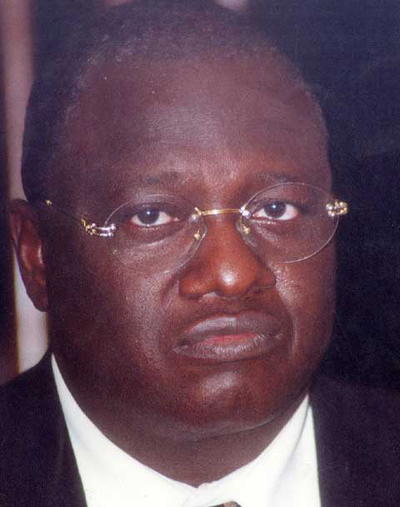
Brigadier General Tunde Ogbeha (rtd) was a two-term member of the Senate, representing Kogi West Senatorial District (1999-2007); and a former military governor of the defunct Bendel State. Ogbeha bares his mind on topical issues. Excerpts:
By Boluwaji Obahopo, Lokoja
What informed your decision to join the military?
I got interested in the army when I was in Jos with my parents living in police barracks. My dad was a police officer. Soldiers came for their usual exercise in the barracks. They stay directly opposite our house. I liked their uniform, their Land Rover and the smart way they did their things: It was then I said to myself that I will like to join the military. I joined the military through the Military School in Zaria in 1962. Of course, the Military School runs secondary school programme side by side with military training. After that, I gained admission into Nigerian Defense Academy, NDA. I passed out of NDA as a second lieutenant.

It’s very difficult, but the high points of my life include the day I got into military school as a young boy; the day I got admission as a cadet into NDA; the day I graduated from NDA and commissioned in 1970 as a second lieutenant.
My progression in the military was very exciting. Before my retirement I got to the level I thought was enviable, I became the Chief of Administration of the Nigerian Army. I got retired as Brigadier General and got into politics and did the best I could in politics. I also run by the side some humanitarian services to the people.
When you were active in the military, Nigeria went through civil war. It was a turbulent period for the country like we are going through right now. What role did you play then?
What happened during the civil war is different from what is happening now. During the civil war, there were obviously marked enemies; we knew who the enemies were. We had obvious objective, we knew who we were looking for, we knew who we were fighting and where they were located. Enemies then were not anonymous or unseen. The situation on ground now is quite different.
We are fighting enemies that are mobile and living within the community. It is an irregular warfare, so to say. What we had in the civil war was a conventional war. Presently, we are fighting enemies that you neither know what they want nor their philosophy. When you are going through this kind of war, your greatest support must come from the people. I mean the citizenry. The people must be willing to provide you with information to operate. It is a real difficult situation for Nigeria. The challenge we are facing now to me is greater than what we had during the civil war.
Given your rich background as a retired senior military officer, what do you think relevant security agencies have done right or ought to do in order to win this war against insurgency in the country?
Surely we must win this war and we need to win it as quickly as possible. The military to me has done well within available resources. The challenge we have now was not taught in the training institutions. In the training institutions, majorly, we were taught the act of conventional warfare; in addition, we were trained how to handle civil unrest, riots and stuff like that. What we are going through now is something we have to teach and we must teach it.
What I am saying in effect is that the military doesn’t have adequate training to handle what is happening. In essence, we are not appropriately equipped to deal with this kind of situation. When I say inappropriately equipped, I mean we don’t have sufficient arms and ammunition, we don’t have sufficient equipment that is relevant to the situation on ground.
The government got to do more to acquire relevant equipment to deal with the challenge. I think the president has taken the right step by going to the National Assembly to request to take loan to get the appropriate equipment for the military.
What do you think we need to do now, I mean proactive measure to be on top of the situation?
I think that is being done, the army is not waiting for Boko Haram to overwhelm it. So within their limited resources, the army is having the upper hand in confronting the insurgence. I think the army is winning already. But the best situation is to bring the challenge absolutely under control as quickly as possible so that Nigerians can sleep with their two eyes closed.
The situation we are going through now, does it mean the military didn’t foresee it?
I don’t think we foresaw it. I personally never thought that Nigeria will be in a situation we are today. If somebody had told me, I would have argued vehemently. I never thought Nigerians could be suicide bombers but today we are. I never thought Nigerians could dare confront security agencies but today they are doing it. So many things are happening that we never thought about.
I think, if you are talking about preparation for this kind of situation; sure we are not prepared. But now that it has come on us; I think government allowed it to take too long, the situation was allowed to manifest into an cctopus. But I believe we have to pay the price by facing the challenge. I see the military prevailing and the Boko Haram becoming history.
This war is not only Jonathan’s war. Why do you think Nigerians are not patient with him?
You are right; it’s not Jonathan’s war. This is Nigerians’ war but the citizens have the right to be impatient because that is the basic responsibility of government – to provide security for lives and property. If government, therefore, is not doing this, then the citizens become nervous and expectant. I do not blame the citizens; because everybody is unhappy and upset about the situation. I think the question should be what Nigerians are contributing to win the fight against this insurgency. I think the citizens could provide information to government and the security agencies if we have any. We must support government.
The international community came in to support the efforts of our government to win this war , buts its like we not seeing the effect of the support?
Yes, you might be right but don’t forget that Rome was not built in a day. This kind of situation does not end in a day. The insurgency we are talking about has developed very strong roots even across our borders. Terrorism today has become a worldwide thing. When you talk of terrorism, you can trace it to countries like Libya, Mali, Chad, down to Nigeria.
We need to contain it on time and I believe that is why the international community is interested. They are coming to help because they are equally vulnerable. Before now it was Al-Qaeda, now it is Boko Haram. Boko Haram is extending its territory everywhere and that is why Nigeria and the sub- region should collaborate to put the situation under control.
Information gathering and information sharing is very important in winning a war like this. I do hope the security agencies are sharing information effectively for a common objective. This information sharing should not just be among the security agencies but the citizenry should be free to share information with government and the security agencies.

I think the role of the media is to inform and educate the citizenry, but they should try to be patriotic. I am of the belief that in your reports, you should be patriotic; information you know will cause the nation trouble should be done away with. When the media start reporting propaganda that tend to rubbish the effort of government or that of the security agencies, without even considering the hazardous environment in which they are operating; that calls for concern. I think our media people should be more patriotic. I think we should all take the nation first, then every other thing follows.
With the situation now, don’t you think we need the experience and service of our retired military officers?
I don’t think so. Our military presently is up to the task, their morale is high. They are engaged in operation that is not in any textbook. They are dealing with enemies they don’t know. The enemies are so mobile that you can’t track them. So, I do not think that those of us that have retired have any role to play now but we can give advice if calls upon. I am sure if the military wants advice from us, we will oblige them. .
Let’s talk about your political career. Why politics after your retirement from the army despite your vast business empire?
I don’t know what the motivation is but I saw a platform where I could help my people; my constituency. I wanted to help contribute to the political progress of Nigeria and that is what I tried to do when I was in the Senate. I think I am happy with myself, I did what I ought to do, I think I represented my people very well, I represented the Senate very well and I represented Nigeria very well.
In case of call to service…
Well, I will react to them positively. Positively in the way that whatever I can do within my competence I will do. I am not going to do something that I cannot progress on either because of age or other conditions. Whatever I want to do I must be able to do it competently. If they beckon on me and it is within the conditions I lay down for myself, I will not let them down. The important thing is that I will always want to seek and protect their interest.
Presently, there are controversial issues in Kogi politics especially your constituency. There is the claim that there was a gentleman’s agreement between the Okuns and the Lokoja/KotoKarfe axis about sharing of elective offices. As a major stakeholder, what is the true position?
I don’t know what is happening, but, in 1999, the late Chief Sunday Awoniyi, the then leader of West Senatorial District, being a man of fair conscience and justice, thought that the governorship of Kogi should go to the Okuns in Kogi-West and that is how Olorunfemi came in. It was arranged that the Senate should go to Lokoja and that was how I came in.
It was agreed that the senatorial seat should oscillate between the Lokoja/Kotokarfe people and the Okuns. That is why after I finished my second term, I did not struggle to get third term. I respected that arrangement and said it should go to the Okuns. I am expecting that such arrangement should be respected and the senatorial seat should be brought back to Lokoja/Kotokarfe axis.
But, as you said, this is a gentleman’s agreement and nobody cares to respect it, this is where tensions come into politics – These are the things that bring tensions. Right now, I know there is tension, I decided to be quiet to see what happens. Where there is no fairness, it brings anti-party activities. I hope when the time of nomination comes, good reasoning and common sense will prevail. People from the constituency will respect that agreement bequeathed to us by our highly respected elder statesman, the late Chief Awoniyi.
As an elder statesman and stakeholders, what are you doing about the issue that has now become controversial?
To me, politics is not a do-or-die affair. When you are in politics for the sake of peaceful co-existence, you have to develop the spirit of give and take, what I call consensus building. Sometimes it is not 100%, it could be 50/50. I believe in the fairness of the governor; because he has shown that he is ready and prepared to be fair to all.
We think we will go through primary elections with fairness and equity so that there will be no imposition of candidates and the will of the people will prevail.
Now that you have mentioned the governor, what exactly is your assessment of the governor since his assumption of office?
Within the limited financial resources at his disposal, he is putting it into good use in the sense that he is trying to change the face of Kogi, bring development to Kogi and giving people a sense of belonging. I think he has done well. I think he will do more if he is given the opportunity and co-operation. I have seen him doing a lot in education, agriculture, in the health sector and also doing a lot in provision of critical infrastructure. Our governor is on the right track and we need to support him.
Do you think Wada deserves second term?
This first mandate is not over, I think it’s too early to start talking about second term. Second term will take care of itself. You know they said; ‘by your work we shall know you’. When the good works are there, re-election will become automatic. He is on the right track and if he finishes this tenure on the right track, I don’t see why he cannot get the second term.
What is happening to the reconciliatory move of the state PDP?
Truly, the reconciliation is still on. Currently, the governor is on local governments ‘thank you visit’ and I think that is still part of the reconciliation. A lot of night and mid-night meetings are going on among stakeholders and party faithful. If you watch, Alhaji Jibril Isah Echocho has been attending government functions. That shows that the reconciliation efforts put in place by our indefatigable governor is working.
Even, aggrieved members are coming back to the PDP, we are one big family before and other people will come back.
Talking about the opposition party in Kogi State, especially the APC, what is your assessment of them?
Yes, the opposition is on ground. We cannot underrate the opposition. The APC is on ground, we must work hard to make sure they don’t occupy the comfort zone. We must work hard to justify the support of the people and, above all, we must not take the people’s support for granted.
Let us talk about the National Conference. Are you impressed with issues that cropped up there?
The National Conference has both good and bad points. There were some good things they did and some bad ones. But my own problem is that how do you implement whatever decision they have made? As far as I am concerned, there is no substitute for the National Assembly because the lawmakers are elected by the people. The National Conference members are not elected; so they have no business to make decision for Nigerians. They don’t have that right, they don’t have the mandate. I believe that whatever decisions they have made should be turned over to the National Assembly to handle.
Disclaimer
Comments expressed here do not reflect the opinions of Vanguard newspapers or any employee thereof.