
By Tonnie Iredia
About a month ago, the Nigerian Guild of Editors held its Annual Convention in Asaba with the theme ‘Nigeria beyond Oil’. It is noteworthy that the conference took the form of a crusade to get the nation to diversify its economy and stop its over reliance on oil. For this reason, this column commended the move especially the pivotal role of Governor Emmanuel Uduaghan of Delta State. Considering that the crusade will evolve a plan B for even development of the nation, the need to evolve such initiatives in all sectors cannot be overemphasized.
Since 1999 when democracy returned to our nation, ample premium has been placed on political development. That is welcome. But the nation desires to also pay a corresponding attention to its social and economic growth.
Otherwise, the over politicisation of every issue can easily lead us to what Governor Rochas Okorocha of Imo State describes as ‘Kwashiokorism’- a phenomenon in which only the head grows bigger by the day at the expense of other parts of the body. This is more so as our political leaders have established beyond reasonable doubt that politics has neither ethics nor morality and that it is merely a game that is like a war, in which the end justifies whatever means
The consensus today is that our politicians particularly the ruling Peoples Democratic Party, old and new, have overheated the polity to the extent that the rather fragile fabric of solidarity which binds our nation together has been stretched to breaking point. Can Nigeria afford to play politics all year round leaving little or no room for development and good governance? Is it fair that the typical Nigeria politician, irrespective of political party, who gets elected into office for a four year term, begins in less than 24 hours in office, different schemes for a second term? It is therefore time to identify well-meaning patriots who can galvanize our feeble civic society into a formidable pressure-group to check mate majority of our politicians who have proven to be too drunk to be rational
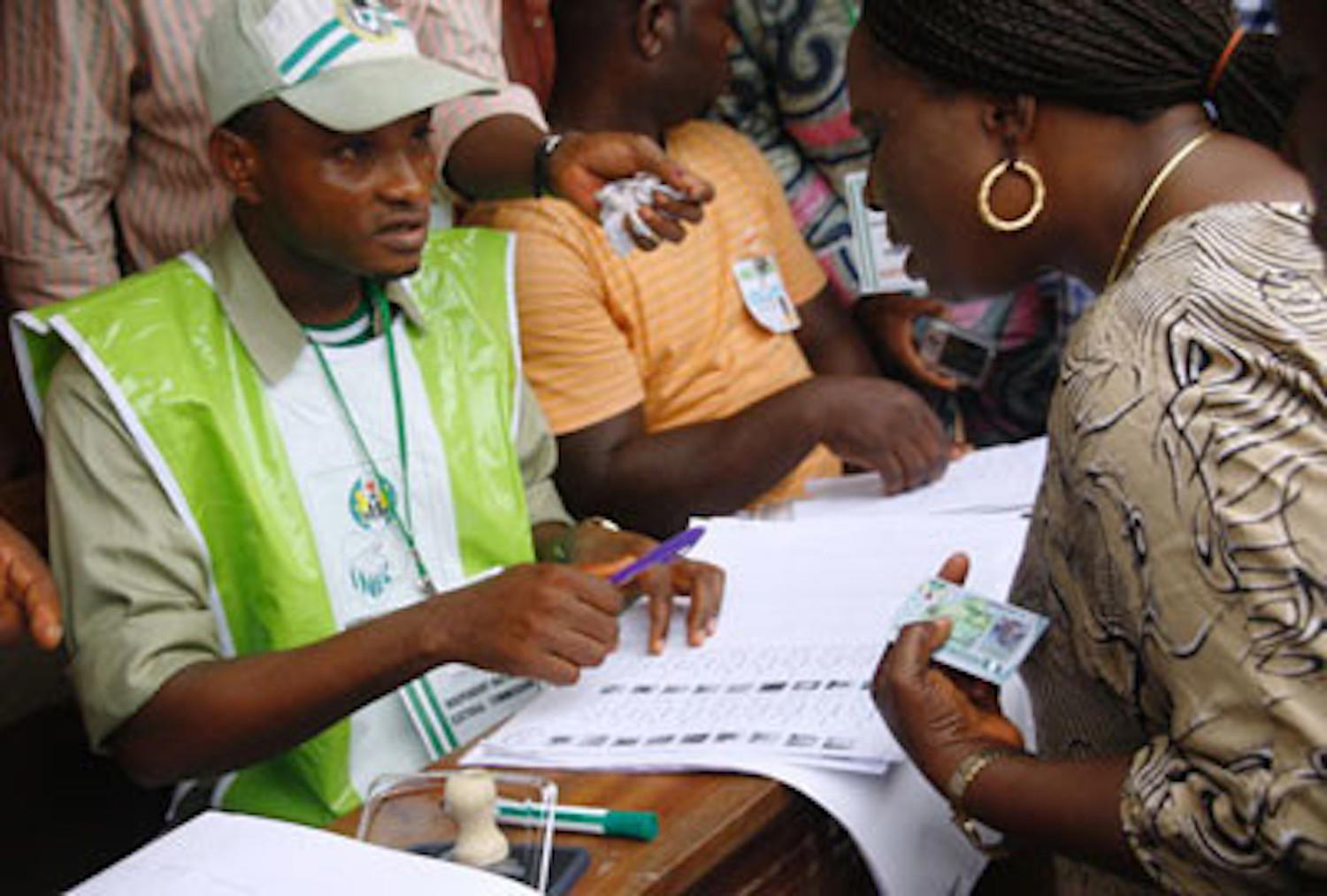
The first assignment of the team should be to put pressure on the Independent National Electoral Commission (INEC) to serve as a veritable umpire of our election process by employing best practices in the conduct of elections. The over-rated current managers of INEC have to be told that the nation has not seen commensurate electoral reforms. The Commission has not even been able to conclude the registration of voters it commenced 3 years ago. All that we have remains a system of temporary voters’ cards with several announcements that permanent cards are coming “soon”.
Again, INEC appears to believe that the system has improved simply because University Vice Chancellors (VCs) are now the returning officers in our elections. The INEC chairman himself a former VC, should note that no one believes that his former colleagues can stop election malpractices without the aid of technology having been unable to end examination malpractices in their universities.
The present managers of INEC have to reject political pressures from election riggers and use technology to sanitize our election process so that we can elect into office, visionary leaders who can initiate and implement good development projects for the nation. In any case, in this age of biometrics where the Police, Immigration, Road Safety, Population Commission, National Identity Agency etc. are all using technology to identify Nigerians, INEC cannot remain in the stone age and buy the concoction that our gsm-loving population is not literate enough to participate in a technology based exercise. With such a resolve, people will no longer be able to manipulate their way into power making it easy for us to have a responsible political class that can drive the nation’s growth.
Our civil society groups must wake up from their slumber and take their rightful position in returning the nation to the true path of development. All that is needed is not to organize destructive riots but to raise the consciousness of Nigerians and make every political conduct an election issue. In other words, all the groups must come together and in unionism refuse to vote for politicians who are unable to meet our collective desires. There is a catalogue of examples that cannot be fully exhausted here. A few would do.
First, Nigeria has enough money to build a few hospitals that can dissuade our current medical tourism. Thus, Presidents and Governors as well as their deputies and their spouses who travel abroad for medical treatment because we have no good hospitals should not be voted back into office for a second term. Second, those who are unable to accord priority to education leading to incessant strikes in our universities should not return. The same should apply to those who are unable to provide employment thereby exacerbating our current high level of insecurity. Indeed, Governors who are unwilling to pay minimum wage should not be patronized. What this suggests is that labour shall be a veritable part of the scheme
Third, all those who have surreptitiously held- on to salaries that are internationally recognized to be the highest in the world should not be supported. Neither should voters condone any longer, politicians who deprive societal institutions of growth by demanding undue favours during oversight functions. The same should happen to those who impose candidates on organizations for employment. The civil society grouping would have ample gender support when we add to those who should not return, legislators who initiated and or voted in favour of child marriage.
Fourth, political office holders who victimize ‘non indigenes’, minority groupings and their sponsors who seek to impeach the majority, those who in an election interpret 16 as bigger than 19, those who manipulate the impeachment of innocent deputies, men and indeed women of capacity who fight in the legislature, executives who build a-one kilometre road at the cost of 8, those who disobey court orders and those who deprive the citizenry of freedom of movement whenever they have a function should not return. With these, 2015 will be our year of strength rather than that of predicted extinction.
Disclaimer
Comments expressed here do not reflect the opinions of Vanguard newspapers or any employee thereof.