
By Bisi Lawrence
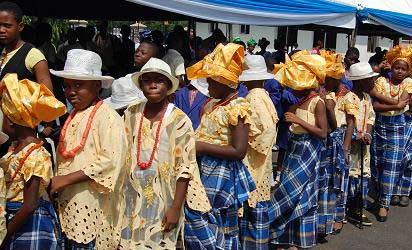
I happened to attend a celebration of the so-called “Democracy Day” earlier in the week. It was held by a concert of elementary/primary/basic (suit yourself) schools which included one in which I have an abiding interest. The children marched with banners waving, after which formal ceremony, they settled down to dance. You never saw the like— or maybe you have! We are in a country where almost anything is allowed to pass muster, even the way our children grow up.
The pupils launched out with vim and vigour at the sound of the music, itself a repetitious horror denied of tune and short of melody. And then the gyrations began, among children of between five and eleven years old, in the style and disgustingly prurient manner in which they had seen the grown-ups dance on the TV. I could hardly believe my eyes.
Some of the teachers too, though lacking the facility of a supple torso that makes such contortions possible, attempted to encourage their wards by following suit.
When I tried to express my shock at such carryings-on, one of the teachers was surprised. “You should see them at their parties”, she panted. And, of course, the parents too would be present at such gatherings, obviously casting loving glances at the display of depravity. Some parents would probably not have been comfortable with such antics, while others may feel inclined to accommodate them, even if they do not fully accept them. But isn’t that a description of our general attitude to so many deplorable circumstances of our life as a nation?
Start from the naming of that day as “Democracy Day”. What is the rationale for the purpose of an act that deprives the nation of a whole working day, a nation whose people claim to be serious about their over-all development? What makes it deserving of that title in a land which had celebrated its independence from colonial rule decades earlier?
Into what other form of government did we graduate when we obtained our freedom? Granted that we were subjected to the iron heel of military rule for a considerable period, yet it could not crush our spirit of liberty which kept us alive as a people until we subsequently restored our rights. Was it at the point when we had at last emerged from the doom of military rule that anyone would discount the sacrifices that had been made and the victory that had been won, to impose a shabby landmark in our history for us — and least of all, by elements of those who had deprived us of our rights to proper governance?
But we took it in, didn’t we? Just like we nearly take it all in. There were, we should not forget, people like Nnamdi Azikiwe, Obafemi Awolowo, Aminu Kano, Osita Agwuna, Mokuogwu Okoye, Gani Fawehinmi, Wole Soyinka and his unique cousins, the Kuti brothers, Fela and Beko, Alhaji Balarabe Musa and several others who fought and continue to fight against taking it all in, hook, line and sinker. But the odds have always been overwhelming.
First is the constraint of poverty, which points one’s desire in the direction of the next meal, especially in the midst of available food if one can pay the price of acquiescence. It comes with an irresistible velocity when others are seen benefiting from silence, while others are losing through resistance. The saying in Yoruba that the lure of food sometimes deprives one of wisdom ( Ohun ti yio je ni ko je ki 0 gbon) then assumes the full force of its conviction. Have you not heard of the Ijaw alhaji who boasted that President Goodluck Jonathan had better be retained in office, or else?
Then is the awesome power which those above (Oga at the top) have acquired and are able and willing to use with devastating effect, to manipulate, to intimidate and to totally devastate institutions and personalities. It is happening right before our eyes and voices are raised against it, but who pays much attention to toothless dogs, no matter how much they bark? When Obasanjo was going to impose Yar’Adua of the nation, no less than seven governors were said to have shown up, but not one of them eventually waited for the show down. They were not cowards; they were just cautious.
Finally, and the most dangerous aspect of this deplorable situation, is that world-weariness might spread through the articulate section of the nation and laisser-faire begins to dominate our psyche. That would permit decadence to bloom, and corruption to flourish, because rather than fight them one would be naturally inclined to join them, look around and see how the graph depicting the status of corruption is rising. From the secondary schools to the tertiary institutions, from the commercial houses to the banks, from the police stations to the high courts and probably beyond, the filthy fingers of bribery, fraud, sleaze and all forms of impropriety have left their dark imprint on the face of all our endeavours, even within the gates of our religious establishments.
That is why we no longer seem to nurse the luxury of shame. We have gone beyond that.
We now adorn ourselves with its apparels. Is it not shameful that, after we had built scores of universities within our own country (and still counting) we still clamour to send our children and wards to universities abroad? And why not, when our universities are now regarded as little better than glorified secondary schools, even by ourselves? And we now eagerly source for huge amounts to send our sick ones to India, and Pakistan, and South Africa — and maybe soon to Afghanistan — to receive standard remedial attention available in several other parts of the world. And we are unable to refine the petroleum products which a benevolent providence has bequeathed on us. In stead, we ship them to foreign lands to refine them at an arguably monumental loss to us, in the process of which we defraud our own resources. Nothing to be ashamed of in what brings in enough from which to give billions of naira in bribe, whilst millions starve for want of two square meals a day … nothing, nothing at all!
And that is why super-economists doubling as Finance Ministers will stand up and tell us about why we should not complain at all, because Nigeria remains the preferred “investment destination” of so many foreign countries. So you ask, “What has that done for the economic situation of this country when you remove it all from the scented pages of dry Harvard School of Business presentation? How many jobs does it provide? How many mouths does it feed? How many poor lives does it relieve? How many roads does it repair? How much more energy does it provide? How can she stand there, from day to day, and tell us that the “economy” is not as bad as it is made out to be? Well, the answer is simple: she is a Nigerian; she has no shame.
We can perceive how much better the economy is in the last three years from what we see. We try to say it ought to be vastly better, but we are cowed by near-penury and brow-beaten by sheer apprehension at what may happen to us, if we were to raise too high a voice. For what might not happen to you if you shouted too much about your civil right when every attempt was made to overwhelm a State Governor at his own doorstep for trying to claim his right as a citizen to vote and be voted for in an open election? And it is all being done in the open by men of honour who no longer know shame.
They know it is wrong, but they look at us boldly in the face and carry on all the same.
And in that, they are different from the children I saw dancing the day they call “Democracy Day”, though it fell on a season of heart-gripping injustice. Those young minds did not know the full impact of their error, especially on themselves, because no one had told them that prurient excitement would lead to an immoral end. But, at the end of the day, to grab that much-abused phrase, the two groups are on all fours with each other and every Nigerian — they have no shame.
However, the people of RiversState are challenged today to throw off the cloak of ignominy that is being cast on their shoulders as a people in standing firm by the honour of their governor, Chibuike Amaechi, who is now the target of unmerited disgrace. They have the opportunity of resisting the naked edge of implacable power and pointing the way of true Democracy to the rest of us. They are called upon to uphold the dignity of their ancestors which history has marked down for them to follow. And they, too then may become the pathfinder for the true destiny of this nation.
Time out.
Disclaimer
Comments expressed here do not reflect the opinions of Vanguard newspapers or any employee thereof.