
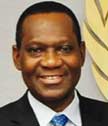
Foreign Affairs Minister, Amb.Olugbenga Ashiru
I READ the article titled ‘Decline of Nigeria’s Foreign Policy’, published in The Guardian of May 6, 2013 by Dr. Adekeye Adebajo, Executive Director for Conflict Resolution, Cape Town, South Africa.
He obviously did not do the basic research to capture activities of the Ministry of Foreign Affairs in the last two years, before writing his article. It is curious that a ‘scholar’ could write an article on Foreign Policy and deliberately dish out false information to the wider public, for self aggrandisement. It is, therefore, appropriate to write this article to put the record straight and not allow the dissemination of falsehood, based on intellectual laziness or plain mischief, to triumph over truth.

Foreign Affairs Minister, Amb.Olugbenga Ashiru
Contrary to Dr. Adebajo’s assertions, Nigeria did not contest any election with South Africa’s Dr. Nkosazana Dlamini-Zuma, for the post of African Union Commission (AU) Chair person. We also did not campaign against her election or for any other candidate. All we did was to voice our reservation that the medium and smaller nations within the Organisation should be allowed to fill that post, to make them have a sense of belonging.
Sense of belonging
This was necessary, given the great sacrifices which Nigeria had made to develop and nurture the continental organisation and its unity. We had nurtured and provided an appropriate leadership, which was appreciated by all concerned, since the formation of the OAU in 1963, through to its transformation to the AU, in the last fifty years. This was also in line with our policy of promoting and deepening the unity of our continent, as advocated by the founding fathers of the Organisation. We have consistently provided the voice of reason that maintained the unity of our continent, even when crises developed that could have led to the breakup of the Organisation.
Nigeria definitely had its own agenda in the run-up to the elections referred to by Dr. Adebajo. We decided that it was in Nigeria’s national interest to take a shot to fill one of the posts of Commissioners in the Organisation. The foreign policy machinery of the Ministry of Foreign Affairs was energised only to that goal. It, therefore, strategized on how best to ensure victory for Nigeria’s chosen candidate, Ambassador (Mrs.) Aisha Abdullahi, former Ambassador to Guinea, Conakry. It was this team that planned and built alliances across Africa’s sub-regional groups in order to get Nigeria elected to the post of Commissioner for Political Affairs. It should be noted that this is the Department responsible for the enthronement of democracy and conduct of elections in Africa.
A ‘scholar’ like Dr. Adebajo should have acknowledged this success. He was no doubt aware of Nigeria’s failed attempts thrice before the elections under consideration, to achieve this feat since the formation of the AU ten years ago. Today, Nigeria and South Africa have put the elections behind them and are working together to advance the cause of Africa, particularly to build a more economically strong continent. This was attested to by the recent very successful State visit of President Goodluck Jonathan to South Africa from May 6 to 8, 2013.
Furthermore, Dr. Adebajo also got it wrong on Nigeria’s peace keeping efforts in Africa and the world at large. Nigeria’s role and record in peace keeping operations in Africa and outside the continent is unassailable. This was in fact the subject of commendation by the United Nations Secretary General Mr. Ban ki-Moon, in his meeting with Nigeria’s Foreign Minister, Ambassador Olugbenga Ashiru in New York on April 25, 2013.
Distinguished diplomat
The former praised Nigeria’s efforts to re-equip its forces in Darfur and Mali with modern and UN rated equipment. Yes, Dr. Adebajo is correct that his mentor, benefactor and a distinguished diplomat, Prof. Ibrahim Gambari, after serving for over 10 years as Under Secretary General, lost out in the high wire politics at the topmost layer in the United Nations, but that loss cannot be equated to a sudden decline in our profile at the United Nations.
Despite the loss of Professor Gambari as UN Secretary General Special Representative in Darfur, we continue to be well represented, even at the top-most level of the UN system, with one Under Secretary General (Prof. Babatunde Osotimehin) and two Assistant Secretary Generals (Mrs Margaret Vogt and Ms. Amina Zubairu). In the last two years, we have secured, through very tough elections, 14 positions for Nigeria and Nigerians, including the prestigious position of President of International Fund for Agricultural Development (IFAD), based in Rome. This is the first time in the history of our diplomatic relations that Nigeria will secure such a high number of positions in international organisations in quick succession.
In Cote d’Ivoire, Nigeria’s strong voice to uphold democracy, evidenced in the support given to the winner of the Presidential election, Dr. Alassane Quattara prevented a bloodbath in that country. President Goodluck Jonathan’s unwavering support for democracy made the EU, UN and the US to follow Nigeria’s lead, while the AU had no choice but to come on board and support Nigeria’s position for the winner of the elections in that country. Nigeria’s position was a step taken in line with President Jonathan’s policy to defend democracy in Africa.
With over three million Nigerians living in that country, the intervention in Cote d’Ivoire was in our national interest. Today and for the first time in the history of our diplomatic relations, Nigeria and Cote d’Ivoire are on the same page, working together to resolve the challenges in the continent. A number of Nigerian businesses have since taken advantage of the very cordial relations between both countries.
As examples of Nigeria’s impeccable foreign policy gains, I will quote what two distinguished statesmen said of Nigeria’s leadership role. First, Dr. Quattara, who made Nigeria his first port of call after his inauguration as President of Cote d’Ivoire said in Abuja in September 2011, and I quote, “but for the role played by President Goodluck Jonathan, my country would have been in a bloody civil war.” Secondly, the United States President Barack Obama in his statement to the 66th Session of the United Nations General Assembly on September 21, 2011 said “Nigeria must be commended for the leadership role it played in resolving the crisis in Cote d’Ivoire.”
Furthermore, and in line with our policy of zero tolerance for unconstitutional change of government, Nigeria condemned the recent undemocratic changes of government in Guinea Bissau and Mali. In Guinea Bissau, it was President Jonathan that negotiated a peaceful resolution of the crisis and prevailed on the coup leaders from executing the detained erstwhile President and Prime Minister and even facilitated their safe passages out of the country. In Mali, Nigeria was the architect of the peace deal that installed a transitional government. Dr. Adekeye may wish to note that the draft Framework Agreement was initiated in Abuja at the Ministry of Foreign Affairs. Nigeria was, therefore, not working from the back, as reasoned by him, but from the front. Indeed, we were in the driver’s seat all through the negotiations. Furthermore, Nigeria has committed over 1200 troops to the UN-mandated African-led International Support Mission in Mali (AFISMA) under the command of our own Major General Shehu Abdulkadir. We worked very hard, with France and other members of the United Nations Security Council, to ensure that AFISMA becomes a UN operation and thereby transfer its funding from ECOWAS/ AU to the United Nations. This was no doubt a decisive move to avoid Nigeria ending up with shouldering the financial burden of the military operation in Mali. This was a strategic move by Nigeria.
In post Arab spring crisis and the resultant civil war in Libya in 2011 when the leadership in Africa and the African Union were in total disarray, with no clear path to follow, it was Nigeria’s timely intervention in the recognition of the then Transitional National Council (TNC) that showed the way for other African countries to follow.
Defending democracy
Within a few days of Nigeria’s announcement, a majority of Member States of the African Union, hitherto sitting on the fence, followed our lead. The commitment to defending democracy on our continent informed Nigeria’s timely decision to support the aspiration of the Libyan people for freedom and democracy. Nigeria’s position, which was dictated by our national interest, was very decisive. The immediate result of Nigeria’s action was the protection of our nationals that remained behind in the country, even when we had dispatched an air craft to evacuate our citizens at the outbreak of the country’s civil war.
In a bid to encourage and promote the inflow of Foreign Direct Investment into the country, Nigeria has signed bilateral agreements and MOUs with several countries in the areas of trade, technological cooperation, ICT, education, culture/tourism, etc. The increased exchange of high level visits between Nigeria and other countries of the world have certainly enhanced Nigeria’s bilateral cooperation with these countries.
AmeduOgbole Ode is Acting Director/ Spokesperson, Ministry of Foreign Affairs
To be concluded
Disclaimer
Comments expressed here do not reflect the opinions of Vanguard newspapers or any employee thereof.