What is the cost of freedom of expression
The weaponization of law: Nigeria and the case of cybercrimeBy Ikechukwu Nnochiri A Federal High Court judge in Abuja, Justice Obiora Egwuatu, had, on September 9, made a critical observation about the continued weaponisation of the cybercrime law by security agencies.He noted that cyberstalking charges have become a “new oil well” for law enforcement agencies, […]
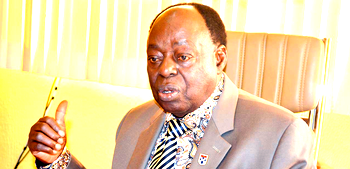





Valedictory speech: Justice Dattijo ‘convicted’ fellow justices without proof — Ahamba, SAN
Justice Musa Dattijo retired from the Supreme Court bench last week upon clocking the mandatory retirement age of 70 years.

EFCC chair: Fresh issues over Olukoyede’s confirmation
In this report, Vanguard’s Law & Human Rights captures the gist of the arguments for and against the appointment of Olukoyede as the chairman, Economic and Financial Crimes Commission, EFCC and the implication of Senate’s confirmation of his appointment at a time the judiciary was already seized of the case facts.

Impeachment: Aiyedatiwa’s race for survival in Ondo
In this report, Vanguard’s Law Human Rights explores the background facts surrounding the on-going plot by Ondo State House of Assembly to impeach the state Deputy Governor, Lucky Aiyedatiwa; examines the steps taken so far by the embattled deputy governor to save his head vis-à-vis judicial precedent and constitutional provisions on impeachment of executive governors and their deputies.

Why Nigeria is on wrong path 63 years after independence — Kalu, SAN
Professor Awa Kalu, SAN, a respected member of the inner bar and erstwhile Abia State Attorney-General and Commissioner for Justice in this interview draws a distinction between the rule of law and the rule of man even as he emphasises that any society that fails to operate by the rule of law is prone to conflict and instability.

Perspectives on OBJ’s ‘drilling’ of Iseyin monarchs
In this report, Vanguard’s Law & Human Rights examines two separate video clips on how former President Olusegun Obasanjo publicly ‘drilled’ more than a dozen Iseyin monarchs at a state function in Oyo State last Friday over what he called breach of protocol and harvests perspectives of Nigerians, particularly lawyers, on what appears a clash between the Yoruba tradition and the constitutional protocol on the one hand and the evolution of traditional rulership from pre-colonial era till date on the other hand. The report infers that stakeholders desire urgent review of the 1999 Constitution to allow for preservation of traditional institution in Nigeria.