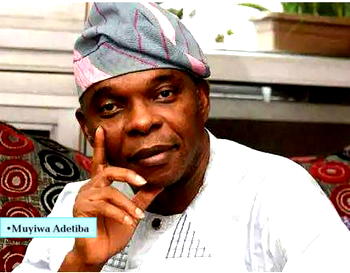

Carrying coal to Nescastle, by Muyiwa Adetiba
Regular users tell me that the road from Sagamu interchange to the Lagos end is usually about thirty minutes if the traffic is light and about forty-five minutes if it is heavy, which often happens at weekends. Recently, it took us – my two friends and I – almost four hours to navigate that journeyand […]


Licenced to kill, rob and defraud?
The catchphrase, ‘Licenced to kill for the secret service’ caught my fantasy as a young man. It was to explain—and possibly excuse—the dare devil forays of James Bond, the legendary Agent 007 of Her Majesty’s Secret Service. Many of us loved this debonair agent whose job was to rid the society of dangerous people.

The path of least resistance
Trust Nigerians to make a joke out of anything. In the wake of the FBI announcement of the names of Nigerians who had been accused of being involved in internet fraud running into several millions of dollars, a social media ‘joke’ on FBI went viral. It was about the FBI not respecting our Federal Character. This was because the listed names were predominantly from a particular ethnic group. It would indeed, have been funny if it wasn’t a grim indicator of who we had become. Everything in Nigeria has to be patterned along ethnic lines it seems.

Did Senator Ike Ekweremadu deserve his German experience?
It sounded unbelievable that a ranking Senator could be so disgraced— I found parts of the footage really embarrassing —in a foreign land by his own people. Especially since some of those people—by themselves or through their kinsmen—had been responsible for the serial endorsements he had received through the ballot box over the years. To the best of my knowledge, this ranking Senator has not had any problem winning elections in his senatorial district time after time. Even after his alleged ‘sins’ on the Biafra cause, he still won the last election handily. So it is either the elections did not represent the true feelings of the people in which case we need a serious electoral overhaul, or the action was from a few disgruntled minorities as alleged by him. I also find the endorsement of this action at home by many people including enlightened ones, uncomfortable. It is a pointer to people’s feeling at the state of the nation.

Did ‘Revolution now’ fail?
One lesson I have never forgotten about the human mind and how it operates was taught me way back in the 70s in the unlikeliest of circumstances. The 70s were the years of the strong anti-apartheid movement all over the world. And Nigeria, led by the extremely likeable Joe Garba as External Affairs Minister, had a strong anti-apartheid foreign policy. In fact, Nigeria was listed among the front line states although it is geographically miles away from Southern Africa where apartheid was in full force.

Racial profiling
Last Friday morning found my senior brother and I on the way to Ilesha in Osun state. It was a trip we should have made months ago.

A reporter’s reporter turns 70
They came out in good numbers to pay a befitting tribute to a man who had devoted more than half of his working life which spanned four and a half decades to active journalism.

They hardly make them like that anymore
Alhaji Lateef Kayode Jakande, the Action Governor of Lagos State, the ‘Baba Kere’ of yore, became officially certified as ‘Baba Agba’ last Tuesday when he joined the revered and extremely rare club of Octogenarians. I missed the event that marked the occasion.

Are our politicians bridge builders or bridge breakers?
I have Aremo Olusegun Osoba’s yet to be autographed and yet to be opened biography in my hands—I hope to rectify the first soon by requesting him to do me the honour of an autograph and the second next week now that Wimbledon, (British Open) which ended last weekend, and Africa Cup of Nations, which ended this weekend, have been cleared off my sporting table.

Are our politicians bridge builders or bridge breakers?
I have Aremo Olusegun Osoba’s yet to be autographed and yet to be opened biography in my hands—I hope to rectify the first soon by requesting him to do me the honour of an autograph and the second next week now that Wimbledon, (British Open) which ended last weekend, and Africa Cup of Nations, which ended this weekend, have been cleared off my sporting table.

RUGA as the new oil field?
Since the Federal Government, or an arm of it, announced the policy of RUGA settlements to contain the itinerant nature of our cattle business, neither the government nor the governed has had peace.

Some values we used to hold dear
A prominent Minister in the last government once told me a story of how as a young boy, he was hurrying out on an errand along the dusty streets of his village in Otukpa, Benue State when he went past a heavily pregnant woman labouring to pound yam.
Furore over Fulani vigilantes
Anybody who is familiar with interstate travels in Europe will attest to the belief that it is usually a pleasant experience as long as you keep to basic traffic rules. The highways are lined with conveniences should you decide to take a break either to refuel yourself or your car. The police vehicles you see in strategic places are there to make you feel safe as well as to keep you on the straight and narrow.The only fear you can have is a car breakdown, and it is not that much of a fear because help is usually available at the touch of a button. Not so in Nigeria where the absence of basic conveniences on the highway makes you feel vulnerable in case nature calls in any shape or form—or your car decides to rebel or malfunction—while the presence of police vehicles fills you more with trepidation than relief.Certain highways are in fact, dotted with more than police. They have other government operatives like Customs, Immigration and even Civil Defence which line up to exact their toll and regular interstate travellers have to learn to deal with them. Recently, bandits masquerading as herdsmen have joined them to make roads unbearable for travellers.And a car breakdown in this situation makes you susceptible to many dire challenges. That there is still space for these marauders to rob and kidnap in the ‘tightly marked’ interstate roads says a lot about the quality of the people supposedly put on the roads to protect us.

How I choose to remember MKO Abiola
By Muyiwa Adetiba Chief Moshood Abiola has become the hero of our democracy. And so shall it be for as long as June 12 is seen as our Democracy Day. In fact, the day might as well be called M.K.O. Abiola Day. But it is by no means a unanimous choice. There are people, a […]

Miyetti Allah, herdsmen, and the people of Osun State
I have strong ties to Osun State. These ties mean I should visit at least once a fortnight. But my aversion for local travel generally and road travel particularly, had led to what can best be described as a dereliction of some duties. In the course of my travels to that part of the world, I have had flat tyres along Ife–Ilesha road a couple of times, engine problems a couple of times, been accosted by policemen many times and taken to their station once. But ‘the ties that bind’ are too strong for these to be used as tenable excuses not to visit. Besides, not once during those challenges did I consider my life to be in serious danger. Then suddenly, I am told that a route I have used all my adult life at different hours of the day— or night—has now become too dangerous to ply. Or if you must ply, it has to be within specific hours. And the herdsmen I have been seeing all my life around the route, and regarded as benign, are now to be feared and regarded as dangerous to my well-being. This is now, not only a tenable reason not to fulfil my obligations to that area, it is a serious cause for concern.

As the visa noose tightens
On Monday, I had a conversation with a lady who calls me daddy and whom I am proud to regard as a daughter. She is a manager in a bank. Her husband is a medical doctor. They are both in their 40s. Ordinarily, the likes of these two, should be the backbone of any society. They should be the archetypal middle class with a home in the better part of town and kids in posh schools. They should qualify to be members of the top social and sporting clubs in their area. That was what it was in my time. That is what still obtains in many other countries. But the reality of their time is that they are struggling financially and socially to earn the status that their professional training and position should have entitled them to. They feel, quite rightly, that they can have a better life elsewhere. It is an option they are being pushed to explore.