
By Jeremiah Urowayino
Trade experts and thought leaders from across the African continent have said Africa has a role in shaping the World Trade Organisation, WTO, reform, noting that the world is at a critical juncture for the multilateral trading system.
They said this while launching the Africa Trade Policy Working Group, ATP Working Group, a new effort to strengthen African voice and influence in global trade governance, with Dr Ese Owie appointed as Convenor.
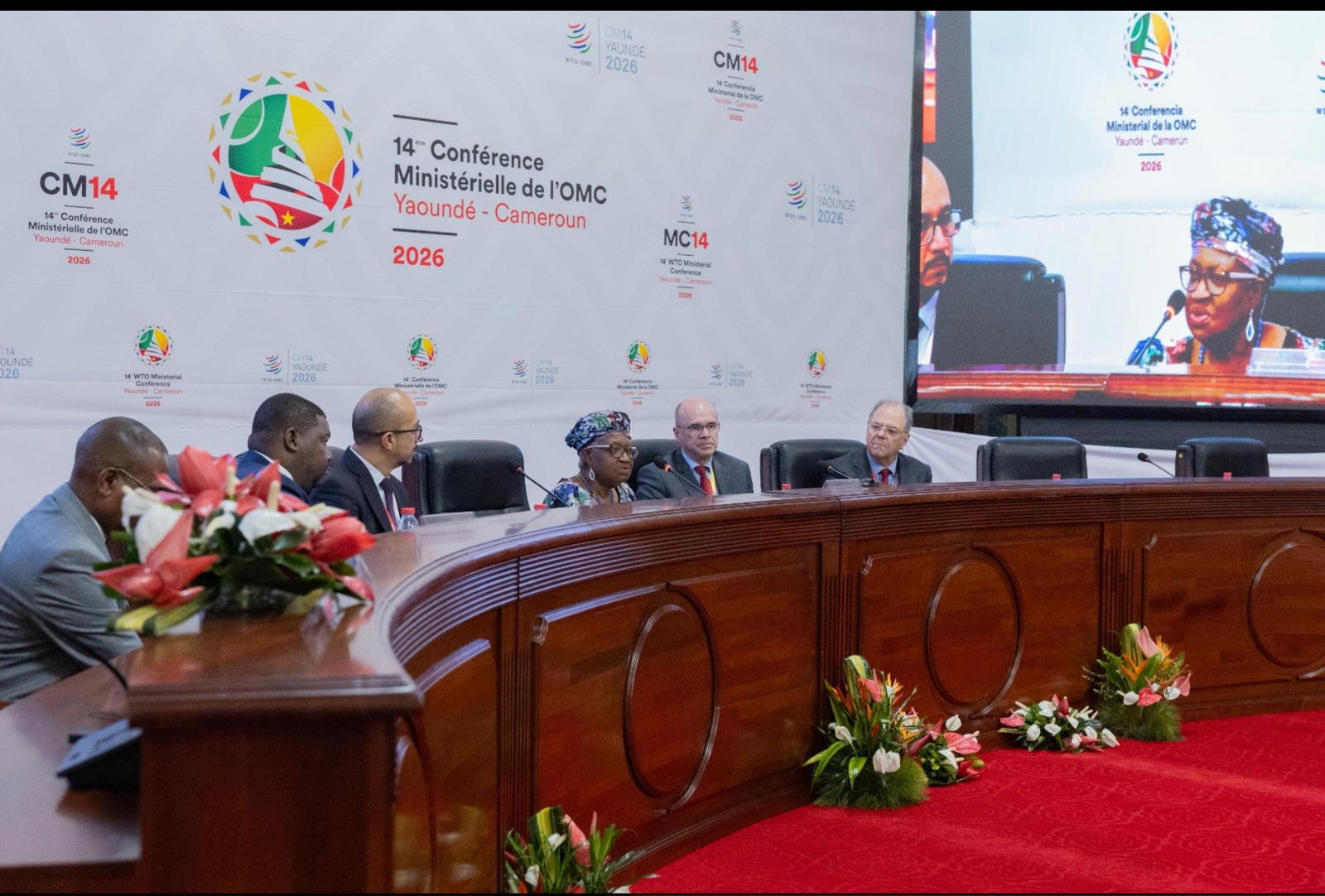
The ATP Working Group, launched on the sidelines of World Trade Organization’s 14th Ministerial Conference, MC14, in Yaoundé, Cameroon, aims to position Africa as a strategic actor in the evolving global trade order by amplifying and connecting leading thinkers from across the continent and the African diaspora, while bridging policy, academia, and practice.
The ATP Working Group emerged from a high-level workshop co-organised by the Remaking Trade for a Sustainable Future Project, RTP, ODI Global, Trade Negotiations and Investment Forum, TNIF, International Relations Institute of Cameroon, IRIC, Forum on Trade, Environment & the SDGs, TESS, and South African Institute of International Affairs, SAIIA.
Those featured include WTO Director-General, Dr Ngozi Okonjo-Iweala; WTO Deputy Director-General, His Excellency Xiangchen Zhang; and Professor Dan Esty of Yale University and a co-founder of the Remaking Trade Project, and other leading policymakers, negotiators, and scholars.
The statement, which revealed the group, said: “Key areas of focus will include development-oriented reform, climate-trade linkages, supply chain resilience, digital trade, and institutional renewal, thereby advancing a more coherent, coordinated, and forward-looking African contribution to global trade debates.
“Discussions at MC14 and associated convenings underscore both the urgency of WTO reform and the growing recognition that Africa must step forward to proactively shape the future of global trade governance.
“The multilateral trading system is undergoing structural transformation, driven by geopolitical realignment, climate change, supply chain restructuring, and digitalization. The establishment of the ATP Working Group reflects a strategic shift in Africa’s engagement with global trade governance—from fragmented participation to coordinated influence.
“The ATPWG, convened by the Remaking Trade for a Sustainable Future Project’s Senior Advisor Dr Ese Owie, is anchored by a coalition of leading African and globally recognized institutions, reflecting both regional depth and international reach. Founding partners include: African Future Policies Hub; Firoz Lalji Institute for Africa, London School of Economics; International Relations Institute of Cameroon, IRIC, Lagos Business School, Pan-Atlantic University; Onsi Sawiris School of Business, American University in Cairo; Trade Negotiations and Investment Forum, TNIF; South African Institute of International Affairs, SAIIA; Strathmore Law School, SLS. In addition to its institutional partners, the ATPWG is supported by a network of leading African trade experts, several of whom attended the launch in Yaoundé, underscoring the depth of expertise and commitment behind the initiative.”
Disclaimer
Comments expressed here do not reflect the opinions of Vanguard newspapers or any employee thereof.