
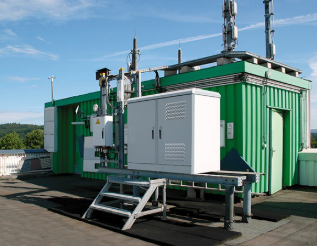
Cost of 11,000 rural base stations, 40m litres of diesel expose details
By Juliet Umeh
With more than 11,000 rural telecommunications base stations consuming an estimated 40 million litres of diesel monthly, Nigeria’s drive to connect underserved communities faces a costly infrastructure challenge that extends beyond building network towers.
The challenge is compounded by the affordability of smartphones and data, unreliable electricity and the difficulty of generating sufficient revenue from rural networks. For millions of people, having a mobile signal does not necessarily mean they can afford to access digital services, attend online classes, obtain digital financial services or connect farmers to markets.
The Nigerian Communications Commission, NCC, reported broadband penetration of 57.40 percent in July 2026, with 124.42 million broadband subscriptions. However, subscription figures alone do not establish how many rural residents enjoy reliable, affordable and meaningful internet access.
The infrastructure gap is equally important. While fibre networks can provide backbone capacity, connecting remote villages and households requires additional investment in last-mile infrastructure. Operators must also contend with the cost of powering base stations, maintaining equipment and deploying networks in communities where demand may not immediately justify the investment.
These challenges formed the focus of the second edition of the Rural Connectivity Summit, RuralConnect 2.0, organised by Business Metrics Limited in Lagos under the theme, “Rural Inclusion at Scale: Connecting the Next 25 Million Users for Frontier Market Growth.”
Telecommunications operators, regulators, infrastructure providers, satellite companies and investors called for a shift from measuring connectivity through network coverage to ensuring actual usage, affordability and sustainable service delivery.
Beyond coverage
President of the Association of Telecommunications Companies of Nigeria, ATCON, Tony Emoekpere, said the industry needed to move beyond coverage figures and subscriber numbers to establish whether rural residents could afford and use available services.
“We need to move away from coverage and think about how to ensure that people in rural communities use the technology services rendered to them,” he said, identifying device and data costs as major barriers.
Emoekpere proposed a commercial model in which schools, primary healthcare centres, local government facilities and farm cooperatives serve as anchor customers, generating predictable demand to sustain rural network investments.
“A site that connects a school, a primary health care centre, a local government and a farm cooperative can enter the phase of revenue from day one. And that can serve as a sustainability,” he said.
He also advocated integrating telecommunications deployment with electricity projects, arguing that mini-grids should be planned with the potential to power connectivity infrastructure.
Powering rural networks
Managing Director and Chief Executive Officer of the Rural Electrification Agency (REA), Abba Aliyu, represented by the agency’s Executive Director, Technical Services Directorate, Umar Umar, highlighted the cost of powering rural telecommunications infrastructure.
According to the agency, Nigeria has more than 11,000 rural base stations, with an estimated 40 million litres of diesel consumed monthly to power a large proportion of them.
“Reliable electricity is the enabling infrastructure for rural connectivity,” Umar said, describing ongoing collaboration between REA and the NCC to integrate electricity infrastructure with telecommunications networks.
The partnership has progressed from mapping rural mini-grids and telecommunications base stations to evaluating business models and preparing pilot projects involving operators, tower companies and mini-grid developers.
REA’s existing interventions include the Nigeria Electrification Project, under which about 380 grant agreements have been signed, more than 150 hybrid solar mini-grids commissioned and approximately 1.45 million solar home systems deployed.
The agency also highlighted the $750 million World Bank-funded Distributed Access through Renewable Energy Scale-Up programme, expected to support 1,350 mini-grids, including 250 interconnected mini-grids, with the broader objective of providing new electricity access to about 17.5 million Nigerians.
Stakeholders believe integrating telecommunications sites with renewable energy infrastructure could reduce operating costs and improve network reliability.
Rural connectivity is an investment challenge
In a separate interview with the Chief Technology Officer of NATCOM Development and Investment Limited, trading as NTEL, Kingsley Uwazie, said rural connectivity was primarily an economic and investment challenge rather than simply a coverage problem.
“Rural connectivity is not a coverage challenge. Rural connectivity is an investment economic challenge,” he said, noting that high operating expenditure often makes rural deployment commercially unattractive.
Uwazie outlined four approaches to bridging the gap: infrastructure sharing, deploying appropriate technologies, aggregating demand and making devices more affordable.
On infrastructure sharing, he urged operators to share towers, energy facilities and backhaul infrastructure to reduce the cost of deployment and maintenance.
He also advocated using different technologies according to local conditions rather than extending fibre to every location.
“Where we need LEO satellites, we use satellites. Where we need fixed wireless for the last mile, we use fixed wireless. We don’t have to put fibre on all last mile areas,” he said.
According to him, fibre could provide backbone capacity, while satellite, fixed wireless and mobile networks could serve communities where fibre-to-the-home deployment would be too expensive.
Uwazie also stressed the need to aggregate demand by connecting institutions such as schools and hospitals to the same infrastructure.
“We need to find a way to aggregate demand, build the connectivity in such a way it is useful at different times, so that it pays off the cost of building that site,” he said.
He further proposed instalment payment plans to help rural residents acquire smartphones. For example, devices costing between N60,000 and N90,000 could be offered through 60- to 90-day payment arrangements, depending on the price and repayment terms.
He argued that affordable devices would help more people participate in digital services, although the benefits would depend on household incomes and data costs.
Financing the last mile
Founding Partner of Infratel Africa, Tola Yusuf, said Nigeria’s challenge was less about a shortage of solutions than the ability to implement them sustainably.
Presenting a paper titled “The Reality of Rural Connectivity: Pursuing Sustainable Deployment Amid Multiple Challenges,” Yusuf identified five critical factors: power, payback, permits, protection and people.
“Building a rural site is hard. Keeping it alive is harder,” he said, advocating renewable energy, viable financing, streamlined approvals, infrastructure protection and community participation.
Yusuf cited findings from his doctoral research indicating that stakeholders recognised the value of blended finance, infrastructure sharing and renewable energy, but faced difficulties with funding, coordination and timely implementation.
“Nigeria does not have an ideas problem. We have an execution problem,” he said, urging stakeholders to measure outcomes such as network uptime, affordability and connectivity for schools and clinics.
“Fund the service. Reward the outcome,” he added.
He cautioned that backbone infrastructure alone would not guarantee inclusion, referring to Project BRIDGE and its planned 90,000 kilometres of fibre.
“Reaching the LGA headquarters is not reaching the village. The backbone creates capacity. The last mile creates inclusion,” he said.
Local investment and inclusive policies
Director of Strategic Business Initiatives at ipNX Nigeria, Olusola Teniola, called for long-term, naira-based financing and stronger support for indigenous companies capable of delivering last-mile connectivity.
He also advocated local peering and local content, urging policymakers to incorporate the needs of rural communities into connectivity strategies.
“Those policies and strategies need to be intentional, otherwise we will keep going round in circles,” Teniola said.
Convener of RuralConnect 2.0, Omobayo Azeez, said rural connectivity had implications for education, healthcare, agriculture, financial inclusion and economic opportunities.
He identified high infrastructure costs, unreliable power, difficult terrain, limited backbone infrastructure and uncertain commercial returns as major constraints.
“This is why RuralConnect seeks to move the conversation from connectivity as an aspiration to connectivity as an actionable development agenda,” Azeez said.
Ultimately, stakeholders argued that connecting the next 25 million users requires an integrated approach combining electricity, shared infrastructure, appropriate technologies, affordable devices and sustainable financing.
The measure of success, they said, should not simply be how many villages have network coverage, but whether residents can afford reliable services and use them to improve their livelihoods.
Disclaimer
Comments expressed here do not reflect the opinions of Vanguard newspapers or any employee thereof.