
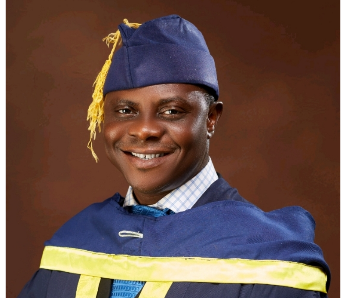
… says air ambulance physician acquires anaesthesia skills to boost emergency survival
…urges doctors, nurses to specialise in anaesthesia, critical care
By Joseph Erunke, Abuja
For patients battling for survival during medical emergencies, the difference between life and death may come down to how quickly a healthcare professional can secure a compromised airway, a reality that has driven the Managing Director of Braingrace Ambulance Services Limited, Dr. Akeremale Stephen, to acquire specialised training in anaesthesia.
Stephen, a flight physician who routinely participates in emergency medical evacuations and critical care transfers by air and road, has graduated from the School of Anaesthetic Studies, Badagry, with a Diploma in Anaesthesia, in a move he said was driven by the need to strengthen his capacity to save lives during medical emergencies.
The programme is accredited by the West African College of Surgeons.
For the physician, the qualification goes beyond personal career advancement, reflecting a commitment to improving emergency medical services, particularly in situations where patients can deteriorate rapidly and access to immediate, advanced medical intervention becomes critical.
Drawing from his experience in emergency ambulance operations, Stephen said the ability to assess, secure and manage a patient’s airway was indispensable to the survival of critically ill patients, particularly during medical evacuations when access to comprehensive hospital facilities could be limited.
“An airway lost is a life at risk,” he said, underscoring the importance of advanced airway management in emergency medicine and critical care transport.
As a flight physician, Stephen explained that he frequently encountered situations in which patients could deteriorate unexpectedly, requiring emergency resuscitation, ventilatory support, sedation or endotracheal intubation.
Such situations, he noted, leave little room for hesitation, making specialised knowledge and the confidence to intervene promptly essential for medical personnel involved in pre-hospital care and aeromedical evacuation.
According to him, the realities of emergency medical transportation informed his decision to pursue further training in anaesthesia, equipping him with additional competencies to manage life-threatening situations and improve patient outcomes.
Beyond the operating theatre
Challenging the perception that anaesthesia is primarily associated with surgical procedures, the physician said its relevance extends to intensive care, trauma management, emergency medicine, pre-hospital treatment and aeromedical services.
He explained that anaesthetic training provides healthcare professionals with essential knowledge of airway management, patient monitoring, pain control, sedation, ventilatory support and emergency response.
These skills, he said, are particularly important for medical teams transporting critically ill patients over long distances, where sudden deterioration could turn a routine transfer into a fight for survival.
“Whether managing a critically injured trauma victim on the roadside, stabilising a patient during a long-distance air evacuation, or accompanying a critically ill patient on a commercial medical escort flight, the ability to protect and control the airway can determine the outcome of the entire mission,” he said.
Stephen, whose company provides emergency ground and air ambulance services, medical evacuation and medical escort operations, said strengthening the clinical capabilities of emergency medical personnel was critical to improving the quality and safety of patient transportation in Nigeria.
Against the backdrop of the demands of emergency healthcare delivery, the physician urged medical doctors, nurses and other healthcare professionals to consider specialised training in anaesthesia and critical care.
He said Nigeria and other African countries needed more healthcare professionals with advanced competencies in airway management, resuscitation and emergency care to improve survival rates and strengthen healthcare delivery.
He added that investment in specialised training would help equip medical personnel to respond more effectively to emergencies, particularly in pre-hospital settings where early intervention could significantly influence patient outcomes.
For Stephen, the diploma represents an opportunity to translate additional clinical knowledge into better emergency response and safer patient transfers through Braingrace Ambulance Services Limited.
He said he remained committed to strengthening emergency medical services, advancing air ambulance operations, promoting safe patient transportation and contributing to the development of emergency healthcare systems in Nigeria and across Africa.
The physician also paid tribute to the late Dr. Olaniyi Oladapo, the pioneering coordinator and one of the principal architects of the School of Anaesthetic Studies, Badagry.
He credited Oladapo’s vision, commitment and advocacy for anaesthesia training with helping to establish an institution that has trained generations of anaesthesia professionals and contributed to healthcare delivery in Lagos State and Nigeria.
According to him, the late doctor’s legacy continues through the healthcare professionals whose training and expertise contribute to saving lives.
Stephen also commended the current coordinator of the school, Dr. Abiola Mafe, for her leadership and commitment to maintaining the institution’s academic and clinical standards.
He expressed appreciation to the consultants, lecturers, instructors, clinical trainers and mentors who contributed to his professional development, saying their guidance had strengthened his competence and determination to provide safer and more effective emergency and critical care services.
As he marks the achievement, Stephen said his overriding objective remains to ensure that patients entrusted to his care receive the highest possible standard of treatment, regardless of whether they are being transported by road or air.
For him, the diploma is not merely another academic credential but an additional tool for confronting the critical moments when medical expertise can determine whether a patient survives.
“Every new skill acquired in medicine represents another opportunity to save a life,” he said.
Disclaimer
Comments expressed here do not reflect the opinions of Vanguard newspapers or any employee thereof.