
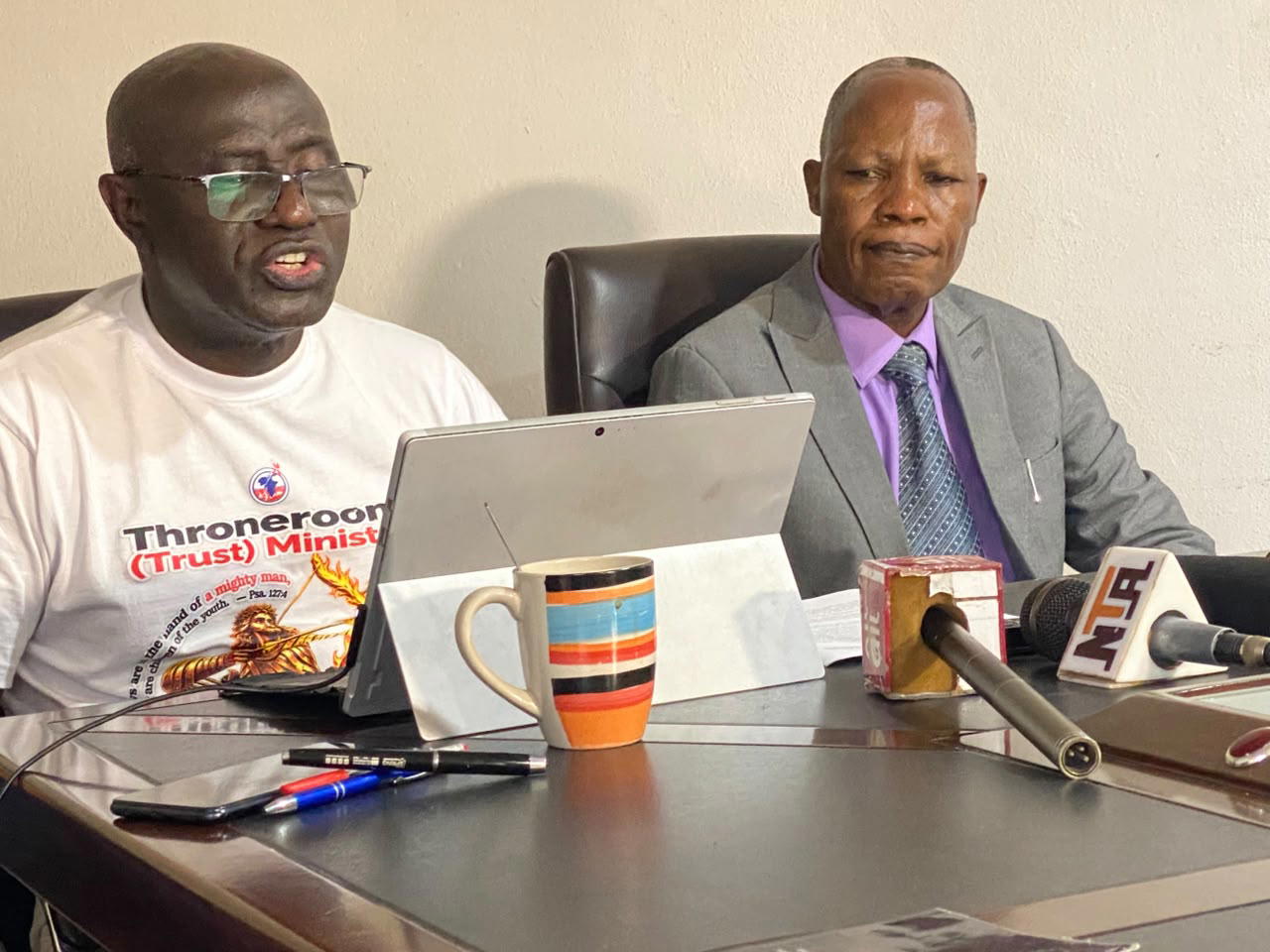
The Middle Belt will support political parties that present clear, practical and region-specific development plans rather than rely on political rhetoric and general campaign promises, the first Fire Convocation of Middle Belt Nations has declared.
The position was contained in a communiqué read by the Vision Pioneer of Throneroom Trust Ministries, Apostle Dr Emmanuel Nuhu Kure, at the end of the three-day convocation held at Throneroom Ministries, Kafanchan, Kaduna State, from October 15 to 17, 2026.
The communiqué stated that political parties seeking the region’s support must demonstrate an understanding of its peculiar challenges and present actionable plans to address insecurity, infrastructure deficits, education, healthcare, economic empowerment, agriculture and inclusive governance.
It cautioned the region against committing prematurely to any political party without obtaining clarity on its development agenda, urging those who had already done so to reconsider their positions in the interest of the people.
The convocation also called for increased political participation among Middle Belt residents through voter registration, higher voter turnout, participation in elective contests, support for credible candidates and accountability from elected representatives.
It urged the people to embrace a fundamental shift in consciousness, leadership, unity and collective action to address challenges confronting the region and Nigeria at large.
The communiqué called on communities to define their aspirations, establish clear priorities and pursue their legitimate interests with courage and unity while overcoming fear, division and passivity.
It stressed that communities should not merely wait for peace and justice but should organise themselves and pursue their goals with determination, while prioritising the protection of human life and the safety of their people.
On insecurity, the gathering expressed concern over persistent insurgency, terrorism, banditry and kidnapping, as well as the loss of lives and destruction affecting communities across the region.
It questioned why Nigeria had continued to struggle with these challenges despite having security institutions, intelligence networks and other resources.
The communiqué also expressed concern over what it described as the silence and absence of government in rural communities affected by violence, calling for urgent and decisive action to protect lives and property.
Participants were urged to strengthen community protection, intelligence sharing and cooperation while pursuing peaceful and constructive responses to insecurity.
The convocation further called for an end to the culture of silence surrounding violence and suffering in the region. It advocated responsible reporting and constructive engagement to ensure that the experiences of victims and affected families were not forgotten.
During its question-and-answer session, the gathering also discussed concerns about movements seeking to establish a global Islamic caliphate and the stated objectives of jihadist groups pursuing an African caliphate centred in Northern Nigeria.
The communiqué highlighted the potential implications of these concerns for Middle Belt communities, warning that developments affecting rural settlements could extend to urban centres if not adequately addressed.
It urged residents to remain conscious of the challenges confronting their communities and pursue lawful measures to protect their lives, freedoms and ancestral lands.
The gathering also called on Christian denominations to rise above their differences and work together on issues affecting their communities.
It commended Kure for championing spiritual awakening, collective consciousness and purposeful engagement with the challenges confronting the Middle Belt.
According to the communiqué, the region’s renewal would require visionary leadership, spiritual revival, unity, courage and a collective determination to pursue peace, justice, freedom and sustainable development.
The communiqué was endorsed by Kure, Apostle Dabs Dalyop Gwom, Hon. Rimamnde Shawulu Kwewum, Apostle Emmanuel Egoh Bako, Dr Zuwaqhu K. A. Bonat, Rev. Gideon Mutum and Luka Biniyat.
The convocation brought together ministers from different Christian denominations across the 15 Middle Belt states and the Federal Capital Territory, alongside elder statesmen, families affected by violence, researchers and resource persons specialising in peace and conflict journalism, research and advocacy.
Disclaimer
Comments expressed here do not reflect the opinions of Vanguard newspapers or any employee thereof.