
By Olasunkanmi Akoni
The Lagos State Government, through the Office of Education Quality Assurance (OEQA), has reaffirmed its commitment to a technology-driven, evidence-based quality assurance system to improve teaching and learning in public and private schools.
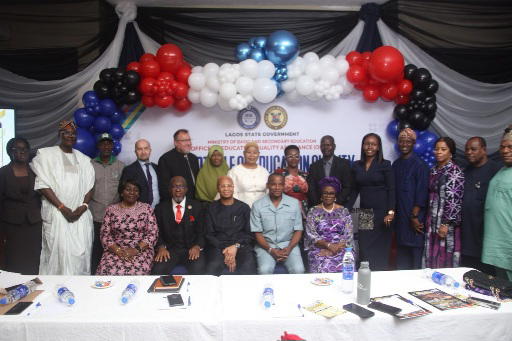
The commitment was restated at a Roundtable on Education Quality Assurance, organised by OEQA at, Ikeja, themed: “Adopting Global Best Practice in Transforming Education Quality Assurance in Lagos State.”
Declaring the roundtable open, Commissioner for Basic and Secondary Education, Mr. Jamiu Tolani Alli-Balogun, said the engagement would generate practical ideas for strengthening quality assurance, stressing that evaluation must go beyond inspections to translate into targeted interventions and measurable learner performance.
Tolani welcomed technical partners from Finland and urged stakeholders to adapt international best practices to Lagos realities, expressing confidence the roundtable would produce actionable recommendations and an implementation roadmap.
Delivering the keynote, immediate past Director-General of the Budget Office of the Federation, Mr. Ben Akabueze, said the true measure of an education system is not enrolment but quality of learning, noting persistent disparities in learning resources, textbooks, labs and teacher support between public and private schools.
He advocated a proactive, data-driven framework anchored on clear standards, regular school self-evaluation, continuous teacher development and technology-enabled monitoring.
Tutor-General/Permanent Secretary, Education District I, Dr. (Mrs.) Idowu Olufunke Oyetola, called for clearer standards for public and private schools, improved feedback mechanisms, leadership certification for principals, school-cluster mentoring, data dashboards and community participation, with attention to learners with disabilities.
Director-General of OEQA, Dr. Sulaimon Ogunmuyiwa, outlined the agency’s REMI mandate: Regulate, Evaluate, Monitor and Improve. He said quality assurance should support improvement, not be punitive.
He listed challenges including shortage of evaluators, manual documentation, inconsistent data, inadequate staffing and weak stakeholder coordination.
To address gaps, he presented seven reform priorities, including strengthening school-based quality assurance through trained vice-principals, annual self-evaluation and improvement plans, expanding operational presence across 57 LGAs and LCDAs, a Non-State School Policy, and establishing a quality assurance laboratory to assess learners, teachers and schools.
Earlier, Director, Planning, Research and Statistics, OEQA, Mrs. Evelyn Ibukun Pelemo, said efficient quality assurance must be built on clear standards, reliable data, professional competence and transparency, with global principles adapted to Lagos context.
Group Head, Education Finance, Sterling Bank, Mrs. Yonodu Okeugo, who represented CEO Mr. Abubakr Sulaiman, highlighted private-sector support through educational solutions and technology tools.
The roundtable drew policymakers, school owners, professional associations, education district representatives and development partners.
Disclaimer
Comments expressed here do not reflect the opinions of Vanguard newspapers or any employee thereof.