
Dockhive, a cloud infrastructure company, is developing an AI-powered platform designed to simplify software deployment and give developers greater control over the infrastructure powering their applications.
The company is positioning its services for an emerging era in which artificial intelligence agents increasingly write, modify and manage software, creating demand for infrastructure that can support automated deployment and operations.
At the centre of its approach is Drone, an AI deployment agent designed to turn codebases into running applications by handling tasks such as building software, identifying deployment problems and attempting to resolve them.
According to the company, developers can request application deployment without manually configuring every build step, while retaining the ability to intervene when additional configuration is required. Framework-specific deployment presets are also available for those who prefer greater control.
The approach seeks to address a persistent challenge in software development: although AI coding assistants are making it easier to generate code, deploying and maintaining applications still requires technical expertise and coordination across multiple infrastructure services.
Dockhive is developing tools intended to bridge that gap, allowing developers to manage more of the process from code creation to production.
The platform also integrates with AI coding tools through the Model Context Protocol (MCP), enabling developers to interact with infrastructure from within their existing development environments.
The company believes that as AI agents become more capable of building and modifying applications, infrastructure must evolve to allow those agents to deploy, operate and maintain software more efficiently.
Sovereign cloud ambition
Beyond deployment automation, Dockhive is pursuing a broader vision of sovereign cloud infrastructure, with an emphasis on giving developers and businesses greater control over where their workloads run and how their data is managed.
Dependence on major cloud providers can expose startups and businesses to pricing constraints, operational complexity and limitations associated with particular infrastructure ecosystems.
For organisations handling sensitive information, questions about data location, access, compliance and control also remain important considerations.
Dockhive’s approach seeks to make infrastructure more accessible while advancing greater independence from tightly coupled cloud environments.
However, the company’s broader sovereignty ambitions will depend on practical capabilities, including workload portability, transparent infrastructure policies, security controls and clear information about where data is processed and stored.
Integrated services for developers
Dockhive’s product ecosystem comprises several services designed to support different stages of application development and operation.
Drone handles deployment automation, while App Hosting provides a route from code repositories to live applications. HivePods offers cloud development environments, and Tunnel allows developers to expose locally running applications through public HTTPS addresses for testing and collaboration.
Other services include managed databases, Hive Buckets for S3-compatible object storage, Hive Realtime for real-time messaging, Hive Functions for serverless code execution and managed n8n workflow automation.
The platform also offers Node Explorer and integrations for AI agents, extending its capabilities into infrastructure management and developer workflows.
By bringing these services together, Dockhive aims to reduce the need for development teams to assemble and maintain separate tools for building, testing, deploying and operating applications.
The approach could be particularly useful to startups and smaller development teams seeking to reduce infrastructure overhead, as well as businesses building AI products that require increasingly automated operational workflows.
Founders’ shared vision
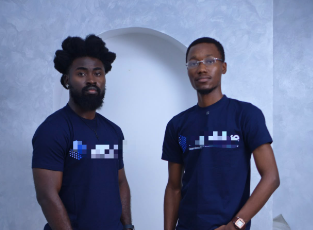
Dockhive was founded by Abdulkereem Opeyemi Kereem and Oloyede Solamipe Akinola, who met at the TensorFlow Dev Summit in 2019 and developed a shared interest in software infrastructure, decentralised systems and greater control over digital technology.
They began working together in 2021, undertaking consultancy projects involving Web3 and fintech applications.
Those experiences helped shape their interest in infrastructure that could provide developers with greater flexibility without imposing the limitations they associated with conventional cloud models.
Dockhive subsequently emerged from their efforts to translate that vision into practical products for software developers.
Rather than requiring users to assemble complex infrastructure independently, the company is working to make a broader range of services available through an integrated platform and agent-driven workflows.
Developing its wider infrastructure vision
Dockhive’s technical history also includes work on decentralised infrastructure and consensus systems.
Its legacy documentation states that Seacure Weave consensus has moved to Necter Network, which is intended to support an upcoming Dockhive mining application. The earlier Dockhive node-provider programme described in the documentation has been retired.
The distinction highlights the difference between the company’s longer-term infrastructure ambitions and its current developer services, which focus on application deployment, development environments and supporting infrastructure tools.
Dockhive is also inviting eligible startups to apply for its Startup Program, which advertises up to $5,000 in cloud credits over 12 months to help early-stage businesses build and run their products on the platform.
Preparing for the age of AI agents
The growing use of AI agents is creating new demands on cloud infrastructure as automated systems take on more responsibilities for writing code, deploying applications and performing operational tasks.
This shift presents an opportunity for platforms that can make infrastructure more programmable, accessible and responsive to both human developers and AI systems.
Dockhive’s strategy combines AI-assisted deployment, integrated developer services and a longer-term focus on sovereign infrastructure.
Its success, however, will depend on its ability to deliver reliable deployments, transparent costs, secure operations and meaningful control over data and workloads.
For developers, the immediate objective is to reduce the time and complexity associated with infrastructure management, allowing them to concentrate on building and improving software.
For Dockhive, the broader ambition is to make sovereign cloud infrastructure more practical and accessible to the next generation of software developers.
Disclaimer
Comments expressed here do not reflect the opinions of Vanguard newspapers or any employee thereof.